Author: homeforpickleball

  • 14mm vs 16mm Pickleball Paddle: The Complete Guide to Choosing the Right Thickness

    14mm vs 16mm Pickleball Paddle: The Complete Guide to Choosing the Right Thickness

    Why Paddle Thickness Is the First Decision You’ll Make

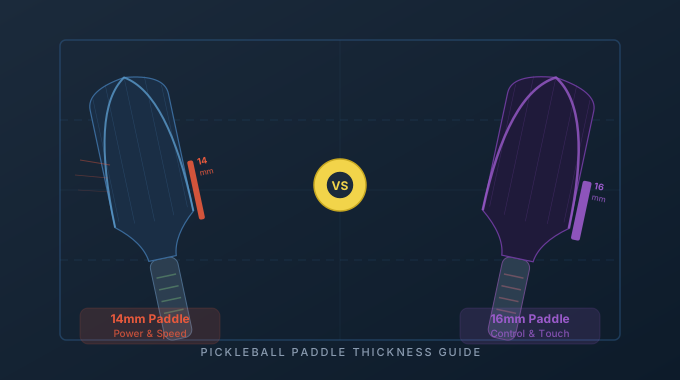
    Walk into any pickleball specialty store or scroll through a paddle retailer’s website, and you’ll quickly notice that most paddles are offered in two core thicknesses: 14mm and 16mm. The difference sounds negligible, just 2 millimeters, but anyone who has played with both will tell you the gap in feel and performance is anything but small.

    The choice between a 14mm and 16mm pickleball paddle affects nearly every aspect of your game: how hard you can drive the ball, how well you can reset at the kitchen, how forgiving the paddle is on mishits, how fast your hands move in a firefight, and even how your arm and wrist feel after a long session.

    This guide will walk you through every meaningful difference between 14mm and 16mm paddles, backed by real-world player experience and paddle science, so you can make a confident, informed purchase that matches your playing style and skill level.

    What Does Paddle Thickness (Core Thickness) Actually Mean?

    Before diving into comparisons, it’s worth clarifying what “14mm” and “16mm” actually refer to. These measurements describe the thickness of the paddle’s core, not the paddle face or the overall paddle dimensions.

    Most modern pickleball paddles use a polymer honeycomb core sandwiched between two face materials (carbon fiber, fiberglass, graphite, or Kevlar). The thickness of that honeycomb core is what’s measured in millimeters. A thicker core means more material between the two faces, which fundamentally changes how energy is absorbed and returned at the moment of contact. The newest core technology is EPP and EPA core.

    Common core thickness options in the market range from 10mm (very thin, used by elite power players) to 16mm. The 14mm and 16mm options represent the two most popular choices for recreational and competitive players alike.

    14mm vs 16mm Pickleball Paddle: The Six Key Differences
    1. Power and Pop

    Winner: 14mm

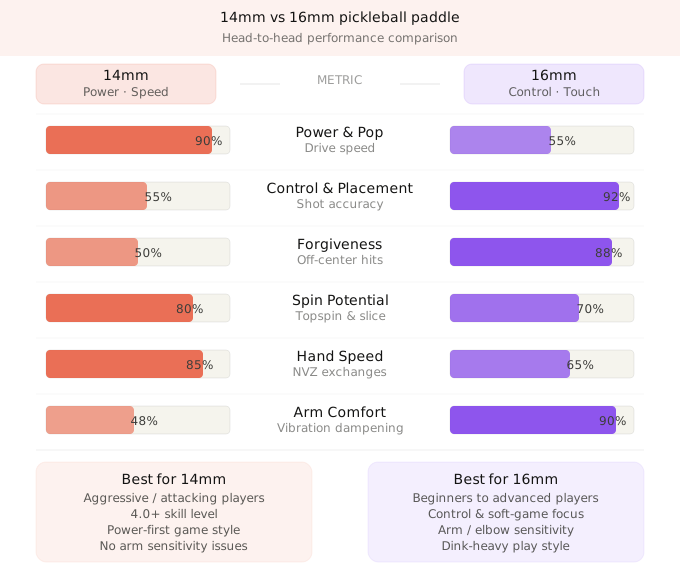
    The thinner core of a 14mm paddle compresses and rebounds more quickly at contact. This “trampoline effect” translates into noticeably more pop and ball speed off the paddle face. Your drives feel explosive, your speed-ups at the net come off sharper, and put-away shots are easier to finish.

    The 16mm paddle, by contrast, absorbs more of the ball’s energy into the thicker core. This dampening effect sacrifices some raw power but gives you much greater control over where that energy goes.

    The bottom line: If you love ripping drives and living at the net with fast hands, the 14mm paddle gives you a natural power advantage.

    2. Control and Shot Placement

    Winner: 16mm

    The thicker core of a 16mm paddle absorbs more ball energy, giving you a longer dwell time, that is, the ball stays on the paddle face a fraction longer before rebounding. This extended contact window makes it easier to guide shots, execute delicate dinks, and place the ball precisely into gaps.

    The soft, muted feel of a 16mm paddle is particularly beneficial in the transition zone and at the kitchen, where touch and consistency matter more than raw power. Resets, drop shots, and third-shot drops all become more manageable with the additional control a thicker core provides.

    The bottom line: If your game is built around ball placement, dinking consistency, and minimizing unforced errors, the 16mm is almost certainly the better match.

    3. Spin Generation

    Winner: 14mm (slight edge)

    Spin in pickleball is primarily driven by the paddle face surface (raw carbon fiber generates the most spin), but core thickness also plays a role. The faster rebound of a 14mm paddle means the face exits contact with the ball more quickly, which can enhance the bite and spin potential for players with a brushing stroke.

    The 16mm paddle’s slower rebound and softer contact can reduce the amount of spin generated on identical swings, though this difference is modest and can often be offset by technique.

    4. Forgiveness and Sweet Spot Size

    Winner: 16mm

    Forgiveness refers to how well a paddle performs on off-center hits. A useful metric for this is twist weight: a measurement of a paddle’s resistance to twisting on contact with the ball (on a scale of roughly 5 to 8, with 6.4 being average). Thicker cores tend to produce higher twist weights, meaning the paddle stays more stable and the ball still travels reasonably well even when you don’t hit it dead center.

    A 14mm paddle, with its smaller core, can feel noticeably punishing on mishits; the smaller sweet spot means off-center contact results in more dramatic speed and direction loss.

    The bottom line: Beginners and intermediate players who still miss the center of the paddle regularly will enjoy a much more forgiving experience with a 16mm.

    5. Hand Speed and Maneuverability

    Winner: 14mm

    Because 14mm paddles are generally lighter (less core material = less overall weight), they’re quicker to accelerate and maneuver. In fast hands exchanges at the Non-Volley Zone (NVZ), that extra hand speed can be the difference between getting your paddle on the ball in time or being caught out of position.

    The 16mm paddle, being heavier and thicker, may slow your hand speed slightly. For players who rely on quick reflexes and fast reactions at the net, this difference is real and noticeable.

    6. Feel and Vibration

    Winner: 16mm (for comfort); 14mm (for feedback)

    The 16mm paddle delivers a softer, plusher feel on contact. It absorbs vibration more effectively, which means less strain is transmitted to your hand, wrist, and elbow over time. This makes the 16mm a particularly smart choice for players managing tennis elbow, golfer’s elbow, or any repetitive strain issue.

    The 14mm paddle produces a crisper, stiffer impact sensation. Many advanced players prefer this because it provides instant feedback; you know immediately whether you’ve hit the sweet spot or not. However, if you’re sensitive to vibration, a 14mm paddle can feel harsh over long sessions.

    Quick Comparison Table

    Feature14mm Paddle16mm Paddle
    Power / Pop✅ Higher❌ Lower
    Control❌ Lower✅ Higher
    Spin Potential✅ Slightly better❌ Slightly lower
    Sweet Spot❌ Smaller✅ Larger
    Forgiveness❌ Less forgiving✅ More forgiving
    Hand Speed✅ Faster❌ Slightly slower
    Vibration / Comfort❌ More vibration✅ Less vibration
    Best for Skill LevelIntermediate–AdvancedBeginner–Advanced
    Best PlaystyleAggressive, attackingControl, all-court

    Who Should Choose a 14mm Paddle?

    A 14mm paddle is the right fit if you:

    • Play at a 4.0 skill level or above, and want to add more offense to your game
    • Prioritize fast hands and net aggression over soft game consistency
    • Have good technique and consistently hit the center of the paddle
    • Enjoy generating your own power through swing mechanics and wrist snap
    • Want more pop on drives, counters, and put-aways
    • Do not suffer from arm or elbow pain that might be aggravated by vibration

    Many 5.0-level competitive players gravitate toward 14mm paddles specifically for the offensive edge they provide in high-speed exchanges. The extra pop and maneuverability are genuinely advantageous at the net when trying to finish points, something that becomes increasingly valuable as you move up in skill level.

    Who Should Choose a 16mm Paddle?

    A 16mm paddle is the right fit if you:

    • Are you a beginner or intermediate player, still building consistency and technique
    • Rely on touch shots, dinks, and resets as the foundation of your game
    • Prefer a larger sweet spot that rewards you even on imperfect swings
    • Experience arm or wrist discomfort and need a dampened, vibration-absorbing feel
    • Play longer sessions and want a paddle that’s gentler on your body
    • Are trying to reduce unforced errors and improve placement over power

    It’s worth busting a common myth here: thicker does not mean “for beginners only.” Many top professional players use 16mm paddles in tournament play. The thicker core is a strategic choice; it’s about results and consistency, not about playing ability.

    Does Skill Level Change the Equation?
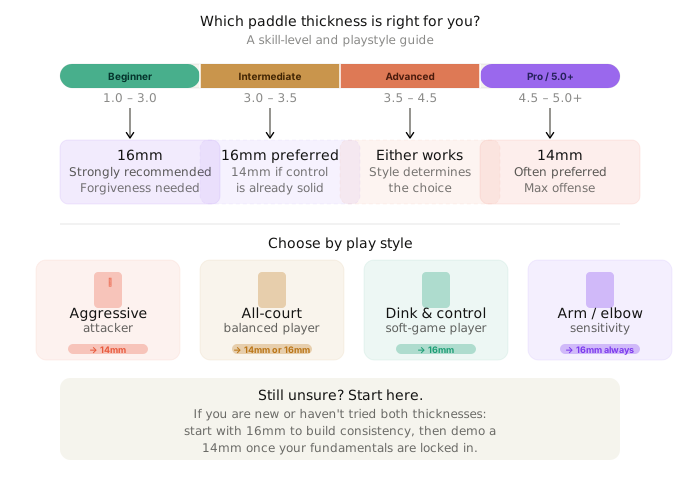
    Yes, significantly. Here’s a general framework:

    • Beginners (1.0–3.0): The 16mm paddle is almost universally the better starting point. The forgiving sweet spot and consistent feel help you build proper strokes without the paddle punishing your early mistakes.
    • Intermediate players (3.0–4.0): Either thickness can work well depending on playstyle. If your soft game is strong, a 14mm can add offensive dimension. If you’re still developing control, stick with 16mm.
    • Advanced players (4.0–5.0+): At this level, personal preference and playstyle dominate the decision. Aggressive, attacking players often prefer 14mm. Control-dominant, tactically-minded players often prefer 16mm. Many high-level players own both and switch depending on opponent and conditions.

    Does Paddle Face Material Matter When Choosing Thickness?

    Absolutely, face material and core thickness interact with each other. Here are the key pairings to understand:

    Carbon Fiber Face + 16mm Core: This is arguably the most popular combination among serious recreational and competitive players. Carbon fiber’s spin generation and consistency, paired with the control and forgiveness of a thick core, result in a paddle that’s excellent for all-around play with a premium soft game.

    Carbon Fiber Face + 14mm Core: The combination preferred by attacking, power-oriented players. Maximum pop and spin potential at the cost of some control and forgiveness.

    Fiberglass Face + 16mm Core: A more budget-friendly combination that still delivers solid control. Fiberglass provides a slightly softer touch than carbon fiber and is easier on the arm.

    Fiberglass Face + 14mm Core: Provides pop without the extreme stiffness of carbon, a reasonable middle ground for players who want power but are sensitive to harsh feedback.

    Common Myths About Paddle Thickness Debunked

    Myth 1: “Thinner paddles are for pros, thicker ones are for beginners.” False. Many elite professionals play with 16mm paddles for their reliable control. Paddle choice is about playstyle, not bragging rights.

    Myth 2: “2mm is too small a difference to notice.” False. Players who switch between 14mm and 16mm consistently report immediate, significant differences in feel, power, and control. The 2mm gap is one of the most impactful spec changes you can make.

    Myth 3: “A 14mm paddle automatically makes you hit harder.” Partially false. The 14mm paddle does produce more pop on identical swings, but if your technique lacks power generation, the paddle alone won’t solve that. A well-executed swing with a 16mm can still produce significant power.

    Myth 4: “You should stick with one thickness forever.” False. Many players own both thicknesses and rotate between them based on matchup, playing conditions, or even just mood. Experimenting is the best way to understand your preferences.

    How to Test Before You Buy

    Whenever possible, demo a paddle before committing. Most local pickleball clubs, sporting goods stores with pickleball sections, and dedicated pickleball retailers offer demo programs. Testing a 14mm and a 16mm version of the same paddle model (like the Joola Kosmos or Joola Perseus Pro Series) gives you the cleanest apples-to-apples comparison.

    When demoing, pay attention to:

    1. How your dinks feel: are they easy to control or do they fly long?
    2. How your drives respond: do they have enough pop, or do you want more touch?
    3. Off-center hits: Does the paddle feel stable, or does it twist?
    4. How your arm and elbow feel after 30–45 minutes of play

    Final Verdict: 14mm vs 16mm Pickleball Paddle

    There is no objectively “better” thickness. Both 14mm and 16mm paddles are used by players across every skill level, and both have legitimate advantages:

    • Choose 14mm if you prioritize power, speed, spin, and fast hands, and your technique is solid enough to make the most of a smaller sweet spot.
    • Choose 16mm if you prioritize control, consistency, forgiveness, and a softer feel, especially if you’re still developing your game or value your long-term arm health.

    If you’re still on the fence, most experts and experienced players agree: start with 16mm. It’s easier to learn on, more forgiving, and still capable of excellent power when you swing with intention. Once your fundamentals are solid, experimenting with a 14mm paddle becomes a more rewarding and lower-risk experience.
  • Pickleball Paddle Weight: Everything That Actually Matters


    Why Pickleball Paddle Weight Matters

    Of all the variables that define a pickleball paddle,  surface material, core thickness, shape, grip size, and weight are arguably the most immediately felt and the most misunderstood. Pick up the wrong weight and the consequences show up fast: mishits at the kitchen line, a tired arm by the third game, or worse, the dull ache of pickleball elbow creeping in after every session.

    Pick up the right weight, and the paddle disappears. It becomes an extension of your arm. Volleys feel crisp, drives carry real punch, and you can play for hours without thinking about your equipment at all.

    198–255gTypical weight range for composite paddles
    227gThe “sweet spot” preferred by 80% of players
    3gOf lead tape shifts swing weight noticeably
    72%Of beginner injuries linked to wrong-weight gear

    Weight influences four key performance pillars simultaneously: power generation, swing speed and reaction time, shot control and precision, and arm fatigue and long-term injury risk. No other single spec does all four at once. That’s why getting this decision right is worth the time it takes to read this guide.

    It’s also worth understanding the difference between static weight and swing weight. The number printed on the packaging is static weight, how heavy the paddle is sitting on a scale. Swing weight describes how the paddle actually feels in motion. Two paddles can have the same static weight but very different swing weights depending on where the mass is distributed (head-heavy vs. handle-heavy). A head-heavy 221g paddle can feel heavier than a handle-heavy 230g paddle during play. Keep this in mind throughout.

    The Three Weight Categories

    The pickleball community has converged on three broadly accepted weight classes. Different retailers use slightly different cutoffs, but the ranges below reflect the most widely used standards in 2026:

    Category 01
    Under 207g

    Featherlight paddles built for speed, touch, and rapid-fire exchanges at the net.

    Lightweight

    Category 02
    207–235g

    The balanced zone. Power and control coexist. Recommended for most players at most levels.

    Midweight

    Category 03
    238g+

    Maximum mass for maximum drive power. Favored by power-baseline players and singles specialists.

    Heavyweight

    PICKLEBALL PADDLE WEIGHT CATEGORIES
    LIGHTWEIGHT
    Under
    207g

    ✓ Fast reactions
    ✓ Dink control
    ✗ Less power

    MIDWEIGHT
    207–
    235g

    ✓ Power + control
    ✓ All-court play
    ✓ Lowest injury risk

    HEAVYWEIGHT
    238g
    and up

    ✓ Maximum power
    ✓ Singles play
    ✗ Slower at net


    Net · Kitchen · Touch
    All-court · Doubles · Beginners
    Baseline · Power · Singles


    Paddle shapes above are proportional; lightweight is narrower, heavyweight is wider and longer
    Standard pickleball paddle: max 61cm total length · max 30cm width (USAP rules)

    Pickleball paddle weight categories

    Within midweight, some retailers further subdivide into “light-mid” (207–215g) and “mid-heavy” (230–238g), but for decision-making purposes, the three-class framework is sufficient for most players.

    Lightweight Paddles (Under 207g)

    Lightweight paddles are the racquet equivalent of a sports car: agile, responsive, and built for precision. The reduced mass means less resistance on your swing, which translates directly into faster hand speed and quicker recoveries at the non-volley zone (the kitchen).

    Who Should Use a Lightweight Paddle?

    Players who thrive at the net, love dink rallies, and rely on touch over power are the natural audience for lightweight paddles. Those coming from table tennis or racquetball, sports built on wrist-speed and quick reactions, often adapt to lightweight pickleball paddles immediately. Players managing joint sensitivity may also find that the reduced arm load helps them play longer without discomfort.

    ✓ Pros

    • Fastest reaction time: ideal for kitchen volleys
    • Superior maneuverability and paddle speed
    • Less shoulder fatigue during long matches
    • Excellent touch and feel on soft shots
    • Natural fit for dink-heavy playing styles

    ✕ Cons

    • Less raw power behind baseline drives
    • More shock transferred to elbow on impact
    • Requires faster swing speed to generate pace
    • Can feel unstable against hard-driving opponents

    Despite common belief, very light paddles are not the automatic cure for pickleball elbow. A paddle that’s too light forces your elbow to absorb more raw vibration on impact. If you’re dealing with arm pain, a midweight paddle (221–227g) is often the better prescription.

    Midweight Paddles (207–235g)

    If there’s a universal starting point in pickleball gear, this is it. Midweight paddles consistently earn recommendations from coaches, equipment specialists, and tour players as the optimal category for the vast majority of players, beginner through advanced. The physics are simple: enough mass to drive through the ball cleanly, light enough to react quickly at the net.

    “The midweight zone: 221 to 235g, is where about 80% of all players will perform at their best, regardless of skill level.”

    The Goldilocks Zone of Pickleball

    A paddle in the 221–235g range offers what equipment analysts call “biomechanical balance.” It provides enough physical mass to plow through the ball on baseline drives without requiring an aggressive swing. It delivers structural stability for consistent shot placement. And critically, it remains agile enough for blocking and resetting at the kitchen without sacrificing defensive reaction time.

    For players coming from tennis, particularly those accustomed to mid-weight racquets, a midweight pickleball paddle will feel immediately familiar. The swing mechanics translate well, and the reduced weight compared to a tennis racket means the adjustment period is short.

    ✓ Pros

    • Best overall balance of power and control
    • Suitable for all court positions
    • Forgiving learning curve for new players
    • Reduces injury risk vs. extremes on either end
    • Ideal for doubles play at any level

    ✕ Cons

    • Not the absolute fastest at net volleys
    • Not the most powerful option for singles baseline play
    • Wide range means sub-category selection still matters

    Heavyweight Paddles (238g+)

    Heavyweight paddles are specialized tools. The extra mass creates greater momentum through the swing arc, meaning more force reaches the ball with less absolute swing speed required. For power-first players, particularly those who play singles, who stand at the baseline, or who have a slower natural swing speed, the tradeoff is favorable.

    Who Benefits Most from a Heavy Paddle?

    Older players whose swing speed has decreased over time often find that a heavier paddle compensates effectively, producing adequate pace without demanding explosive arm mechanics. Singles specialists benefit similarly, since singles pickleball rewards powerful drives in a way that doubles does not. Professional players on the tour typically use paddles in the 233–244g range; they need the mass to counter opponents hitting at elite speeds from the baseline.

    ✓ Pros

    • Maximum power output on drives and serves
    • More shot “forgiveness” — larger effective sweet spot feel
    • Less effort needed to generate pace
    • Excellent for singles and baseline play

    ✕ Cons

    • Slower reaction time at the kitchen line
    • Increased shoulder and forearm fatigue over time
    • Not recommended for players with existing arm issues
    • Requires stronger conditioning to wield effectively

    Full Weight Comparison Table

    WEIGHT vs. PERFORMANCE:  FOUR KEY FACTORS
    Lightweight

    Midweight

    Heavyweight
    Power

    Under 207g
    Low–Moderate

    207–235g
    Moderate–High

    238g+
    High


    Control

    Under 207g
    Excellent

    207–235g
    Very Good

    238g+
    Moderate


    Reaction

    Under 207g
    Fastest

    207–235g
    Fast

    238g+
    Slower


    Safety
    (arm & elbow)

    Under 207g
    Good (elbow risk)

    207–235g
    Best: lowest overall risk

    238g+
    Good (shoulder risk)

    Performance comparison across all three weight classes
    Factor Lightweight (<207g) Midweight (207–235g) Heavyweight (238g+)
    Power Low–Moderate Moderate–High High
    Control Excellent Very Good Moderate
    Reaction Speed Fastest Fast Slower
    Arm Fatigue Low shoulder / higher elbow Low–Moderate Higher shoulder/forearm
    Best For Net play, dinking, touch shots All-court play, doubles Baseline drives, singles, power
    Recommended Skill Intermediate–Advanced All levels Advanced / physically conditioned
    Injury Risk Elbow shock if too light Lowest overall risk Shoulder strain if overused
    Playing Style Touch player, dink specialist All-rounder, doubles specialist Power baseliner, singles player

    Best Weight by Player Type & Skill Level

    BEST PADDLE WEIGHT BY PLAYER TYPEBeginner
    Any new player or sport switcher
    → 207–235g midweight
    Start here

    Net / touch player
    Dink-first, kitchen specialist
    → Under 207g lightweight
    <207g

    Intermediate all-rounder
    Developing all-court game
    → 210–235g mid range
    221g

    Power / baseline player
    Drive-first, singles specialist
    → 230–244g heavyweight
    238g+

    Advanced / competitive
    Tour or high-league play
    → 233–244g + fine-tune with tape

    Senior / joint sensitivity
    Managing elbow or shoulder pain
    → 221–230g midweight

    Tennis background
    Mid-weight racquet experience
    → 221–235g midweight

    Racquetball / table tennis
    Fast-twitch wrist-speed game
    → Under 207g lightweight

    Recommendations are starting points, adjust with lead tape after developing a feel for your paddle

    Best weight by player type and skill level

    For Beginners

    The clear recommendation for beginners is a midweight paddle in the 207–235g range. While it’s tempting to reach for either extreme, a super-light paddle thinking it’ll be “easier to swing,” or a heavy one hoping for built-in power, both choices create problems before you’ve had the chance to develop sound technique. The midweight range gives you room to develop your game without your equipment fighting against you.

    For Intermediate Players

    By the intermediate stage, you know whether you’re a net-first or baseline-first player. Net-first players can begin exploring paddles on the lighter end of the midweight range (207–218g). Baseline-oriented players who want to add pace to their drives can explore the heavier midweight options (224–235g). Experimentation within the midweight class, rather than crossing into the extremes, is usually the smartest intermediate strategy.

    For Advanced & Competitive Players

    Advanced players often have strong opinions developed through years of iteration. Many competitive players land on a very specific target weight, sometimes within a 6g window, and use lead tape for fine-tuning. Elite pro players on the PPA and MLP tours predominantly use paddles in the 233–244g range, where the added mass helps neutralize pace from power-hitting opponents.

    For Seniors & Players with Joint Issues

    The midweight range remains the safest harbor here. A paddle that’s too light amplifies elbow shock; one that’s too heavy strains the shoulder and forearm under repetitive use. The 221–230g range strikes the right balance, providing enough mass to handle ball impact without demanding extreme muscular effort throughout a long match.

    If you previously played tennis with an average-to-heavy racquet, start with a midweight pickleball paddle. If your previous racquet sport was table tennis or racquetball, both lighter and faster, a lightweight pickleball paddle will likely feel more natural to your swing mechanics.

    Paddle Weight & Injury Prevention

    The relationship between paddle weight and arm injury is more nuanced than “lighter is safer.” USA Pickleball guidance has identified improper equipment as one of the most common sources of arm pain among recreational players, and the error cuts both ways.

    A paddle that is too light forces the smaller muscles and tendons of your elbow to absorb the raw kinetic shock of ball impact directly. With less mass in the paddle to dampen that force, more vibration travels up the arm. This is a direct pathway to lateral epicondylitis, what the pickleball community calls “pickleball elbow.” Paradoxically, players dealing with early elbow discomfort often make things worse by switching to the lightest paddle they can find, believing the reduced weight will spare their arm. In many cases, it accelerates the problem.

    A paddle that is too heavy introduces a different risk: chronic muscular fatigue and, eventually, shoulder strain. Swinging a heavy paddle requires constant effort from the rotator cuff and supporting forearm muscles. If those muscles aren’t conditioned for the workload, strain develops over time, especially in players logging multiple games per week.

    “For most players dealing with arm pain, the answer isn’t the lightest paddle available; it’s the midweight range around 221–227g.”

    The general guidance from equipment specialists and sports medicine professionals is that the 221–227g midweight zone represents the lowest-risk weight category for most players, particularly those with pre-existing joint sensitivity or those new to racquet sports. If you add lead tape or other customization, always start small, build gradually, and stop immediately if any new discomfort develops.

    Customizing Your Paddle Weight with Lead Tape

    Lead tape, a thin adhesive-backed strip of dense metal, is the primary tool players use to fine-tune paddle weight after purchase. It’s fully legal under USA Pickleball rules and widely used across all competitive levels, from recreational club players to touring pros.

    Where You Place It Changes Everything

    Adding the same amount of tape to different positions on the paddle produces meaningfully different results:

    LEAD TAPE PLACEMENT: EFFECT ON SWING WEIGHT & BALANCE

    sweet
    spot


    Top edge (12 o’clock)
    Head-heavy → more power
    Bigger sweet spot at top


    Both sides
    (3 & 9 o’clock)
    Wider sweet spot
    More off-centre stability


    Handle / throat area
    Handle-heavy → more control
    Quicker feel at net

    Handle-heavy

    Head-heavy
    Balance point shifts depending on where tape is placed

    Start small: 1–2g strips
    Test over several sessions before adding more


    Lead tape is fully legal under USA Pickleball rules at all levels of competition

    Lead tape placement guide and effect on paddle balance
    Tape Placement Effect on Feel Best For
    Top edge (12 o’clock) Head-heavy feel; more power, bigger sweet spot at top Power-focused players, drive specialists
    Both side edges (3 & 9 o’clock) Wider sweet spot, more stability on off-center hits Players seeking shot forgiveness and consistency
    Handle / throat area Handle-heavy balance; more control, quicker feel at net Dink-first players, net specialists

    Just three grams of lead tape added to the outer edge guard measurably alters the functional swing weight and dynamic balance point of a paddle. Advanced players can feel weight changes as small as 6g during play, which is why some competitive players specify a guaranteed weight range (e.g., 213–218g) when ordering from manufacturers. For most recreational players, a range variance of 6g will be imperceptible.

    Start with a small strip (1–2 grams) and play with it for several sessions before adding more. Jumping straight to maximum lead tape risks overloading joints that aren’t conditioned for the extra load. If you notice new arm discomfort, remove the tape immediately.

    Frequently Asked Questions

    What is the best pickleball paddle weight for beginners?

    For beginners, a midweight paddle between 207 and 235g is the safest and most effective choice. This range offers a balance of power and control that helps new players develop sound technique without either extreme working against their progress.

    Does a heavier pickleball paddle cause elbow pain?

    It can, particularly if the paddle exceeds what your arm muscles are conditioned to handle over extended play. However, a paddle that is too light can also cause elbow pain by transmitting more shock on impact. The midweight range of 221–227g is generally recommended for players managing elbow sensitivity.

    What weight do professional pickleball players use?

    Most professional pickleball players use paddles in the 233–244g range. The added mass helps them counter the pace of opponents hitting at elite speed and generate power on baseline drives without requiring an extreme swing.

    Is it legal to add lead tape to a pickleball paddle?

    Yes. Lead tape (also called weight tape) is explicitly permitted under USA Pickleball rules. Players at all levels use it to fine-tune the static weight and swing weight balance of their paddles within legal specifications.

    What is the difference between static weight and swing weight in a pickleball paddle?

    Static weight is the total mass of the paddle measured on a scale — the number you see on product listings. Swing weight describes how the paddle actually feels during a swing, which is influenced by where the mass is distributed. A head-heavy paddle will feel heavier than its static weight suggests; a handle-heavy paddle will feel lighter and more maneuverable.

    How much does grip size affect pickleball paddle weight?

    Grip size does affect total paddle weight. A 4.5″ double grip can add approximately 14g to a paddle, while a thinner 4″ grip can reduce weight by about 6g. Switching grip sizes is one way to make minor weight adjustments without purchasing a new paddle.

    ⚡ The Final Verdict

    Your Perfect Weight, Simplified

    If you’re new to pickleball or returning from another racquet sport, start with a midweight paddle (207–235g). It will serve you better than any other choice while your game develops.

    If you’re an experienced player who lives at the kitchen line and thrives on touch, explore the lighter end of midweight or lightweight class (198–213g). Speed is your weapon.

    If you’re a power player, a singles specialist, or someone with a naturally slower swing speed: move toward the heavier midweight or heavyweight range (235–244g). Let mass do the work.

    And if you want to fine-tune? Buy the paddle closest to your target weight and use lead tape to dial in the last 14–28g and balance point exactly where you need it.

  • Power and Pop in Pickleball Paddles Guide

    When players start looking for a new pickleball paddle, one of the first things they hear is that a paddle has “great power” or “a lot of pop.” The problem is, these terms are often thrown around without much explanation, which leads to confusion and, more importantly, poor paddle choices.

    Power and pop are not the same thing, even though both influence how fast the ball comes off your paddle. Understanding the difference between the two, and knowing which one actually suits your game, can have a direct impact on how you perform, whether that’s finishing points at the baseline or winning quick exchanges at the kitchen.

    What Is Power in a Pickleball Paddle?

    Power in a pickleball paddle refers to how much pace you can generate when you take a full, committed swing. It shows up most clearly when you have time to set your feet and drive through the ball, such as on serves, returns, and baseline drives.

    Also Read: Types of shots in Pickleball

    A paddle with good power allows you to hit deeper shots with less effort. You don’t feel like you have to swing out of your shoes just to push your opponent back. Instead, the paddle does some of the work for you, transferring energy efficiently into the ball and helping you maintain pressure from the back of the court.

    Players who rely on aggressive playstyles, especially those who like to drive their third shots or play singles, tend to benefit from paddles that lean toward power. It allows them to dictate rallies, force weak replies, and create opportunities to finish points early.

    What Is Pop in a Pickleball Paddle?

    Pop, on the other hand, is about what happens on short, compact swings, particularly at the kitchen line. It refers to how quickly and sharply the ball rebounds off the paddle face with minimal effort.

    You’ll notice pop most during fast-paced situations, hand battles, punch volleys, quick blocks, and reaction shots. A paddle with good pop feels lively and responsive. Even with a short movement, the ball comes off clean and fast, allowing you to keep up with rapid exchanges.

    In doubles play, where most points are decided at the net, pop becomes extremely important. It helps you react quickly, counter effectively, and apply pressure without needing a big backswing.

    Why Power and Pop Are Often Confused

    The confusion between power and pop comes from the fact that both involve speed, but they show up in completely different moments of a rally.

    Power is something you feel when you have time to swing freely. Pop is something you rely on when you don’t.

    A paddle can feel powerful on drives but still lack quick response at the net. Similarly, a paddle can feel incredibly lively in hand battles but struggle to generate depth from the baseline. This is why choosing a paddle based only on “how fast it feels” can be misleading if you don’t consider where that speed is coming from.

    Why Power Matters in Real Match Play

    Power plays a critical role in controlling rallies from the back of the court. When you can hit deep, penetrating shots consistently, you force your opponents into defensive positions, often leading to shorter balls that you can attack.

    It also becomes a weapon on:

    • Serve returns that push opponents back
    • Passing shots when opponents crowd the net
    • Overheads that finish points cleanly

    Without enough power, you may find yourself working harder just to stay neutral in rallies. Your shots land shorter, giving opponents more time and more options.

    Why Pop Matters Even More in Doubles

    While power helps you start the point strong, pop often determines how the point ends, especially in doubles.

    At the kitchen line, everything happens quickly. You don’t have time for big swings, and that’s where pop becomes your biggest asset. A paddle with good pop allows you to:

    • Punch volleys with minimal effort
    • Counter speed-ups effectively
    • Keep your paddle compact and efficient
    • Maintain pressure during hand exchanges

    Players who struggle in fast net battles often aren’t slow; they’re using paddles that don’t respond quickly enough in tight situations. This is generally affected by a paddle’s swing weight and twist weight.

    The Trade-Off Between Power and Pop

    Most paddles don’t maximize both power and pop equally. There’s usually a balance.

    Paddles built for power tend to:

    • Have lower dwell time
    • Feel stiffer
    • Reward full swings
    • Be less forgiving on touch shots

    Paddles built for pop and control tend to:

    • Feel softer or more connected
    • Excel in short swings
    • Offer better touch
    • Sacrifice some baseline depth

    The key is not choosing the “best” paddle overall, but choosing the one that matches how you actually win points.

    What Influences Power and Pop in a Paddle?

    Several design elements affect how much power or pop a paddle has.

    Core Thickness

    Thinner paddles usually produce more power and quicker rebound. Thicker paddles absorb more energy, which improves control but reduces raw speed.

    Face Material

    Fiberglass faces tend to feel more powerful and lively, while carbon fiber faces emphasize control and spin, often slightly reducing raw pop. The future of paddles seems to be tilting more towards all foam paddles, EPP and EPA to be precise.

    Paddle Weight

    Heavier paddles can generate more power due to increased momentum, but may feel slower in hand battles. Lighter paddles improve reaction speed and perceived pop at the net.

    Paddle Weight

    Heavier paddles can generate more power due to increased momentum, but may feel slower in hand battles. Lighter paddles improve reaction speed and perceived pop at the net.

    How to Choose What You Need

    The right balance between power and pop depends entirely on your playing style.

    If you’re someone who:

    • Likes driving the ball
    • Plays singles often
    • Wins points from the baseline

    You should lean toward power-oriented paddles.

    If you:

    • Play mostly doubles
    • Spend a lot of time at the kitchen
    • Rely on quick hands and counters

    You should prioritize pop and responsiveness.

    For most intermediate players, especially in doubles, a slightly pop-focused paddle with enough power for occasional drives tends to be the most practical choice.

    Power vs Pop in Pickleball Paddles: Comparison Table

    FeaturePowerPop
    DefinitionAbility to generate pace on full swingsQuick rebound on short, compact swings
    Where It Shows UpBaseline drives, serves, passing shotsKitchen volleys, hand battles, counters
    Swing TypeFull, aggressive swingsShort, compact movements
    Feel at ContactHeavy, explosiveQuick, snappy, responsive
    Best ForSingles play, driving third shotsDoubles play, fast net exchanges
    Control LevelCan be harder to control if too highEasier to control in tight situations
    Common Trade-OffLess touch and finesseLess depth on full drives
    Influenced ByPaddle weight, stiffness, thinner coresFace responsiveness, balance, swing speed
    Ideal Player TypeAggressive baseline playerQuick hands, net-focused player

    Final Thoughts

    Power and pop are both essential, but they serve different purposes. One helps you control the rally from a distance, while the other helps you win it up close.

    When you understand how each one works, you stop guessing and start choosing paddles with intention. And that’s when your equipment actually starts supporting your game instead of holding it back.

    The goal isn’t to have the most powerful or the most responsive paddle; it’s to have the one that shows up exactly when you need it most.

    FAQs

    What is the difference between power and pop in pickleball paddles?

    Power is how much pace you can generate on a full swing, while pop refers to how quickly the ball rebounds off the paddle during short, compact shots, especially at the net.

    Which is more important: power or pop?

    It depends on your playing style. Power is more important for singles and baseline play, while pop is more important in doubles where fast hand battles at the kitchen decide most points.

    Can a paddle have both power and pop?

    Yes, but most paddles lean slightly toward one side. Some modern paddles aim to balance both, offering decent power on drives and quick response at the net.

    Do thicker paddles have less power?

    Generally, yes. Thicker paddles tend to absorb more energy, which improves control and feel but slightly reduces raw power compared to thinner paddles.

    Why does my paddle feel powerful but hard to control?

    You may be using a paddle with high power but low dwell time, meaning the ball leaves the face quickly. This can make it harder to control softer shots like dinks and resets.

    Is pop important for beginners?

    Pop becomes more important as you move into intermediate and advanced play, especially in doubles. Beginners can benefit from a balanced paddle that offers both control and moderate pop.

    How do I know if I need more power or more pop?

    If your shots lack depth and feel weak from the baseline, you likely need more power. If you struggle in fast exchanges at the net, you likely need more pop.

  • Swing weight and Twist weight in Pickleball Paddles Guide

    When most players shop for a pickleball paddle, they look at the obvious specs: weight, thickness, and surface material. But two of the most important performance factors often get overlooked: swing weight and twist weight.

    These numbers don’t always appear clearly on product pages, yet they heavily influence how a paddle feels in your hand, how fast you can react at the kitchen, and how stable the paddle remains on off-center hits.

    If you’ve ever picked up two paddles with the same listed weight but felt like one moved faster or felt more solid on mishits, you were experiencing differences in swing weight and twist weight.

    Let’s break down what each one means and why smart players pay attention to both.

    What Is Swing Weight in Pickleball Paddle?

    Swing weight measures how heavy a paddle feels when you swing it, not when you simply hold it. Technically, it reflects how the paddle’s mass is distributed relative to your hand.

    Two paddles can both weigh 8.0 ounces on a scale but feel completely different in motion. One may whip through the air easily, while the other feels sluggish. That difference is swing weight.

    While swing weight affects how fast you can move the paddle, it also plays a role in how much pop you feel at the net. This ties closely into the difference between power vs pop in pickleball paddles.

    In Simple Terms

    • Lower swing weight = faster hand speed, easier maneuverability
    • Higher swing weight = more plow-through, more drive stability

    Swing weight becomes especially noticeable during quick exchanges at the kitchen.

    Why Swing Weight Matters on the Court

    Swing weight directly affects how quickly you can position your paddle and how much momentum you carry through the ball.

    At the Kitchen Line

    Lower swing weight helps with:

    • Fast hand battles
    • Quick counters
    • Rapid paddle adjustments
    • Defensive reaction volleys

    If you play a speed-up heavy doubles game, this matters a lot.

    From the Baseline

    Higher swing weight can help with:

    • Deeper drives
    • More stable contact
    • Better plow-through
    • Heavier passing shots

    Players who rely on full swings often appreciate the extra mass in motion.

    Signs Your Swing Weight Is Too High

    Many intermediate players unknowingly use paddles that are too slow for their hands.

    Watch for these clues:

    • You feel late in hand battles
    • Quick body shots jam you
    • Paddle feels slow to reset
    • You struggle against fast opponents

    If this sounds familiar, your swing weight may be working against you.

    Signs Your Swing Weight Is Too Low

    On the flip side, extremely low swing weight can create its own issues.

    You might notice:

    • Drives lack depth
    • Paddle feels unstable on blocks
    • You lose plow-through on hard shots
    • Put-aways don’t feel heavy enough

    Balance is key, especially in doubles.

    What Is Twist Weight in Pickleball Paddles?

    Twist weight is less talked about but equally important. It measures how resistant the paddle is to twisting in your hand on off-center contact.

    Every time you hit the ball outside the sweet spot (which happens more often than players admit), the paddle wants to rotate slightly. Twist weight determines how much it actually moves.

    In Simple Terms

    • Higher twist weight = more stability on mishits
    • Lower twist weight = more paddle wobble on off-center hits

    If swing weight is about motion through the air, twist weight is about face stability at impact.

    Why Twist Weight Matters More Than Most Players Realize

    Perfect center contact is rare in real play, especially during fast exchanges.

    Higher twist weight helps:

    • Keep the paddle face stable
    • Reduce mishit vibration
    • Maintain directional control
    • Improve consistency under pressure

    This becomes especially important in defensive situations when you’re reacting rather than swinging freely.

    Where You’ll Notice Twist Weight Most

    During Fast Hand Battles

    When exchanges speed up at the kitchen, you don’t always catch the sweet spot cleanly. A paddle with good twist weight stays firm instead of fluttering.

    On Stretch Volleys

    When you’re reaching wide and making contact toward the edge of the paddle, higher twist weight prevents the face from opening or closing unintentionally.

    On Blocks and Counters

    Stable paddles absorb pace better and keep the ball low. Lower twist weight paddles can feel shaky in these moments.

    What Paddle Features Influence Swing Weight?

    Several design elements affect how heavy a paddle feels in motion.

    Head Shape

    Elongated paddles usually have higher swing weight because more mass sits farther from your hand. Standard or hybrid shapes often feel quicker.

    Balance Point

    Head-heavy paddles swing slower but drive through the ball harder. More evenly balanced paddles feel quicker at the net.

    Overall Paddle Length

    Longer paddles naturally increase swing weight. Even small differences in length can change maneuverability noticeably.

    What Affects Twist Weight?

    Twist weight is mostly influenced by how much mass sits toward the paddle’s edges.

    Perimeter Weighting

    Paddles with foam-injected edges or reinforced perimeters usually have higher twist weight because there’s more stability around the face.

    Paddle Width

    Wider paddles generally resist twisting better than very narrow elongated shapes, all else being equal.

    Construction Quality

    Higher-end paddles often engineer stability more carefully, even without dramatically increasing static weight.

    Also Read: How are Pickleball paddles made

    Swing Weight vs Twist Weight: Which Matters More?

    This isn’t an either-or situation. They affect completely different parts of performance.

    • Swing weight controls how fast you can move the paddle
    • Twist weight controls how stable the paddle is on contact

    Ideally, you want a paddle that:

    • Moves quickly enough for your hand speed
    • Stays stable enough under pressure

    Many modern paddles try to optimize both, but there is always some trade-off.

    How to Choose the Right Balance for Your Game

    Prioritize Lower Swing Weight If You:

    • Play fast doubles
    • Win points in hand battles
    • Value quick counters
    • Often feel late at the kitchen

    Prioritize Higher Twist Weight If You:

    • Want more forgiveness
    • Miss the sweet spot occasionally
    • Value block stability
    • Play against heavy hitters

    The Sweet Spot for Most Intermediate Players

    Most improving doubles players benefit from:

    • Moderate swing weight (not too sluggish)
    • Solid twist weight (for stability under pressure)

    This combination supports both quick hands and consistent blocking, two skills that matter more and more as competition improves.

    Swing Weight vs Twist Weight: Quick Comparison Chart

    FeatureSwing WeightTwist Weight
    What It MeasuresHow heavy the paddle feels during a swingResistance to twisting on off-center hits
    AffectsHand speed, maneuverability, plow-throughStability, forgiveness, control on mishits
    Lower Value MeansFaster hands, easier to maneuverLess stability, more paddle wobble
    Higher Value MeansSlower hands, more power through contactMore stability, better off-center control
    Most Noticeable DuringHand battles, volleys, quick exchangesBlocks, counters, stretched shots
    Important ForSpeed, reaction time, net playConsistency, control, defensive play
    Influenced ByBalance, paddle length, head shapeEdge weighting, paddle width, construction
    Best ForFast doubles players, quick handsPlayers wanting forgiveness and stability
    Trade-OffToo high = slow handsToo low = unstable paddle face

    Final Thoughts

    Swing weight and twist weight might not be the flashiest paddle specs, but they quietly shape how confident you feel on the court. One controls your speed through the air; the other controls your stability at impact.

    When players say a paddle feels “fast,” “solid,” or “forgiving,” they’re usually reacting to these two factors, even if they don’t realize it.

    If you want your next paddle upgrade to actually improve your game, start paying attention to how the paddle moves and how it behaves on mishits. Those details often matter more than the headline specs.

    FAQs

    What is swing weight in a pickleball paddle?

    Swing weight is how heavy a paddle feels when you swing it. It affects how fast you can move your paddle, especially during quick exchanges at the net.

    What is twist weight in pickleball?

    Twist weight measures how stable the paddle is on off-center hits. Higher twist weight means less wobble and better control when you miss the sweet spot.

    Is lower swing weight better?

    Lower swing weight is better for faster hands and quick reactions, especially in doubles. However, too low can reduce power and stability on drives.

    Is higher twist weight always better?

    Higher twist weight improves forgiveness and consistency, but extremely high stability can sometimes make the paddle feel less maneuverable.

    Can two paddles have the same weight but feel different?

    Yes. Even if two paddles weigh the same, differences in swing weight and balance can make one feel faster and the other feel heavier in motion.

    Which matters more: swing weight or twist weight?

    Both matter equally but affect different things. Swing weight impacts speed and maneuverability, while twist weight affects stability and control.

    What’s a good balance for intermediate players?

    Most intermediate players benefit from moderate swing weight for speed and solid twist weight for stability, especially in doubles play.

  • Dwell Time & Vibration in Pickleball Paddles: Control, Spin & Comfort Guide

    When players talk about how a paddle “feels,” they’re usually describing two things: how long the ball seems to stay on the paddle face, and what the paddle feels like in the hand after contact.

    Those two sensations come down to dwell time and vibration management.

    They aren’t just marketing buzzwords. They directly affect control, spin, comfort, and even long-term arm health. If you’ve ever switched paddles and thought, “This one feels softer,” or “This one feels harsh,” you were reacting to differences in dwell time and vibration, whether you realized it or not.

    Let’s break down what these terms actually mean and why they matter more than most players think.

    What Is Dwell Time in Pickleball?

    Dwell time refers to how long the ball remains in contact with the paddle face during impact. We’re talking milliseconds, but in pickleball, milliseconds matter.

    A paddle with higher dwell time holds the ball slightly longer before releasing it. That extra fraction of contact creates:

    • Better control on drops and resets
    • Easier spin generation
    • A softer, more connected feel
    • More margin on touch shots

    On the other hand, a paddle with low dwell time releases the ball quickly. The result is:

    • Quicker pop off the face
    • A more responsive or “crisp” feel
    • Less time to manipulate spin
    • Potentially less forgiveness on soft shots

    Neither is objectively better. It depends on your playing style.

    Why Dwell Time Matters for Control and Spin

    If you rely heavily on third-shot drops, dinks, and resets, dwell time becomes especially important. When the ball sits on the paddle face a split second longer, you gain more control over trajectory and placement.

    It also plays a major role in spin.

    Spin requires friction and contact. The longer the ball interacts with the paddle surface, the more opportunity you have to brush up for topspin or carve under for slice. That’s why paddles known for heavy spin often feel slightly softer or more connected at contact.

    Players transitioning from tennis tend to prefer higher dwell time because it feels more familiar, less “pingy,” and more controlled.

    Higher dwell time often improves control, but it can slightly reduce raw power. If you want to understand this balance better, check out our guide on power vs pop in pickleball paddles.

    What Affects Dwell Time?

    Several paddle characteristics influence dwell time:

    1. Core Material

    The core has the biggest impact.

    • Polymer honeycomb cores typically offer balanced dwell and control.
    • EVA foam or EPP cores often increase dwell time and produce a more muted feel.
    • Thinner, stiffer cores usually reduce dwell and increase pop.

    Foam-core paddles, in particular, are known for enhancing ball pocketing, though they sometimes trade off raw power.

    2. Paddle Thickness

    Thicker paddles (14mm vs 16mm, for example) generally provide more dwell time because there’s more material absorbing impact.

    Thinner paddles feel quicker and more explosive, but can feel less forgiving on off-center hits.

    3. Surface Material

    Carbon fiber faces tend to grip the ball better than fiberglass, increasing perceived dwell and spin potential. Fiberglass, by contrast, usually feels livelier and more powerful but releases the ball faster.

    The face doesn’t control dwell entirely, but it absolutely influences how it feels.

    What Is Vibration Management in Pickleball Paddles?

    Vibration management refers to how well a paddle absorbs and disperses shock when the ball makes contact.

    Every time you hit the ball, vibration travels through the paddle and into your hand, wrist, and elbow. Some paddles dampen that shock efficiently. Others transfer more of it directly to your arm.

    If you’ve ever felt a sharp sting on a mishit, that’s poor vibration dampening.

    Over time, excessive vibration can contribute to:

    • Arm fatigue
    • Wrist discomfort
    • Elbow irritation
    • Reduced confidence on hard shots

    This becomes especially important for players who play multiple times per week.

    Why Vibration Control Matters for Arm Health

    While paddle design alone doesn’t cause injuries, poor vibration management can aggravate existing issues, particularly tennis elbow.

    A paddle that feels overly stiff or hollow may produce more noticeable feedback on contact. Some players like that crisp sensation. Others find it harsh after long sessions.

    Well-dampened paddles tend to:

    • Feel more solid
    • Sound less “pingy”
    • Reduce post-game soreness
    • Improve confidence on blocks and counters

    Comfort isn’t just about luxury; it impacts performance over time.

    What Impacts Vibration in a Paddle?

    Core Density and Composition

    Foam-based cores generally absorb vibration better than traditional honeycomb polymer cores. However, not all foam paddles are equal. Some are tuned for pop rather than dampening.

    Denser cores can reduce vibration but may increase overall paddle weight.

    Edge Construction

    Foam-injected edges or reinforced perimeter builds can reduce vibration on off-center hits. This also expands the effective sweet spot.

    A paddle that feels stable across the face typically manages shock better.

    Handle and Grip Design

    The handle acts as the bridge between paddle and player. Cushioned grips, longer handles, and slightly thicker grip builds can soften vibration transfer.

    Some players add an overgrip not just for sweat absorption, but for shock reduction.

    The Relationship Between Dwell Time and Vibration

    Although they’re different concepts, dwell time and vibration often influence each other.

    Paddles with higher dwell time frequently feel softer because the ball isn’t rebounding instantly. That softer interaction can reduce harsh vibration feedback.

    Conversely, paddles with extremely quick rebound and high pop sometimes feel stiffer in the hand.

    However, this isn’t always a direct correlation. Some modern paddle constructions manage to combine solid pop with excellent dampening, though usually at a higher price point.

    Who Should Prioritize Dwell Time?

    You’ll likely benefit from higher dwell time if:

    • You focus on control over raw power
    • You rely heavily on spin
    • You struggle with resets
    • You’re moving up from beginner to intermediate play

    Control-oriented doubles players typically prefer paddles with noticeable dwell.

    Who Should Prioritize Vibration Management?

    Vibration dampening should be a priority if:

    • You play frequently (3+ times per week)
    • You’ve experienced elbow or wrist discomfort
    • You prefer a muted, solid feel
    • You value comfort during long sessions

    Even if you don’t currently have arm issues, choosing a paddle with good vibration control can be a preventative move.

    Finding the Right Balance

    The best paddle isn’t the one with the most dwell or the least vibration. It’s the one that complements your playing style without compromising comfort.

    Before buying, consider:

    • Do I want more spin or more pop?
    • Do I prefer a crisp or muted feel?
    • Am I sensitive to vibration?
    • Do I prioritize control at the kitchen?

    If possible, demo paddles. Feel is subjective, and numbers alone won’t tell the whole story.

    Final Thoughts

    Dwell time and vibration management aren’t just technical specs buried in product descriptions. They directly influence how confidently you hit third shot drops, how consistently you reset under pressure, and how your arm feels after two hours of play.

    Understanding these concepts helps you choose equipment intentionally instead of chasing trends.

    In the end, the right paddle should feel like an extension of your hand, stable on contact, controlled under pressure, and comfortable enough to trust point after point.

    Pickleball Core Types: Dwell Time & Vibration Comparison

    The core is the engine of a pickleball paddle. It influences how long the ball stays on the face (dwell time), how much feedback you feel in your hand (vibration), and how the paddle performs in soft vs power situations.

    Below is a practical breakdown of the most common core types and how they affect feel and comfort.

    Core TypeDwell TimeVibration DampeningFeel at ContactPower LevelBest For
    Polymer Honeycomb (Polypropylene)ModerateModerateBalanced, slightly mutedMediumAll-around players
    Nomex HoneycombLowLowCrisp, loud, firmHighPower hitters
    Aluminum HoneycombModerateModerate-HighSoft but responsiveLow-MediumControl players
    EVA Foam CoreHighHighPlush, connected, mutedMediumSpin & control-focused players
    EPP Foam CoreHighHighSoft but livelyMedium-HighModern all-court players
    Hybrid (Foam + Honeycomb)Moderate-HighHighStable, solidMediumPlayers wanting balance of pop + comfort

    How Each Core Type Actually Plays

    Polymer Honeycomb (Polypropylene)

    This is the most common core in pickleball. It offers a balanced blend of dwell time and vibration dampening without leaning too heavily into power or softness. Most recreational and intermediate paddles use polymer because it provides reliable consistency without extreme feedback.

    For most players, polymer feels familiar and stable, not overly plush, not overly stiff.

    Nomex Honeycomb

    Nomex cores are known for power and crisp response. The ball leaves the paddle face quickly, resulting in lower dwell time. The tradeoff is increased vibration and a firmer feel.

    Players who love fast hands and put-away power may enjoy Nomex. However, those sensitive to arm discomfort often find it too harsh for extended sessions.

    Aluminum Honeycomb

    Aluminum cores are less common today but still favored by some control players. They provide a softer feel compared to Nomex and decent vibration control, though they lack the explosive power of modern builds.

    They tend to reward patient, placement-focused play.

    EVA Foam Core

    EVA foam cores have grown in popularity in “Gen 3 and Gen 4” style paddles. Foam increases dwell time noticeably, allowing the ball to pocket slightly on contact. This enhances spin potential and soft shot control.

    Vibration dampening is typically excellent, making these paddles more comfortable during long play sessions. However, some foam paddles sacrifice raw power in exchange for feel.

    EPP Foam Core

    EPP (Expanded Polypropylene) is a newer innovation designed to combine the plush feel of foam with improved energy return. Compared to EVA, EPP often feels slightly livelier while still offering strong vibration control.

    For players who want dwell time without losing pop, EPP is an interesting middle ground.

    Hybrid Core Constructions

    Hybrid cores combine honeycomb structure with foam perimeter injection or layered reinforcement. The goal is simple: expand the sweet spot, increase dwell slightly, and reduce harsh vibration without killing power.

    These paddles tend to feel solid across the face and are popular among competitive players who want modern performance without excessive stiffness.

    FAQ’s

    What is good dwell time in a pickleball paddle?

    Good dwell time means the ball stays on the paddle face long enough to improve control and spin without feeling mushy. Control-oriented players typically prefer moderate to high dwell time, especially for drops and dinks.

    Does more dwell time mean less power?

    Not necessarily. While higher dwell time often feels softer, modern paddle construction can maintain solid power. However, extremely high dwell paddles may feel less explosive than stiff, low-dwell designs.

    Which core is best for tennis elbow?

    Foam-based cores (EVA or EPP) and well-built hybrid cores generally offer better vibration dampening. Polymer cores can also work well if paired with good edge reinforcement and grip cushioning. Avoid overly stiff, high-vibration paddles if you’re managing elbow discomfort.

    Why does my paddle feel “pingy”?

    A pingy or hollow sound usually indicates lower vibration dampening. Stiffer cores and thinner paddles tend to transmit more shock and produce sharper acoustic feedback.

    Is thicker always better for vibration control?

    Thicker paddles (like 16mm vs 13mm) usually absorb more impact and provide better vibration control. However, thickness alone doesn’t guarantee comfort; construction quality matters just as much.

    Do carbon fiber faces increase dwell time?

    Carbon fiber faces improve surface grip and spin potential, which can enhance the feeling of dwell time. However, the core still plays the biggest role in actual ball pocketing.

    Can overgrips help reduce vibration?

    Yes. Adding an overgrip can slightly reduce shock transfer into the hand while also improving comfort and sweat absorption. It’s a simple way to fine-tune paddle feel.

  • Why you should be okay with conceding the court in Pickleball

    In pickleball, not every ball is worth fighting for. One of the most overlooked skills is knowing when and how to concede the court. Remember, once you reach the advanced and pro level, every player knows how to execute different types of shots, so not all your shots are going to be winners. This is why you need to be okay with conceding the court; in simpler terms, conceding the court doesn’t mean quitting on the point. It means making a smart positional choice that prevents your opponent from hitting a high-percentage winner while setting you up for a better defensive or neutral rally.

    Players who refuse to concede space often end up:

    • Overreaching
    • Popping balls up
    • Getting passed down the line
    • Or losing balance and court coverage

    Learning when to step back, slide over, or reset is a major step toward smarter, more consistent pickleball.

    What Does “Conceding the Court” Mean in Pickleball?

    Conceding the court means intentionally giving up a portion of the court, temporarily to protect yourself from a higher-risk situation.

    This usually happens when:

    • You’re late to a ball
    • Your opponent has strong court position
    • You’re stretched wide or moving backward
    • The incoming shot is low, fast, or well-angled

    Instead of forcing a low-percentage reply, you retreat, reposition, or block safely, buying time to recover.

    Think of it as controlled defense, not passive play.

    Why Conceding the Court Is Actually a Winning Strategy

    Many players associate court concession with weakness. In reality, it’s a sign of court awareness and discipline.

    Here’s why it works:

    • Reduces unforced errors
    • Forces opponents to hit extra shots
    • Turns offense into neutral rallies
    • Preserves balance and footwork
    • Prevents outright winners

    At higher levels, most points aren’t won by spectacular shots; instead, they’re won because someone refused to give up a cheap error.

    Common Situations Where You Should Concede the Court

    1. When You’re Pulled Wide Off the Sideline

    If your opponent hits a sharp crosscourt angle and pulls you outside the sideline:

    • Don’t try to flick a low-passing shot
    • Don’t lunge for a miracle winner

    Instead:

    • Let the ball travel
    • Reset crosscourt or down the middle
    • Recover back toward your half

    Trying to do too much from outside the court almost always leads to pop-ups or net errors.

    2. When You’re Late Getting to the Kitchen Line

    If you’re transitioning forward and your opponent hits a hard drive at your feet:

    • Concede forward court position
    • Take a step back
    • Block softly into the kitchen

    Forcing a volley while moving forward and off-balance is one of the fastest ways to lose points.

    3. When Opponents Have Net Control

    If both opponents are set at the NVZ and you’re stuck back:

    • Don’t try to blast through them
    • Don’t aim for the sidelines under pressure

    Instead:

    • Drop the ball safely into the kitchen
    • Or drive middle with margin

    You’re conceding offensive pressure temporarily to regain neutral positioning.

    4. When You’re Defending a Speed-Up

    Against a sudden speed-up:

    • You don’t need to counterattack every time
    • You don’t need to win the hands battle instantly

    Concede a step of space:

    • Soften your grip
    • Block the ball back low
    • Reset the rally

    Smart blocks frustrate aggressive players far more than reckless counters.

    How to Concede the Court Properly

    Step 1: Recognize the Losing Position Early

    Good concession starts with recognition:

    • Are you off-balance?
    • Is the ball below net height?
    • Is your opponent in control?

    If yes, it’s time to defend and not attack.

    Step 2: Choose Safety Over Style

    When conceding:

    • Aim crosscourt, not down the line
    • Aim middle, not corners
    • Add margin over the net

    High-percentage shots extend rallies and expose opponent impatience.

    Step 3: Move Your Feet, Not Just Your Paddle

    Conceding isn’t standing still.

    • Slide laterally
    • Create space for contact
    • Recenter after the shot

    Many errors happen because players try to fix poor positioning with wristy shots.

    Step 4: Recover Immediately After the Shot

    The goal of conceding is recovery.

    • Move back into position
    • Reclaim the kitchen line
    • Be ready for the next ball

    Concede → reset → re-engage.

    The Difference Between Conceding and Being Passive

    This distinction matters.

    Conceding the court:

    • Is intentional
    • Is temporary
    • Has a recovery goal

    Being passive:

    • Happens by default
    • Lacks purpose
    • Leaves you reactive

    Strong defenders are proactive about when they give space and when they take it back.

    How Pro Players Use Court Concession

    Watch high-level doubles, and you’ll notice:

    • Players backing off the line to block speed-ups
    • Letting borderline balls go instead of reaching
    • Resetting crosscourt rather than forcing winners

    They aren’t weaker, they’re disciplined.

    Most rallies are won by the player who makes the fewest bad decisions, not the flashiest shots.

    Drills to Practice Conceding the Court

    Controlled Reset Drill

    • One player attacks from the kitchen
    • Defender practices stepping back and resetting
    • Focus on soft hands and margin

    Wide Ball Recovery Drill

    • Feed balls outside the sideline
    • Player practices safe return and recovery
    • Emphasis on footwork and patience

    Speed-Up Defense Drill

    • Practice blocking without counterattacking
    • Goal: reset 5 balls in a row

    Final Thoughts: Smart Players Know When to Give Ground

    Learning how to concede the court in pickleball is about playing the long game within each rally and across the match.

    You don’t need to win every exchange.
    You just need to avoid losing them cheaply.

    The more comfortable you get with controlled concession, the more pressure you put on your opponents to actually beat you, instead of waiting for you to make mistakes.

  • Detailed review of the Gearbox GX2 Paddle

    Detailed review of the Gearbox GX2 Paddle

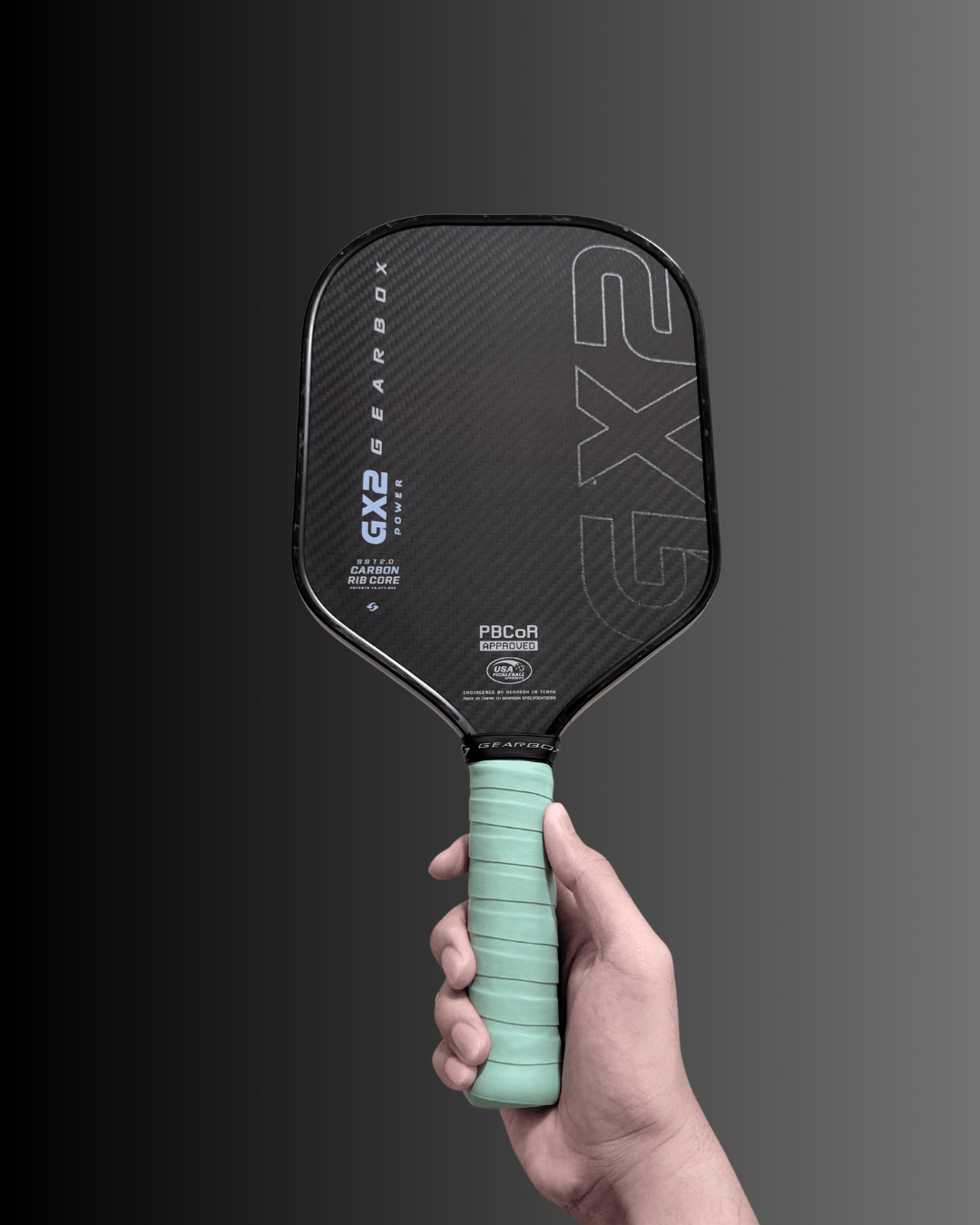
    Every few years, a paddle enters the market that shifts the conversation. The Gearbox GX2 is one of those releases. Marketed as being powered by SST 2.0 CarbonRibCore™, which Gearbox calls the next generation of paddle technology, the GX2 positions itself as a breakthrough in performance engineering.

    After extended court time, one thing is absolutely clear: this is hands down the most powerful paddle I’ve tested to date. Yes, even more powerful than the Selkirk Boomstick.

    But with extreme power comes trade-offs. The GX2 is not a plug-and-play control paddle. It demands time, adjustment, and often customization. For the right player, it’s a weapon. For others, it may feel overwhelming.

    Let’s break it down.

    Gearbox GX2 Specs

    SpecificationDetails
    Model NameGearbox GX2
    Core TechnologySST 2.0 CarbonRibCore™
    Construction TypeOne-piece molded carbon structure
    Thickness16 mm
    Face MaterialRaw Carbon Fiber with textured grit
    Weight RangeMidweight category (varies by batch)
    BalanceHead-responsive (power oriented)
    Play StylePower & drive-focused
    Power LevelExtremely High
    Pop LevelVery High
    Dwell TimeMedium to Low
    Spin PotentialHigh (especially on drives)
    Vibration FeelNoticeable due to stiff structure
    Recommended CustomizationTungsten tape & overgrip
    Best ForAggressive drivers, singles specialists, power-focused players

    Technology: SST 2.0 CarbonRibCore™ Explained

    Gearbox describes the GX2 as powered by SST 2.0 CarbonRibCore™, a continuation of its ribbed carbon internal structure. Unlike traditional honeycomb paddles or foam-dominant Gen 4 builds, the GX2 uses a carbon rib framework that creates exceptional rigidity.

    In my opinion, despite being positioned as next-gen tech, the feel resembles a refined Gen 3 paddle more than a plush Gen 4 foam build. The stiffness is immediately noticeable. The paddle feels solid, firm, and uncompromising on contact.

    That structural rigidity is precisely why it produces so much power, but it’s also why dwell time takes a hit.

    Dwell Time: The Trade-Off

    For a paddle in this class, dwell time needs improvement.

    The ball does not pocket deeply into the face. Instead, it rebounds quickly and aggressively. In hands battles at higher levels, this quicker release can reduce margin for error. Compared to modern foam paddles with extended dwell, the GX2 feels more explosive and less forgiving.

    If your game revolves around soft resets and prolonged pocketing, you’ll need adjustment time.

    Power & Pop: The GX2 Is a Cannon

    There is no soft way to say this: the Gearbox GX2 is a cannon.

    It delivers:

    • Explosive baseline drives
    • Crushing passing shots in singles
    • Devastating overhead put-aways
    • Aggressive counterpunch power

    Both power and pop are elevated. In fact, this combination can initially work against you. In fast kitchen exchanges, you may send more balls long than expected due to the paddle’s lively response.

    If you are power-hungry, this paddle is a no-brainer. It currently stands as the most powerful paddle I’ve tested.

    Spin Performance: Strong on Drives, Selective in Soft Game

    The raw carbon face produces excellent topspin on full drives. Heavy topspin forehands dip sharply, making passing shots extremely dangerous.

    However, the GX2 isn’t everyone’s cup of tea when it comes to delicate dinks and drop shots. Because of its stiffness and rebound speed, the soft game requires precise touch. Players who rely heavily on feather-light resets may need extra practice to dial in consistency.

    Vibration & Comfort

    Due to its stiff carbon structure, vibration is evident. It’s not harsh to the point of being unusable, but the feedback is firm and direct.

    I strongly recommend using a quality overgrip to soften impact feel and reduce shock. Players with arm sensitivity should approach cautiously, especially if they are used to foam-dominant paddles.

    Adjustment Period & Break-In Time

    The GX2 is not a paddle you master in one session.

    Expect:

    • At least one week of hitting to adjust
    • A break-in period as the paddle “opens up.”
    • A learning curve in hands battles

    You may initially hit more balls long due to its pop. Over time, as timing improves and touch recalibrates, the paddle becomes far more controllable.

    Customization: Tungsten Tape Is Highly Recommended

    If you are not naturally a heavy driver of the ball, recalibrating the GX2 with tungsten tape is strongly recommended.

    Strategic weighting can:

    • Improve stability
    • Enhance plow-through
    • Reduce erratic pop
    • Improve hand battle consistency

    Once properly weighted and broken in, the GX2 becomes a far more complete weapon.

    Singles & Doubles Performance

    One of the GX2’s biggest positives is versatility.

    In singles, it’s arguably unmatched. The depth, pace, and passing shot capability are elite-level.

    In doubles, once adjusted, it becomes a counterpunching machine. Quick reactions combined with raw power can end points abruptly. However, control-oriented doubles specialists may find the learning curve steeper.

    Power Paddle Comparison Table

    PaddleCore TypePowerPopDwell TimeSpinStiffness
    Gearbox GX2CarbonRibCoreExtremely HighVery HighMedium-LowHigh (drives)Very Stiff
    Selkirk BoomstickFoam HybridVery HighHighMediumHighMedium
    CRBN TruFoamFull FoamVery HighHighHighHighMedium
    Six Zero DBD PowerHoneycomb HybridHighMediumMedium-HighHighMedium

    Quick takeaway:
    If raw power is your number one priority, the GX2 leads the category.

    Who Should Buy the Gearbox GX2?

    The GX2 is ideal for:

    • Aggressive baseline drivers
    • Singles specialists
    • Power-first tournament players
    • Players comfortable customizing weight

    It may not suit:

    • Pure control players
    • Those sensitive to vibration
    • Players unwilling to go through an adjustment phase

    Final Verdict: A Power Player’s Dream

    The Gearbox GX2 is unapologetically powerful. Powered by SST 2.0 CarbonRibCore™, it delivers explosive pace unlike anything else currently available.

    Yes, dwell time could improve. Yes, vibration is noticeable. Yes, you will need time to adjust.

    But if you crave power: real, point-ending power, then this paddle delivers in a way few others can. It dominates singles, holds its own in doubles, and redefines what “power paddle” means.

    For players who want to overwhelm opponents rather than outmaneuver them, the GX2 isn’t just an option; it’s a statement.

    FAQs

    Is the Gearbox GX2 more powerful than the Selkirk Boomstick?
    Yes. In direct testing, the GX2 produces more raw power and pop.

    Does the GX2 have good dwell time?
    Dwell time is average to below average compared to foam-based Gen 4 paddles.

    Is it beginner-friendly?
    Not ideally. Intermediate to advanced players will benefit most.

    Should I add tungsten tape?
    Highly recommended, especially if you are not naturally a heavy driver.

    Is it arm-friendly?
    Due to its stiffness, vibration is noticeable. Players with arm sensitivity should use caution.

    Can my paddle return shots hit by the Gearbox GX2?
    Absolutely. At the end of the day, successful returns come down far more to player skill than paddle choice. While the Gearbox GX2 is heavily focused on power, modern pickleball paddles across the market each bring their own strengths and unique technologies. A powerful opponent paddle does not mean your current paddle is at a disadvantage. The real key is understanding your own playing strengths and choosing a paddle that helps you maximize them. With proper positioning, timing, and touch, you can effectively handle even the heaviest drives.

  • Detailed review of the Enhance Duo All Foam Paddle

    Detailed review of the Enhance Duo All Foam Paddle

    The all-foam (Gen 4) paddle wave has largely been defined by explosive power, extended dwell time, and oversized sweet spots. The Enhance Duo All Foam paddle takes a noticeably different approach. After extended court time, the Duo reveals itself as a Gen 4 build that often feels closer to a refined Gen 3 paddle in actual play.

    That isn’t necessarily a bad thing. While many foam paddles overwhelm players with raw power, the Enhance Duo leans toward pop, spin, and versatility. However, it also comes with trade-offs, particularly in dwell time and vibration management that serious buyers should understand before jumping in.

    At its current pricing of ₹16,100 in India, the Duo positions itself as one of the more accessible entries into the all-foam category, especially for players moving up from traditional honeycomb paddles.

    Enhance Duo All Foam Specs

    • Thickness: 16 mm
    • Core Construction: Full foam Gen 4 build
    • Face Material: Raw carbon fiber with textured grit
    • Construction: Thermoformed
    • Play Style: Pop + spin focused hybrid
    • Price (India): ₹16,100
    • Ideal Skill Level: Beginner to advanced

    Build Quality & First Impressions

    The Enhance Duo arrives with the clean, performance-first aesthetic that Enhance paddles are known for. The thermoformed body feels structurally sound, and the paddle gives a reassuringly solid impression in hand.

    One of the biggest positives early on is durability. After extended use, the surface grit holds up well, and the overall construction suggests this paddle is built to last longer than many foam-heavy competitors. That alone makes it appealing for players worried about rapid grit wear, a common complaint in the Gen 4 category.

    However, once you step on court, you quickly notice that the Duo does not behave like a typical power-focused all-foam paddle.

    Dwell Time & Feel: Where It Needs Improvement

    This is the most noticeable weakness.

    For a Gen 4 paddle, the dwell time is underwhelming. The ball does not sit on the face as long as many players expect from a foam-based build. Instead, the paddle produces a quicker rebound that feels more like a refined Gen 3 honeycomb paddle.

    In fast hands battles at higher levels, this reduced dwell time can make fine control slightly more challenging compared to the top-tier Gen 4 performers. Advanced players who rely heavily on prolonged pocketing may notice the difference immediately.

    That said, at the beginner to intermediate and even advanced club level, the limitation is far less punishing. Many players may actually appreciate the quicker response once they adapt.

    Spin Performance: A Clear Strength

    Where the Enhance Duo absolutely shines is spin generation.

    The textured raw carbon face produces excellent topspin on drives and particularly impressive bite on slice serves and returns. Heavy slice serves stay low and skid aggressively, giving players a real tactical advantage.

    During baseline exchanges, topspin drives come off the face cleanly with good shape. At the kitchen, roll dinks and spin resets remain effective.

    If your game relies heavily on spin manipulation rather than pure power, the Duo delivers strong value in this department.

    Power vs Pop: Understanding the Difference

    This paddle requires a mindset adjustment.

    Compared to most Gen 4 all-foam power paddles, the Enhance Duo offers:

    • Less raw power
    • More immediate pop

    That distinction matters. Instead of deep, heavy drives coming from effortless swing speed, the Duo produces a quicker, more reactive pop off the face. Early on, this can lead to a learning curve, especially in the soft game, where balls may float higher than expected.

    Players coming from plush control paddles will need time to recalibrate touch shots and resets. However, once you understand the paddle’s response profile, you can begin to harness its quick-fire characteristics effectively.

    Vibration & Comfort: A Word of Caution

    Vibration is more noticeable here than in many competing foam paddles.

    While not harsh, the feedback is clearly present, especially on off-center hits. Because of this, I strongly recommend using a quality overgrip to improve comfort and reduce shock transmission.

    Important note:
    If you already struggle with tennis elbow or arm sensitivity, this paddle would not be my first recommendation. There are more arm-friendly Gen 4 options currently available.

    Customization: Tungsten Tape Unlocks the Paddle

    To get the best version of the Enhance Duo, customization is key.

    Adding tungsten tape helps:

    • Increase stability
    • Improve plow-through
    • Reduce excessive pop
    • Enhance control in hands battles

    Like many modern paddles, the Duo improves noticeably once properly weighted. Players willing to experiment with tape placement will extract far more performance than those using it strictly stock.

    Singles & Doubles Versatility

    One of the Enhance Duo All Foam’s biggest strengths is its versatility across formats.

    In singles, the lighter-feeling response and spin potential help with passing shots and aggressive serves. In doubles, the pop and maneuverability make hand battles quick and reactive once you adjust to the dwell profile.

    Few paddles in this price bracket transition this comfortably between both formats, which adds meaningful value for players who compete in both.

    Durability & Surface Longevity

    A major positive is long-term confidence.

    The Engage Duo appears more durable than many all-foam paddles, particularly in terms of:

    • Surface grit retention
    • Edge integrity
    • Structural consistency

    For players concerned about foam paddles wearing out too quickly, this is one of the more reassuring builds in the category.

    Gen 4 All-Foam Paddle Comparison Table

    PaddleThicknessPowerPopDwell TimeSpinPrice
    Engage Duo All Foam16 mmMediumHighMedium-lowHigh₹16,100
    CRBN TruFoam16 mmVery highHighHighHigh₹25,000
    Six Zero Opal16 mmHighMediumHighHigh₹20,500
    Standout CF Absolute Black16 mmHigh (controlled)MediumHighHigh₹20,500

    Quick takeaway:
    The Engage Duo is the pop-and-spin value pick rather than the raw power leader.

    Who Should Buy the Engage Duo All Foam

    This paddle makes the most sense for players who want entry into the Gen 4 category without paying premium flagship prices. It suits beginners through advanced club players who value spin, pop, and versatility over maximum dwell time.

    Players who demand elite-level hand control or have existing arm sensitivity may want to look elsewhere.

    Final Verdict: A Value Sleeper With a Learning Curve

    The Engage Duo All Foam paddle doesn’t follow the typical Gen 4 script, and that’s both its strength and its weakness.

    It offers:

    • Excellent spin potential
    • Noticeable pop
    • Strong durability
    • Solid singles and doubles versatility
    • Very competitive pricing in India

    But it also brings:

    • Underwhelming dwell time for a foam paddle
    • Less raw power than category leaders
    • Noticeable vibration
    • A short adjustment period

    For beginner to advanced club players, the Duo is genuinely an absolute steal at ₹16,100. For high-level tournament players who rely heavily on extended dwell in hands battles, the limitations may be more apparent.

    Either way, once properly weighted with tungsten and given time to understand its personality, the Engage Duo reveals a surprisingly capable and durable all-foam option.

    FAQs

    Is the Engage Duo a true Gen 4 paddle?
    Yes, it features full foam thermoformed construction, though its on-court feel is closer to a refined Gen 3 paddle.

    How is the dwell time compared to other foam paddles?
    Below average for the category. The ball releases quicker than most Gen 4 competitors.

    Is the spin really good?
    Yes. Topspin drives and especially slice serves and returns are standout strengths.

    Does it have strong power?
    It has less raw power than many all-foam paddles but delivers noticeable pop.

    Should I add tungsten tape?
    Highly recommended. Proper weighting significantly improves overall performance.

    Is it arm-friendly?
    Not the most. Vibration is noticeable, so players with tennis elbow should be cautious.

  • Detailed review of the Standout CF4 Nxt Gen Paddle

    Detailed review of the Standout CF4 Nxt Gen Paddle

    The all-foam paddle category has quickly become one of the most talked-about innovations in pickleball. Gen 4 construction promised bigger sweet spots, more power, and modern performance, but in reality, many of those paddles lean heavily toward raw pop and sacrifice feel. After extensive court time with the Standout CF Absolute Black Fully Foam, it’s clear this paddle takes a different path.

    Rather than chasing overwhelming power, the Standout CF Absolute Black focuses on balance. It combines foam perimeter construction with a narrow-cell polypropylene honeycomb core, creating a hybrid structure that feels controlled yet explosive when needed. At $220, it also positions itself as one of the more reasonably priced Gen 4 all-foam paddles on the market.

    For players searching for a power-and-control hybrid in the all-foam category, this paddle deserves serious attention.

    Standout CF Absolute Black Specs

    • Thickness: 16 mm
    • Core Construction: Narrow-cell polypropylene honeycomb + full foam perimeter
    • Face Material: Raw carbon fiber with textured grit surface
    • Build Type: Thermoformed Gen 4 construction
    • Edge Composition: EVA foam perimeter reinforcement
    • Target Skill Level: Intermediate to advanced / tournament ready
    • Price: $220

    Construction & Design: Not Your Typical All-Foam Build

    At first glance, the Absolute Black looks clean and minimal, but the real story lies beneath the surface. Most all-foam paddles rely almost entirely on foam density to generate power and enlarge the sweet spot. The Standout CF takes a more engineered approach by integrating narrow polypropylene honeycomb cells within its 16 mm profile.

    This narrow-cell design significantly increases sweet spot consistency. Instead of feeling “hot” in certain areas and dead in others, the paddle delivers a more uniform response across the face. Off-center shots maintain depth and stability better than many pure foam builds. That consistency becomes noticeable during fast kitchen exchanges and counter battles.

    The EVA foam perimeter adds reinforcement along the edges, increasing stability while also contributing to vibration dampening. Overall build quality feels tight and durable, no loose edge guard feel, no hollow vibration, and no signs of premature breakdown after extended play.

    Dwell Time & Feel: Controlled Contact That Inspires Confidence

    One of the most impressive aspects of the Standout CF Absolute Black is its dwell time. The ball sits on the face just long enough to provide feedback without feeling mushy. That balance is difficult to achieve in a Gen 4 paddle.

    The combination of foam support and narrow honeycomb core gives this paddle a connected feel. When hitting third-shot drops, resets, or soft dinks, you don’t feel like you’re fighting excess trampoline effect. Instead, the contact feels deliberate and controlled.

    Players who have struggled with overly reactive all-foam paddles will immediately appreciate how predictable this one plays. It doesn’t punish you for soft touch shots, and it doesn’t overlaunch when you’re simply trying to reset the point.

    Spin & Surface Grit Performance

    The raw carbon fiber face features a strong textured grit that performs well in real match scenarios. Topspin drives bite effectively, allowing aggressive baseline players to generate heavy rotation without overswinging.

    During kitchen exchanges, the grit helps with roll volleys and sharp crosscourt dinks. Aggressive dinking becomes a real weapon with this paddle because the spin allows you to push opponents back without sacrificing margin.

    Unlike some textured surfaces that wear down quickly, the grit on the Absolute Black has held up well under extended use. Spin production remains consistent and usable rather than gimmicky.

    Power & Pop: EVA Foam Adds Purposeful Punch

    The EVA foam perimeter plays a key role in delivering controlled power. The Standout CF Absolute Black does not feel like a pure power cannon, but when you accelerate through the ball, it responds with authority.

    Counters feel solid. Speed-ups have bite. Put-aways at the kitchen carry enough pop to finish points cleanly. What separates this paddle from many other all-foam builds is that it doesn’t feel uncontrollably explosive. The power shows up when you swing for it, not when you’re simply trying to dink.

    This makes it one of the rare Gen 4 paddles that can genuinely claim to offer both power and control.

    Vibration Dampening & Comfort

    Vibration dampening is another area where this paddle quietly excels. The foam perimeter combined with the honeycomb core absorbs shock effectively. Contact feels muted without feeling dull.

    Long sessions remain comfortable, and blocking heavy drives doesn’t create harsh feedback in the hand. Players sensitive to paddle vibration will likely find this build forgiving and stable.

    Customization: Unlocking Maximum Performance

    Out of the box, the Standout CF performs well. However, to unlock its full potential, I highly recommend adding tungsten tape.

    My tested setup included:

    • One strip at the head
    • Two strips near the lower throat

    This adjustment improved plow-through, stability during counters, and finishing power. The added weight distribution enhances the paddle’s already balanced nature, making it even more tournament-ready.

    For players serious about maximizing performance, customization is worth the effort.

    Durability & Long-Term Outlook

    Durability is often a concern in the all-foam paddle category. After extended play, the Absolute Black shows strong early signs of longevity. There are no visible edge deformations, no excessive surface wear, and no noticeable core breakdown.

    At $220, it positions itself as one of the better-valued premium Gen 4 paddles currently available. Considering performance and construction quality, it feels competitively priced within the evolving all-foam market.

    Best Paddles to Compare With

    If you’re evaluating the Standout CF Absolute Black, these paddles make the most relevant comparisons:

    • CRBN TruFoam series
    • Six Zero Opal
    • J2CR All Foam models
    • Gearbox Pro Power series

    These paddles represent the closest competition in the hybrid or foam-dominant performance category.

    Gen 4 All-Foam Paddle Comparison Table

    PaddleThicknessCore TypePowerControlSweet SpotPrice
    Standout CF Absolute Black16 mmNarrow honeycomb + foamHigh (controlled)HighLarge & stable$220
    CRBN TruFoam16 mmFull foamVery highMediumLarge but reactive~$230
    Six Zero Opal16 mmFoam dominantHighMedium-highLarge~$240
    J2CR All Foam16 mmFull foamVery highMediumLarge~$230

    The biggest difference is balance. While most all-foam paddles prioritize raw power, the Standout CF Absolute Black leans into usable power and soft-game reliability.

    Who Is the Standout CF Absolute Black For?

    This paddle is ideal for aggressive all-court players who want modern Gen 4 performance without losing touch at the kitchen. Intermediate to advanced players competing in tournaments will appreciate its versatility.

    If you prefer extreme, overpowering paddles, you might lean toward more foam-dominant options. But if you want a hybrid feel that offers both finishing power and dependable control, this paddle fits beautifully.

    Final Verdict: A Sleeping Giant in the All-Foam Category

    The Standout CF Absolute Black Fully Foam paddle does not rely on loud marketing. Instead, it delivers refined performance where it matters most: sweet spot consistency, spin generation, controlled power, and durability.

    In a market filled with power-first Gen 4 paddles, this one stands out because it doesn’t force you to choose between pop and precision. It offers both in a well-balanced 16 mm frame that can absolutely compete at the tournament level.

    Sometimes the biggest brands dominate the headlines, but discovering paddles like this is what makes reviewing gear worthwhile. The Standout CF Absolute Black is a genuine sleeper pick in the all-foam paddle category, and it deserves more recognition.

    FAQs

    Is the Standout CF Absolute Black a true Gen 4 paddle?
    Yes. It features thermoformed construction with foam perimeter reinforcement, qualifying it as a Gen 4 all-foam style build.

    How does it compare to full foam paddles like CRBN TruFoam?
    It offers slightly less raw pop but significantly more control and predictability in the soft game.

    Does it require tungsten tape?
    It plays well stock, but adding tungsten tape noticeably improves stability and plow-through.

    Is the spin performance strong?
    Yes. The textured carbon face delivers reliable topspin on drives and aggressive dinks.

    Is it durable compared to other foam paddles?
    Early signs indicate strong durability with solid edge integrity and sustained surface grit.

  • Detailed review of the SLK Dauntless Paddle

    Detailed review of the SLK Dauntless Paddle

    The all-foam paddle wave is no longer coming; it’s already here. With brands pushing Gen IV foam builds as the future of pickleball tech, Selkirk’s SLK line has officially entered the chat with the SLK Dauntless. On paper, it promises dwell time, forgiveness, and all-court versatility. On court, after 10 days of use, the story is a bit more nuanced, in a good way.

    I spent the first two days strictly drilling with the Dauntless because right out of the box, the paddle felt noticeably stiff and a bit muted. That’s fairly common with denser foam constructions, but it’s worth mentioning because the paddle you feel on day one is not the paddle you’ll be playing with a week later. Once the face started to open up, the Dauntless settled into its true personality: controlled, composed, and very confidence-friendly.

    The simplest way to describe it? Think of it as a more controlled version of the Selkirk Boomstick, but absolutely not a power replacement. Would I call it a cheaper version of the Boomstick? Yes, I would.

    FeatureDetails
    Paddle TypeGen IV All-Foam
    CoreFull foam construction
    FeelPlush after break-in
    PowerLow–Medium
    ControlHigh
    Dwell TimeHigh (similar to SLK Era)
    Sweet SpotForgiving
    Target PlayerBeginner to Advanced
    Play StyleAll-court

    How It Played (10-Day Court Experience)

    After the initial stiffness wore off, the Dauntless started to make a lot more sense. The dwell time is the first thing that stood out. It’s very similar to the SLK Era, which, for context, is currently my paddle of choice, and that familiarity made the transition fairly smooth once the paddle broke in.

    In the soft game, the Dauntless is steady and predictable. Drops were easy to place, resets felt forgiving, and dinks stayed relatively low without that jumpy pop you sometimes get from livelier thermoformed paddles. If your game involves a lot of kitchen work, this paddle gives you the confidence to play patient points.

    Power, however, is not the headline feature here. Drives have enough depth to be effective, but if you’re expecting Boomstick-level pop, you’ll be disappointed. The Dauntless clearly leans toward control first, power second. Personally, I didn’t mind that trade-off because it made the paddle much easier to manage during fast exchanges and transition play.

    What did surprise me slightly was how comfortable it felt in hand battles. For an all-foam build, it holds up well in quick firefights. I even managed to hit a clean Erne during testing, not the easiest shot to execute consistently at the 4.5 level. The contact felt crisp and confident, and the point ended immediately in my favor. Moments like that are where you start to trust a paddle.

    The Adjustment Factor (Especially From Gen 3)

    If you’re moving from a Gen 3 paddle, expect a short learning curve. Early on, you may see a few higher-than-usual drops or slightly floaty dinks. That’s mostly timing and feel adjustment with the foam construction.

    From what I experienced, beginner and intermediate players may need a few sessions to fully dial it in. Advanced players, on the other hand, will likely adapt much faster and start extracting the control benefits almost immediately.


    Build Quality and Durability

    Selkirk’s manufacturing consistency shows here. The paddle feels well put together, the face texture is holding up fine after the first stretch of play, and there are no early red flags with the foam.

    It’s still early for long-term durability claims, but initial signs are positive. Add Selkirk’s customer service reputation into the mix, and the Dauntless comes across as a relatively safe buy in the all-foam category.

    Price Reality Check

    If I’m being honest, the sweet spot for this paddle would have been around $150. That said, spending roughly $30 more for Selkirk’s warranty support and brand trust isn’t unreasonable, especially for players who value after-sales service and peace of mind.

    All-Foam Paddle Comparison

    Here’s where the Dauntless currently sits among other popular all-foam options.

    PaddlePowerControlFeelForgivenessBest Fit
    SLK DauntlessLow–MedHighPlush after break-inHighBalanced all-court
    CRBN All FoamMediumHighCrisp-plushMedium-HighCompetitive control
    Six Zero OpalMediumMedium-HighLivelyMediumAggressive all-court
    J2CRMedium-HighMediumFirmerMediumDrive-leaning players

    In simple terms, the Dauntless is probably the most control-leaning paddle of this group. If your game is built around patience, placement, and kitchen consistency, it makes a strong case for itself.

    Who This Paddle Is Really For

    The Dauntless makes the most sense for players who don’t want to choose between soft-game confidence and the ability to speed things up when needed. If you’re the type who enjoys long dink exchanges but isn’t afraid to jump into hands battles or mix in drives, this paddle fits that balanced identity very well.

    Where it may fall short is for pure power hitters or singles players who rely heavily on put-away pace. There are simply hotter paddles in that category.

    Final Thoughts

    Selkirk didn’t try to overpower the all-foam market with the Dauntless. Instead, they built something far more measured, a paddle that rewards control, patience, and smart all-court play.

    After the brief break-in period, the Dauntless becomes easy to trust. The dwell time is excellent, the forgiveness is real, and the overall feel settles into that familiar Selkirk comfort zone. For players who felt the Boomstick was a bit too hot or who want a foam paddle that doesn’t feel wild, the Dauntless is a very sensible option.

    It may not be the flashiest all-foam paddle on the market, but it quietly does a lot of things right, and for many players, that’s exactly the point.

    Rating: 4.3 / 5

    FAQ’s

    Does the SLK Dauntless require a break-in period?
    Yes. Expect some initial stiffness. After roughly 6–10 hours of play, the face becomes noticeably more responsive.

    Is the Dauntless suitable for beginners?
    Yes, though beginners coming from Gen 3 paddles may need a short adjustment period with drops and dinks.

    How does it compare to the Boomstick in power?
    The Dauntless is clearly more control-oriented and does not deliver the same level of pop as the Boomstick.

    Is this paddle good for fast-hand battles?
    Surprisingly, yes. Despite the foam construction, it holds its own well in quick exchanges.

    Who benefits most from the Dauntless?
    All-court players from roughly 3.5 to 5.0 who value control, dwell time, and consistency over raw power.