Category: Paddle Review

Find the perfect paddle for your play style by exploring in-depth reviews, comparisons, and expert insights to help you choose the best suited paddle just for you.

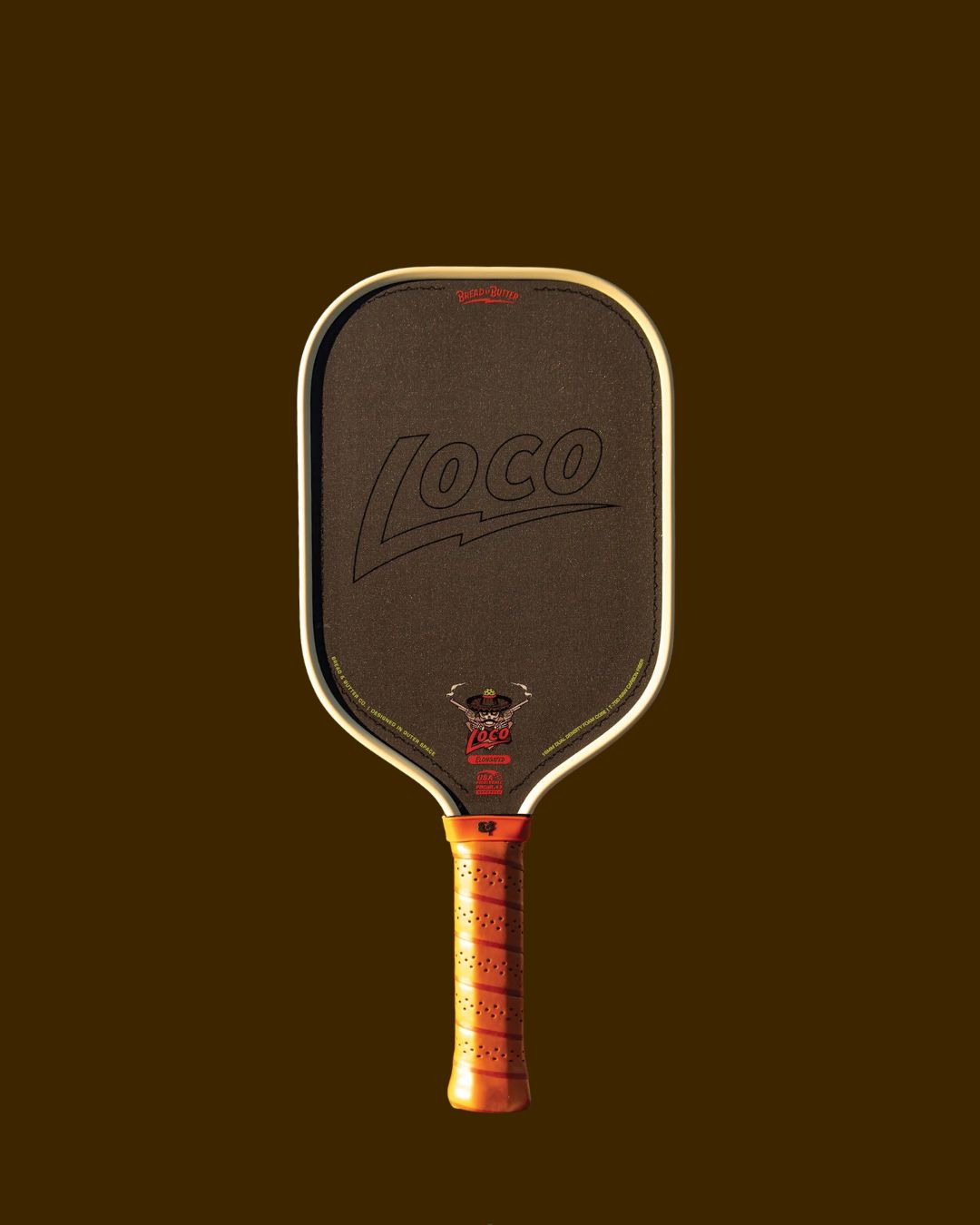
  • Detailed review of the Bread & Butter Loco Paddle

    Detailed review of the Bread & Butter Loco Paddle

    Every now and then, a paddle enters the pickleball world that forces players to pause, rethink, and recalibrate what they thought they knew about power paddles. The Bread & Butter LOCO has quickly become one of those paddles. On paper, it already stands out—full EPP foam core, EVA foam perimeter, and three distinct shapes (Elongated, Hybrid, and Widebody), giving players options depending on how they construct their game. But after spending hours drilling, testing, and matching up against players using their preferred weapons, I realized this paddle has much more depth than the marketing claims.

    As a coach, I always tell players that a paddle should fit you, not the other way around. The LOCO is interesting because at first, it feels unapologetically powerful and similar to the Boomstick, but with a more nuanced touch once it breaks in. During my first 2-hour drill session, the paddle felt noticeably stiff and very lively off the face. However, by session number three, the feel mellowed out and the foam core opened up beautifully. That’s when the controlled drives, buttery drops, and consistent resets started coming alive. I felt like the paddle went from “well this is a bit rigid” to “okay, now we’re cooking” over the course of about 6 total hours of hitting.

    One thing that instantly caught my attention was how maneuverable the LOCO feels. Despite being a full-foam build, something that usually increases swing weight, the twist weight is quite easy on the wrist. Even during fast hands exchanges, I was matching blow-for-blow against players using their regular paddles. This surprised me because generally full-foam paddles tend to feel bulkier in hand but this one somehow don’t.

    However, the one drawback I personally noticed was dwell time. The LOCO has more dwell time than I typically prefer in a hand battle. While this helps with control and shapes your soft game beautifully, in rapid exchanges it sometimes made me feel a half-step behind. Due to this I had to recalibrate my swing path and timing which caused some unforced errors at first (Yes, im blaming the paddle.) But when I asked power players those who hit big drives to try this paddle, they did not find any lack of pop due to dwell time. In fact, they mentioned that unlike other foam paddles, the LOCO doesn’t need tungsten tape at the head or near the sweet spot to unleash its full potential.

    But me being a control-oriented player, I always add tungsten tape at the throat of any power paddle so I did the same with the Loco as well. Through this customization I noticed improved stability, and I was also able to generate the right amount of counter-punching ability without sacrificing maneuverability. So my conclusion is that power players may love the stock setup, control-first players might prefer a bit of customization.

    Overall, the Bread & Butter LOCO is an exciting addition in the ‘Power Paddles,’ segment and at $200 it is in my opinion quite reasonably priced . It’s explosive, highly customizable, and available in shapes that allow players to tailor the paddle to their game. If you are looking for a paddle similar to the as the Boomstick or the Gearbox GX2 then the LOCO deserves a test hit at the very least.

    Bread & Butter LOCO Paddle Specs Comparison

    FeatureElongated LOCOHybrid LOCOWidebody LOCO
    ShapeLongest reach, best for drivesBalanced length + widthLargest sweet spot
    Core ConstructionFull EPP foam + EVA perimeterFull EPP foam + EVA perimeterFull EPP foam + EVA perimeter
    Power★★★★★ (Maximum)★★★★☆★★★★☆
    Control★★★☆☆★★★★☆★★★★★
    Spin PotentialHighHighModerate–High
    ManeuverabilityVery goodExcellentGood
    Sweet Spot SizeMediumMedium–LargeLargest
    Best ForAggressive countering, singles, hard drivesAll-court players, doublesControl players, blockers, defenders

    Please Note: I personally only tested the elongated version of the BnB Loco, for the hybrid and widebody versions I asked around in my network for the data, the data displayed on this table is consistent with 7 opinions which is why I can publish it. If any one of you would like for a detailed paddle review do reach out at homeforpickleball@gmail.com

    Bread & Butter LOCO Paddle Specs (Elongated)

    Power

    If you want power, this paddle delivers it without hesitation. The combination of EPP core and EVA foam perimeter creates a trampoline-like rebound that feels very similar to the Boomstick but with a slightly more predictable response once broken in. The Elongated version, in particular, hits like a hammer.

    Control

    Control comes alive after the break-in period. Once the stiffness settles, the foam engages more consistently and the paddle becomes surprisingly touch-friendly. By session number three, my drops, resets, and dinks were landing exactly where I wanted. I was able to alter between dead dinks and topspin dinks at will.

    Spin

    The raw surface combined with longer dwell time makes the LOCO a top-tier spinner. Rolls, topspin drives, and dipping counters are easy to generate.

    Maneuverability

    A big highlight. The paddle swings lighter than most full-foam builds. Even in the Elongated shape, the twist weight is tuned tightly enough to allow fast exchanges and reactive blocks.

    Durability

    Bread & Butter paddles have generally held up well long-term, and the LOCO feels no different. Foam paddles can be prone to early breakdown, but this one shows no signs of softening too quickly.

    Selkirk BoomStick vs Gearbox GX2 vs Bread & Butter LOCO – Spec Comparison Chart

    SpecSelkirk BoomStickGearbox GX2Bread & Butter LOCO
    Weight Range227–235 g224–230 g224–230 g
    Core TypePolypropylene Honeycomb3K Carbon w/ Patented SST Core (Solid Span Technology)EPP Foam Core + EVA Foam Perimeter (Full Foam)
    Face MaterialRaw QuadCarbon FaceToray T-700 Carbon FiberRaw Carbon Fiber
    Paddle ShapeElongatedTraditional / Control ShapeElongated, Hybrid, or Widebody
    Length17 in16.5 inVaries by shape (typically 16.3–17 in)
    Width~7.4 in~7.375 inWidebody ~8 in, Hybrid ~7.6 in, Elongated ~7.4 in
    Grip Length5.75 in~5.5 in~5.3–5.5 in depending on shape
    Grip Circumference4.25 in4 in (smaller profile)4.25 in
    Swingweight~125–128~113–116~118–121 (varies by shape)
    Twistweight~6.5–7.5~5.8–6.2~6.0–7.0
    Power Rating⭐⭐⭐⭐⭐ (Very High)⭐⭐⭐⭐☆ (High)⭐⭐⭐⭐⭐ (Very High)
    Control Rating⭐⭐⭐⭐☆⭐⭐⭐⭐⭐⭐⭐⭐⭐☆
    Spin Potential~1,900–2,000 RPM~1,900–2,100 RPM~1,800–2,000 RPM
    Notable FeatureMassive power + longest reachOne-piece molded core + consistent feelFull-foam core for max pop + adjustable feel after break-in
    Break-In TimeMinimalNone needed (solid core)4–6 hours of drilling
    Ideal ForPower players, Bangers, SinglesControl players, Precision hittersPower players, foam-core lovers, hybrids who want power + forgiveness

    FAQs About the Bread & Butter LOCO Paddle

    Is the LOCO good for beginners?

    It can be, but it’s designed primarily for intermediate to advanced players who want power and shaping ability.

    Which LOCO shape should I choose?

    • Elongated → Maximum reach & power
    • Hybrid → Balanced power and control
    • Widebody → Largest sweet spot & best soft game

    Does the LOCO need lead or tungsten tape?

    Power players generally say no, but control players may benefit from adding tungsten at the throat, not the head.

    How long does the LOCO take to break in?

    Around 5–6 hours of drilling. It starts stiff but becomes more consistent and soft-feeling with time.

    Is this similar to the Boomstick?

    Yes, in terms of raw power and foam construction. But the LOCO feels slightly more maneuverable.

    Is the LOCO good for hand battles?

    It’s solid, but the dwell time may feel long for some players. If you rely heavily on fast counters, you may prefer adding weight.

    Does the LOCO come in 14 mm thickness?

    No, the BnB Loco only comes in a “16mm” model for all its shapes the elongated, widebody and hybrid.

    Does the Bread & Butter LOCO paddle come with a warranty?

    Yes, the Bread & Butter generally offers a limited manufacturer warranty on their paddles (including the LOCO), covering defects in materials and workmanship. However, coverage terms (such as duration and what counts as a defect) may vary depending on where you purchase it, so it’s best to check with the retailer or the official Bread & Butter website for the exact warranty details before buying.
  • Detailer review of the Selkirk SLK Era Power Paddle

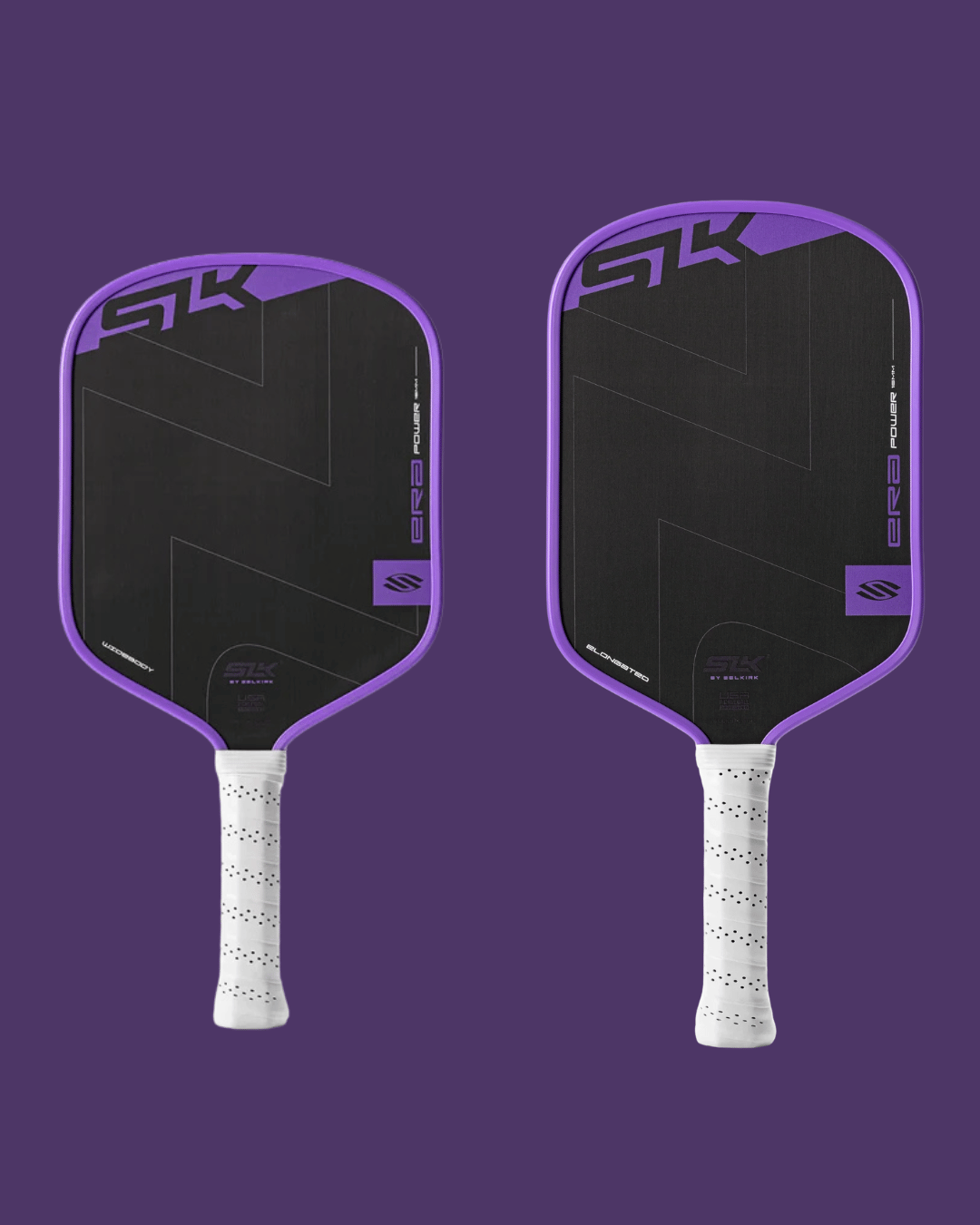
    Detailer review of the Selkirk SLK Era Power Paddle

    If you’ve been around my blog for a while, you already know I’ve always leaned toward control paddles. I like feeling the ball linger on my paddle just a little longer, shaping each shot like I’m painting strokes on a canvas. So when I first picked up the SLK Era Power, I was not expecting to fall for it the way I did, however, just a couple of sessions with the paddle had me sold. Personally, I will be using the paddle in a few upcoming tournaments as well.

    First Impressions

    Right out of the box, the Era Power felt solid and not overly head-heavy, but with enough swing weight to give my drives some serious pop. The carbon face gives it that crisp, confident sound when you connect cleanly, and I immediately noticed how easily I could drive through the ball without losing control.

    If you’ve played with softer paddles before, you’ll likely appreciate how SLK has found a middle ground here. You’ll find there’s power when you want it, but enough feedback to keep your touch shots in check.

    Power With Purpose

    The drives are where the SLK Era Power truly shines. The paddle gives you that little extra “pop” without requiring you to swing harder it feels like the paddle itself wants to help you finish the point. My overheads, in particular, started landing with more speed and bite. It’s one of those paddles that makes you feel rewarded for stepping in aggressively.

    On the backhand punches, I noticed a distinct jump in pace. The ball just springs off the face faster, and those quick exchanges at the kitchen become easier to win.

    That said, the extra power means you’ll need to recalibrate your soft game. My first few dink battles were honestly a mess since I was overshooting a bit and struggling to control the touch. But after a few sessions, once I found my rhythm, I could add extra spin and revs to my dinks. Once those aggressive roll dinks started dipping right at my opponents’ feet I really began to appreciate what this paddle could do.

    Customization Tip: Add Lead Tape Near the Handle

    As a player I have always preferred a more controlled feel, hence I applied a bit of lead tape near the handle, and it completely changed the balance. The paddle felt more stable on blocks and softer on resets. For anyone transitioning from a control paddle, I strongly recommend this tweak as it keeps the power while giving you the familiar balance that you are used to.

    Who This Paddle Is For

    The SLK Era Power is ideal for players who are ready to step up from a control-oriented setup but aren’t ready to go full throttle into a raw power paddle. It rewards clean technique, quick reflexes, and confidence in your offensive shots, but it still gives you the finesse you need in longer rallies.

    If you love playing aggressive doubles and enjoy finishing points with authority, this paddle will feel like a natural extension of your hand.

    Final Thoughts

    The SLK Era Power isn’t just about hitting harder, it’s about hitting smarter. Once you dial in the touch, this paddle becomes an all-court weapon. From explosive drives to rolling dinks, it’s arguably one of the most versatile options for intermediate to advanced players looking to find that sweet balance between control and power.

    Would I recommend it? Absolutely. Especially if you’re coming from a control paddle background like me, just add a little lead or tungsten tape near the handle and let this beauty do its work.

    Comparison Chart: Black Opal vs ERA Power vs Perseus Pro IV

    PaddleCore / ConstructionTypical SpecsBest ForConsiderations
    Six Zero Black OpalFull-foam or advanced foam core, textured face for spin/control(14 mm version) premium build, balanced weightPlayers wanting a mix of control + pop, upgrading from beginner gearPremium price, may require clean technique to fully benefit
    SLK ERA PowerDynamic Fusion Core (polypropylene + EVA foam) + 3-layer face of T700 raw carbon/fiberglassWeight ~7.9–8.4 oz, core thickness ~16 mm in many versions, two shapes (Elongated & Widebody) (Pickleball Warehouse)Intermediate to advanced players who hit drives, want pop + versatilitySlight learning curve in soft game; aggressive style benefits more
    JOOLA Perseus Pro IVAdvanced carbon friction surface + hybrid core constructionTop tier specs, higher price pointAttack-oriented players, spin/drive-specialistsLess forgiving if your technique is inconsistent; cost is high

    Key takeaway:

    • If you’re shifting from basic gear and want a all-round upgrade, Six Zero Black Opal is strong.
    • If you’ve moved toward driving, finishing points and want a paddle that supports that style, SLK ERA Power fits very well.
    • If you’re already high level and want near-elite performance with spin/power focus, Perseus Pro IV is the match.

    FAQs for the SLK ERA Power Paddle

    What core thickness does the SLK ERA Power use?
    The ERA Power is available in 16 mm core thickness in many of its versions (especially the Widebody) which gives a thicker feel and more “meat” behind the hit.

    What shapes does the ERA Power come in?
    It comes in at least two shapes: Elongated (for extra reach/power) and Widebody (for a larger sweet spot and more forgiveness).

    What is the typical weight range for this paddle?
    Specs list weight ranges around 7.9 oz to 8.4 oz depending on model/shape.

    How did I find the paddle’s performance for drives and overheads?
    In my use, I found the ERA Power gave noticeably more “pop” on drives and faster overhead finishes, the paddle communicated that extra speed and bite.

    How did it feel in dink exchanges / soft game?
    Initially it took me some time to adapt in dink battles because the paddle is more power-oriented. Once I settled in, I could use it to roll aggressive dinks and add more revs, making my opponents hesitate.

    Does it work for a player coming from a control paddle background?
    Yes, if you are coming from a control paddle, you’ll benefit from the power the ERA Power offers, but you may want to adjust your soft-game and strikes. Also adding lead tape near the handle (as you did) can help fine-tune the feel.

    Can I customize the weight/balance of the paddle?
    Yes, the manufacturer and user community suggest you can apply lead or tungsten tape (especially near the handle/perimeter) to alter swing weight and balance.

    How forgiving is the paddle on off-center hits?
    The Widebody shape version in particular is noted for having a larger sweet spot and better forgiveness on off-center hits thanks to its Dynamic Fusion Core design.

    What level of player is this paddle best for?
    It’s best suited for intermediate to advanced players who are comfortable with clean strikes, drives, and want a paddle that delivers power + spin. If you’re still heavily relying on arm/wrist-only shots, you might not yet unlock full benefit.

    Is the paddle approved for tournament play?
    Yes the SLK Era is USAPA/APP approved for tournament use. Both, the widebody and elongated shape are approved.


  • Detailed review of the Six Zero Black Opal

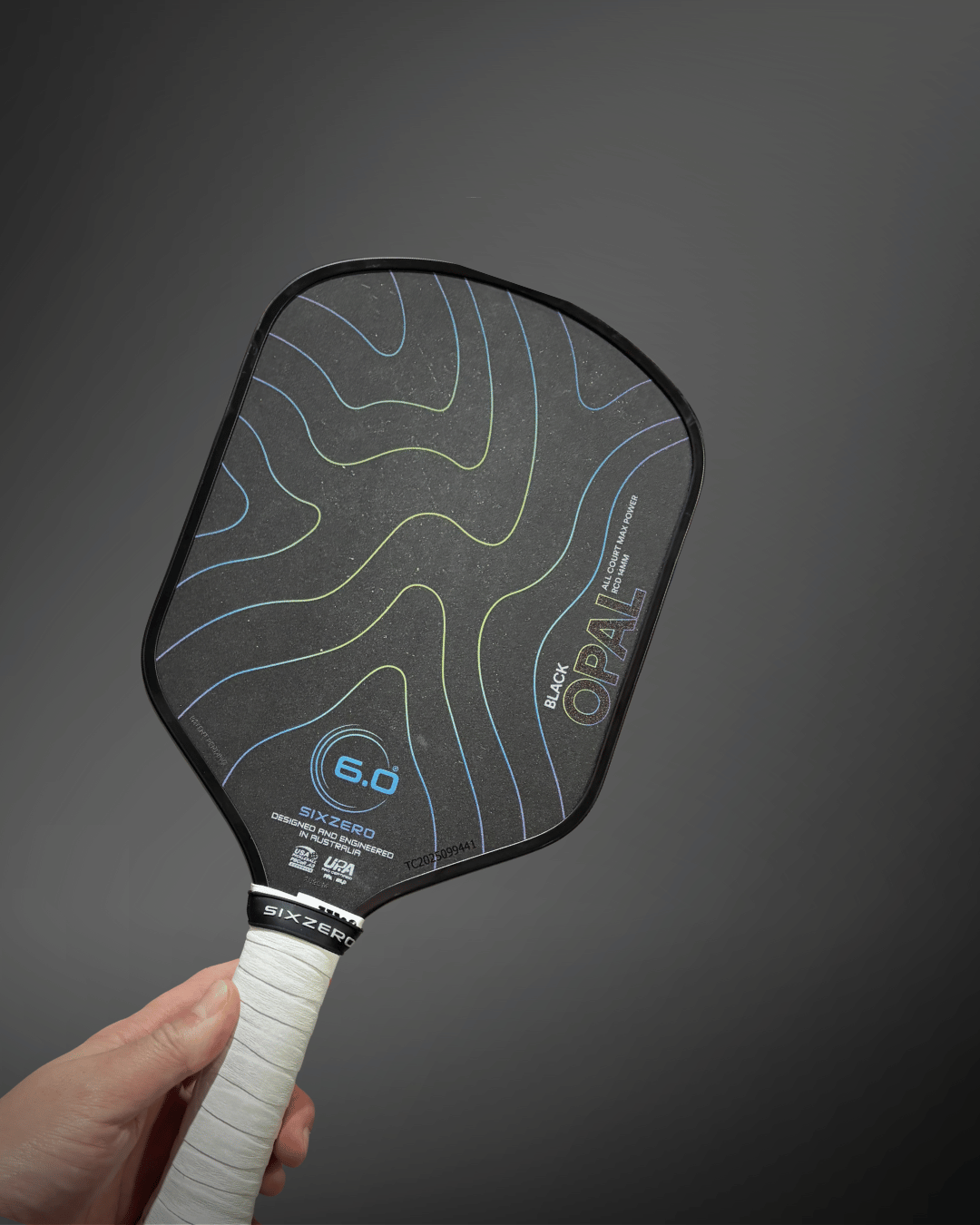
    Detailed review of the Six Zero Black Opal

    As someone who came to pickleball without a racket-sport background (yes, that’s me!), I’m always on the lookout for gear that helps me “feel” the game better. After spending several sessions with the Six Zero Black Opal paddle in my hands, here’s what I found and how it stacks up to my expectations.

    First Impressions: Looks & Feel

    Straight out of the gate, the Black Opal stood out. The matte black finish with subtle iridescent accents gave it a premium look no flashy graphics screaming “look at me,” just clean and sleek. The weight felt nicely balanced in my hand, and the grip size suited my palm well without feeling bulky.

    Because I’m still refining my strokes, grip comfort matters a lot. The grip on the Black Opal felt slightly more cushioned than some entry-level paddles I’ve tried, and that extra comfort translated into less wrist tension during longer rallies.

    On-Court Performance

    Control & Touch

    One of my biggest takeaways: the paddle gave me excellent control. During soft exchanges near the NVZ line, I noticed I could place the ball where I wanted rather than just lumping it deep. For players like me who are still mastering placement over sheer power, that is a big win.

    Power & Pop

    Now, I didn’t become a monster server overnight, but I did feel more pop than I expected for a paddle in this category. When I rotated my body and used my legs (yes, I remembered Tip #1), I could feel the paddle respond with a crisp hit. The Black Opal rewarded good motion it wasn’t “forgiving to sloppy swings,” but that’s not necessarily bad if you’re on the learning curve and want to improve your mechanics.

    Spin & Versatility

    The slightly textured face of the paddle gave me the ability to add a bit more spin than my previous gear. On drives and returns I could feel the difference. While I wouldn’t call it a dedicated “spin machine,” it’s definitely better than many basic paddles. If you’re working toward more advanced shots, this is a nice bonus.

    What I Liked Most

    • Balanced performance: Great mix of control + pop.
    • Comfortable grip: Less fatigue during longer sessions.
    • Premium build aesthetic: Looks as good as it feels.
    • Progress-friendly: I felt like my weaknesses were highlighted—meaning I learned more, not just got an “easy” paddle.
    • Final Verdict

    Comparion with arguably the most common competitors

    While I do not own all three paddles (as of yet!), I borrowed the paddles on seperate occasions, from my friends/slash players who have been using the paddles for a good 3-4 months. I played with each paddle for a week and came up with this comparison. I should also mention that each paddle was modified by my friends, for eg: overgrips of different companies and lead tape.

    PaddleSpecs / MaterialsBest ForTrade-Offs
    Six Zero Black OpalReported weight: ~8.0-8.3 oz
    Core: Full-foam floating core, “G4” / advanced foam layer Surface: Diamond Tough™ texture designed for spin/precision
    Players ready to upgrade beyond basic gear, seeking a paddle that offers both spin and pop with premium feel.Premium price. Because the build rewards good mechanics, if your technique is still very basic you might not unlock its full advantages yet.
    SLK ERA PowerWeight: ~8.0-8.4 oz depending on shape
    Core: 16 mm polypropylene + EVA foam (in many versions) Face: High-end carbon fiber (T700 in widebody version)
    Intermediate to advanced players who want strong power-oriented performance with good tech and two shape options (Widebody vs. Elongated) to match playing style.Because it’s designed for power, control at the kitchen line or in tight soft-game situations may require more finesse. Also slightly heavier feel for players accustomed to ultra-light paddles.
    JOOLA Perseus Pro IVWeight: ~7.9–8.1 oz depending on thickness (14 mm or 16 mm) Core: Polypropylene with dual-layer foam (varies by version)
    Surface: Textured carbon fiber friction surface built for pop/spin
    Players who love aggressive attacking, drives and spin and are comfortable with a paddle that can deliver serious pop.Less forgiving if your timing or technique is inconsistent; may be more paddle than needed for someone focused mainly on control or that soft game.

    How to Use This Comparison

    If you’re an attack-focused player, want max pop and spin, and are comfortable with less forgiveness: the JOOLA Perseus Pro IV may be your match.

    If you’re still mastering your fundamentals and want a great “next-level” paddle that offers both spin control and power: consider the Black Opal.

    If your game is moving into power territory, you play aggressive, hit drives often, and want shape choices: the SLK ERA Power is a strong pick.

    Frequently Asked Questions

    Is the Black Opal available in both 14 mm and 16 mm core thicknesses?
    No, based on the current listings, the Black Opal is listed as the 14 mm version (for example, the product page shows “Black Opal 14mm”). I could not reliably find a 16 mm offering of this specific model during my review period. If you’re seeing “16 mm” listed somewhere, check carefully (model variant, stock, region). For now, I’d treat the 14 mm as the standard for this paddle unless clarified by the brand.

    What happens if I switch to a thicker 16 mm core version would that give more power or different feel?
    Since I reviewed only the 14 mm version of the Black Opal, I can’t speak from direct experience to a 16 mm variant of this model. However, in general with paddle design, a thicker core (16 mm vs 14 mm) usually means more “meat” behind the hit typically more pop/power but slightly less finesse and touch. If Six Zero did release a 16 mm version later, it might shift the feel in that direction. So if you prioritise control, placement and finesse, the 14 mm works very well. If you want maximum pop and you’re comfortable with faster swings, a hypothetical thicker version would lean that way.

    How durable is the surface and material on the Black Opal will it hold up over time?
    From my play sessions, I’ve been genuinely impressed with the build quality. The paddle advertises a “Diamond Tough” surface texture and high-density foam core, which gave the Black Opal a premium feel. After multiple hours of rallying and aggressive drives, I didn’t notice any major marring or dead-spots yet. Of course, long-term durability depends on how you store it, how often you use it, and whether you hit hard or soft. But if you maintain it, I’d expect it to hold up well.

    For someone coming from no racket background (like me), will the Black Opal be too “advanced”?
    That’s a great question. As someone who also started without a racket-sport background, I found the Black Opal to be very usable especially because it rewards good technique rather than penalising beginners severely. If your basics (stance, swing path, using body) are in place, this paddle will work nicely. That said, it does reward you for using your kinetic chain (legs, core, rotation) and good contact point. If you were relying purely on your wrist or arm, you might not feel the full benefit immediately. So yes it may be a bit “advanced” in that sense, but not off-limits. It’s arguably an ideal paddle for someone ready to take that next step.

    What grip size fits this paddle best?

    For my hand size (medium to average), I found the standard grip on the Black Opal comfortable right out of the box no over-grip necessary. If your hands are larger, adding an over-grip is an easy fix, and it didn’t impact the feel for me. The paddle’s balance remains solid, so changing grip size didn’t throw off my play.

    Is this paddle approved for tournament play (USAPA/APP)?
    Yes according to the manufacturer’s spec listing, Six Zero paddles (including the Black Opal) are labelled as “USAPA-approved.” From my own experience in local tournaments, I’ve used this paddle without any compatibility issues. If you play in competitive events, always check the specific tournament rule sheet though.

    How does the Black Opal compare to my old beginner paddle in terms of feel and forgiveness?
    Compared to my previous budget paddle (which had a “dead spot” feel), the Black Opal felt significantly more responsive. When I hit clean strokes, it rewarded me with a crisp pop and strong sound. But and this is worth knowing when I mis-timed or swung only with my arm, it was less forgiving than the old paddle. So if you’re still relying heavily on arm-only swings, you might want to refine your form before expecting full benefit from this paddle.

    How is the warranty and support?
    Six Zero advertises a 12-month structural warranty on their paddles. In my purchase process, the NFC chip registration (embedded in the paddle) made registering the warranty quick and straightforward. It gives me confidence in the build quality especially if you’re investing in a premium paddle.

    How much vibration or arm-fatigue did I feel using it?
    The Black Opal uses technology like “Shock Shield™” aimed at damping vibration. In my sessions I noticed less forearm fatigue than some other paddles I’ve used especially during aggressive drives. That said, because I started pushing myself (using my legs, core, and rotation more), I still felt normal fatigue after long play but no unusual arm or wrist soreness, which is a good sign.