Why Paddle Thickness Is the First Decision You’ll Make
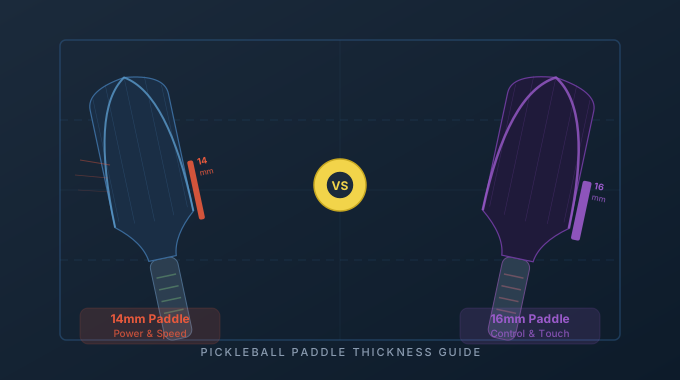
Walk into any pickleball specialty store or scroll through a paddle retailer’s website, and you’ll quickly notice that most paddles are offered in two core thicknesses: 14mm and 16mm. The difference sounds negligible, just 2 millimeters, but anyone who has played with both will tell you the gap in feel and performance is anything but small.
The choice between a 14mm and 16mm pickleball paddle affects nearly every aspect of your game: how hard you can drive the ball, how well you can reset at the kitchen, how forgiving the paddle is on mishits, how fast your hands move in a firefight, and even how your arm and wrist feel after a long session.
This guide will walk you through every meaningful difference between 14mm and 16mm paddles, backed by real-world player experience and paddle science, so you can make a confident, informed purchase that matches your playing style and skill level.
What Does Paddle Thickness (Core Thickness) Actually Mean?
Before diving into comparisons, it’s worth clarifying what “14mm” and “16mm” actually refer to. These measurements describe the thickness of the paddle’s core, not the paddle face or the overall paddle dimensions.
Most modern pickleball paddles use a polymer honeycomb core sandwiched between two face materials (carbon fiber, fiberglass, graphite, or Kevlar). The thickness of that honeycomb core is what’s measured in millimeters. A thicker core means more material between the two faces, which fundamentally changes how energy is absorbed and returned at the moment of contact. The newest core technology is EPP and EPA core.
Common core thickness options in the market range from 10mm (very thin, used by elite power players) to 16mm. The 14mm and 16mm options represent the two most popular choices for recreational and competitive players alike.
14mm vs 16mm Pickleball Paddle: The Six Key Differences
1. Power and Pop
Winner: 14mm
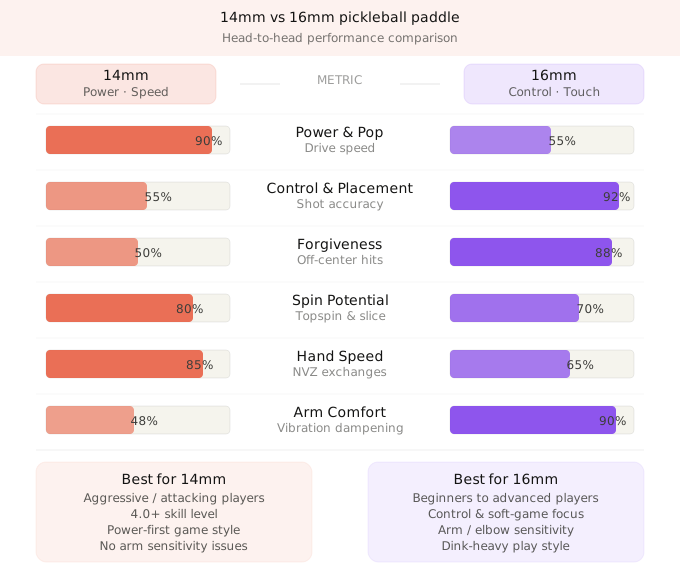
The thinner core of a 14mm paddle compresses and rebounds more quickly at contact. This “trampoline effect” translates into noticeably more pop and ball speed off the paddle face. Your drives feel explosive, your speed-ups at the net come off sharper, and put-away shots are easier to finish.
The 16mm paddle, by contrast, absorbs more of the ball’s energy into the thicker core. This dampening effect sacrifices some raw power but gives you much greater control over where that energy goes.
The bottom line: If you love ripping drives and living at the net with fast hands, the 14mm paddle gives you a natural power advantage.
2. Control and Shot Placement
Winner: 16mm
The thicker core of a 16mm paddle absorbs more ball energy, giving you a longer dwell time, that is, the ball stays on the paddle face a fraction longer before rebounding. This extended contact window makes it easier to guide shots, execute delicate dinks, and place the ball precisely into gaps.
The soft, muted feel of a 16mm paddle is particularly beneficial in the transition zone and at the kitchen, where touch and consistency matter more than raw power. Resets, drop shots, and third-shot drops all become more manageable with the additional control a thicker core provides.
The bottom line: If your game is built around ball placement, dinking consistency, and minimizing unforced errors, the 16mm is almost certainly the better match.
3. Spin Generation
Winner: 14mm (slight edge)
Spin in pickleball is primarily driven by the paddle face surface (raw carbon fiber generates the most spin), but core thickness also plays a role. The faster rebound of a 14mm paddle means the face exits contact with the ball more quickly, which can enhance the bite and spin potential for players with a brushing stroke.
The 16mm paddle’s slower rebound and softer contact can reduce the amount of spin generated on identical swings, though this difference is modest and can often be offset by technique.
4. Forgiveness and Sweet Spot Size
Winner: 16mm
Forgiveness refers to how well a paddle performs on off-center hits. A useful metric for this is twist weight: a measurement of a paddle’s resistance to twisting on contact with the ball (on a scale of roughly 5 to 8, with 6.4 being average). Thicker cores tend to produce higher twist weights, meaning the paddle stays more stable and the ball still travels reasonably well even when you don’t hit it dead center.
A 14mm paddle, with its smaller core, can feel noticeably punishing on mishits; the smaller sweet spot means off-center contact results in more dramatic speed and direction loss.
The bottom line: Beginners and intermediate players who still miss the center of the paddle regularly will enjoy a much more forgiving experience with a 16mm.
5. Hand Speed and Maneuverability
Winner: 14mm
Because 14mm paddles are generally lighter (less core material = less overall weight), they’re quicker to accelerate and maneuver. In fast hands exchanges at the Non-Volley Zone (NVZ), that extra hand speed can be the difference between getting your paddle on the ball in time or being caught out of position.
The 16mm paddle, being heavier and thicker, may slow your hand speed slightly. For players who rely on quick reflexes and fast reactions at the net, this difference is real and noticeable.
6. Feel and Vibration
Winner: 16mm (for comfort); 14mm (for feedback)
The 16mm paddle delivers a softer, plusher feel on contact. It absorbs vibration more effectively, which means less strain is transmitted to your hand, wrist, and elbow over time. This makes the 16mm a particularly smart choice for players managing tennis elbow, golfer’s elbow, or any repetitive strain issue.
The 14mm paddle produces a crisper, stiffer impact sensation. Many advanced players prefer this because it provides instant feedback; you know immediately whether you’ve hit the sweet spot or not. However, if you’re sensitive to vibration, a 14mm paddle can feel harsh over long sessions.
Quick Comparison Table
| Feature | 14mm Paddle | 16mm Paddle |
|---|---|---|
| Power / Pop | ✅ Higher | ❌ Lower |
| Control | ❌ Lower | ✅ Higher |
| Spin Potential | ✅ Slightly better | ❌ Slightly lower |
| Sweet Spot | ❌ Smaller | ✅ Larger |
| Forgiveness | ❌ Less forgiving | ✅ More forgiving |
| Hand Speed | ✅ Faster | ❌ Slightly slower |
| Vibration / Comfort | ❌ More vibration | ✅ Less vibration |
| Best for Skill Level | Intermediate–Advanced | Beginner–Advanced |
| Best Playstyle | Aggressive, attacking | Control, all-court |
Who Should Choose a 14mm Paddle?
A 14mm paddle is the right fit if you:
- Play at a 4.0 skill level or above, and want to add more offense to your game
- Prioritize fast hands and net aggression over soft game consistency
- Have good technique and consistently hit the center of the paddle
- Enjoy generating your own power through swing mechanics and wrist snap
- Want more pop on drives, counters, and put-aways
- Do not suffer from arm or elbow pain that might be aggravated by vibration
Many 5.0-level competitive players gravitate toward 14mm paddles specifically for the offensive edge they provide in high-speed exchanges. The extra pop and maneuverability are genuinely advantageous at the net when trying to finish points, something that becomes increasingly valuable as you move up in skill level.
Who Should Choose a 16mm Paddle?
A 16mm paddle is the right fit if you:
- Are you a beginner or intermediate player, still building consistency and technique
- Rely on touch shots, dinks, and resets as the foundation of your game
- Prefer a larger sweet spot that rewards you even on imperfect swings
- Experience arm or wrist discomfort and need a dampened, vibration-absorbing feel
- Play longer sessions and want a paddle that’s gentler on your body
- Are trying to reduce unforced errors and improve placement over power
It’s worth busting a common myth here: thicker does not mean “for beginners only.” Many top professional players use 16mm paddles in tournament play. The thicker core is a strategic choice; it’s about results and consistency, not about playing ability.
Does Skill Level Change the Equation?
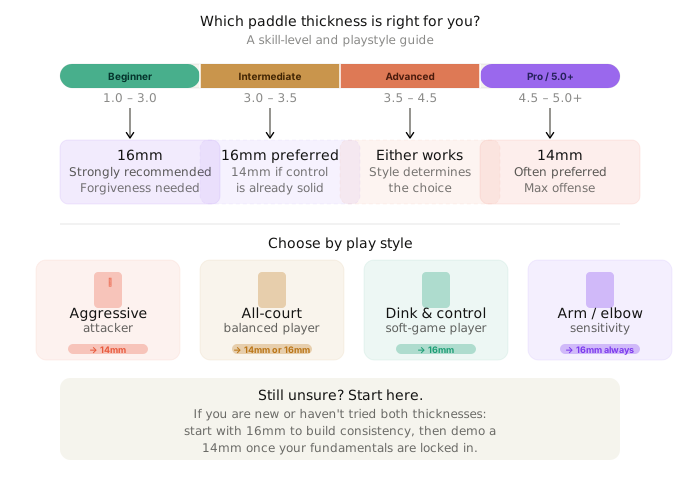
Yes, significantly. Here’s a general framework:
- Beginners (1.0–3.0): The 16mm paddle is almost universally the better starting point. The forgiving sweet spot and consistent feel help you build proper strokes without the paddle punishing your early mistakes.
- Intermediate players (3.0–4.0): Either thickness can work well depending on playstyle. If your soft game is strong, a 14mm can add offensive dimension. If you’re still developing control, stick with 16mm.
- Advanced players (4.0–5.0+): At this level, personal preference and playstyle dominate the decision. Aggressive, attacking players often prefer 14mm. Control-dominant, tactically-minded players often prefer 16mm. Many high-level players own both and switch depending on opponent and conditions.
Does Paddle Face Material Matter When Choosing Thickness?
Absolutely, face material and core thickness interact with each other. Here are the key pairings to understand:
Carbon Fiber Face + 16mm Core: This is arguably the most popular combination among serious recreational and competitive players. Carbon fiber’s spin generation and consistency, paired with the control and forgiveness of a thick core, result in a paddle that’s excellent for all-around play with a premium soft game.
Carbon Fiber Face + 14mm Core: The combination preferred by attacking, power-oriented players. Maximum pop and spin potential at the cost of some control and forgiveness.
Fiberglass Face + 16mm Core: A more budget-friendly combination that still delivers solid control. Fiberglass provides a slightly softer touch than carbon fiber and is easier on the arm.
Fiberglass Face + 14mm Core: Provides pop without the extreme stiffness of carbon, a reasonable middle ground for players who want power but are sensitive to harsh feedback.
Common Myths About Paddle Thickness Debunked
Myth 1: “Thinner paddles are for pros, thicker ones are for beginners.” False. Many elite professionals play with 16mm paddles for their reliable control. Paddle choice is about playstyle, not bragging rights.
Myth 2: “2mm is too small a difference to notice.” False. Players who switch between 14mm and 16mm consistently report immediate, significant differences in feel, power, and control. The 2mm gap is one of the most impactful spec changes you can make.
Myth 3: “A 14mm paddle automatically makes you hit harder.” Partially false. The 14mm paddle does produce more pop on identical swings, but if your technique lacks power generation, the paddle alone won’t solve that. A well-executed swing with a 16mm can still produce significant power.
Myth 4: “You should stick with one thickness forever.” False. Many players own both thicknesses and rotate between them based on matchup, playing conditions, or even just mood. Experimenting is the best way to understand your preferences.
How to Test Before You Buy
Whenever possible, demo a paddle before committing. Most local pickleball clubs, sporting goods stores with pickleball sections, and dedicated pickleball retailers offer demo programs. Testing a 14mm and a 16mm version of the same paddle model (like the Joola Kosmos or Joola Perseus Pro Series) gives you the cleanest apples-to-apples comparison.
When demoing, pay attention to:
- How your dinks feel: are they easy to control or do they fly long?
- How your drives respond: do they have enough pop, or do you want more touch?
- Off-center hits: Does the paddle feel stable, or does it twist?
- How your arm and elbow feel after 30–45 minutes of play
Final Verdict: 14mm vs 16mm Pickleball Paddle
There is no objectively “better” thickness. Both 14mm and 16mm paddles are used by players across every skill level, and both have legitimate advantages:
- Choose 14mm if you prioritize power, speed, spin, and fast hands, and your technique is solid enough to make the most of a smaller sweet spot.
- Choose 16mm if you prioritize control, consistency, forgiveness, and a softer feel, especially if you’re still developing your game or value your long-term arm health.
If you’re still on the fence, most experts and experienced players agree: start with 16mm. It’s easier to learn on, more forgiving, and still capable of excellent power when you swing with intention. Once your fundamentals are solid, experimenting with a 14mm paddle becomes a more rewarding and lower-risk experience.