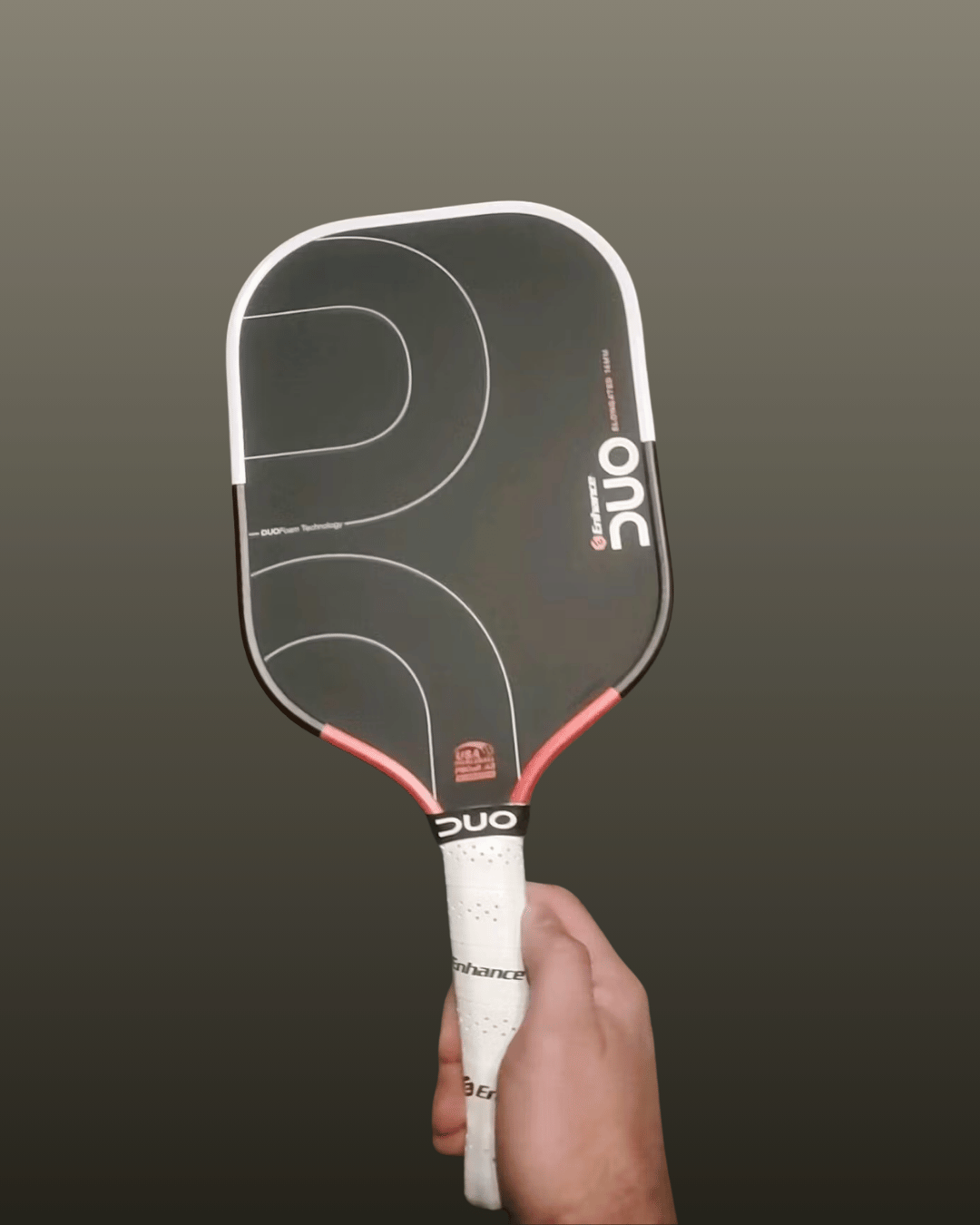
The all-foam (Gen 4) paddle wave has largely been defined by explosive power, extended dwell time, and oversized sweet spots. The Enhance Duo All Foam paddle takes a noticeably different approach. After extended court time, the Duo reveals itself as a Gen 4 build that often feels closer to a refined Gen 3 paddle in actual play.
That isn’t necessarily a bad thing. While many foam paddles overwhelm players with raw power, the Enhance Duo leans toward pop, spin, and versatility. However, it also comes with trade-offs, particularly in dwell time and vibration management that serious buyers should understand before jumping in.
At its current pricing of ₹16,100 in India, the Duo positions itself as one of the more accessible entries into the all-foam category, especially for players moving up from traditional honeycomb paddles.
Enhance Duo All Foam Specs
- Thickness: 16 mm
- Core Construction: Full foam Gen 4 build
- Face Material: Raw carbon fiber with textured grit
- Construction: Thermoformed
- Play Style: Pop + spin focused hybrid
- Price (India): ₹16,100
- Ideal Skill Level: Beginner to advanced
Build Quality & First Impressions
The Enhance Duo arrives with the clean, performance-first aesthetic that Enhance paddles are known for. The thermoformed body feels structurally sound, and the paddle gives a reassuringly solid impression in hand.
One of the biggest positives early on is durability. After extended use, the surface grit holds up well, and the overall construction suggests this paddle is built to last longer than many foam-heavy competitors. That alone makes it appealing for players worried about rapid grit wear, a common complaint in the Gen 4 category.
However, once you step on court, you quickly notice that the Duo does not behave like a typical power-focused all-foam paddle.
Dwell Time & Feel: Where It Needs Improvement
This is the most noticeable weakness.
For a Gen 4 paddle, the dwell time is underwhelming. The ball does not sit on the face as long as many players expect from a foam-based build. Instead, the paddle produces a quicker rebound that feels more like a refined Gen 3 honeycomb paddle.
In fast hands battles at higher levels, this reduced dwell time can make fine control slightly more challenging compared to the top-tier Gen 4 performers. Advanced players who rely heavily on prolonged pocketing may notice the difference immediately.
That said, at the beginner to intermediate and even advanced club level, the limitation is far less punishing. Many players may actually appreciate the quicker response once they adapt.
Spin Performance: A Clear Strength
Where the Enhance Duo absolutely shines is spin generation.
The textured raw carbon face produces excellent topspin on drives and particularly impressive bite on slice serves and returns. Heavy slice serves stay low and skid aggressively, giving players a real tactical advantage.
During baseline exchanges, topspin drives come off the face cleanly with good shape. At the kitchen, roll dinks and spin resets remain effective.
If your game relies heavily on spin manipulation rather than pure power, the Duo delivers strong value in this department.
Power vs Pop: Understanding the Difference
This paddle requires a mindset adjustment.
Compared to most Gen 4 all-foam power paddles, the Enhance Duo offers:
- Less raw power
- More immediate pop
That distinction matters. Instead of deep, heavy drives coming from effortless swing speed, the Duo produces a quicker, more reactive pop off the face. Early on, this can lead to a learning curve, especially in the soft game, where balls may float higher than expected.
Players coming from plush control paddles will need time to recalibrate touch shots and resets. However, once you understand the paddle’s response profile, you can begin to harness its quick-fire characteristics effectively.
Vibration & Comfort: A Word of Caution
Vibration is more noticeable here than in many competing foam paddles.
While not harsh, the feedback is clearly present, especially on off-center hits. Because of this, I strongly recommend using a quality overgrip to improve comfort and reduce shock transmission.
Important note:
If you already struggle with tennis elbow or arm sensitivity, this paddle would not be my first recommendation. There are more arm-friendly Gen 4 options currently available.
Customization: Tungsten Tape Unlocks the Paddle
To get the best version of the Enhance Duo, customization is key.
Adding tungsten tape helps:
- Increase stability
- Improve plow-through
- Reduce excessive pop
- Enhance control in hands battles
Like many modern paddles, the Duo improves noticeably once properly weighted. Players willing to experiment with tape placement will extract far more performance than those using it strictly stock.
Singles & Doubles Versatility
One of the Enhance Duo All Foam’s biggest strengths is its versatility across formats.
In singles, the lighter-feeling response and spin potential help with passing shots and aggressive serves. In doubles, the pop and maneuverability make hand battles quick and reactive once you adjust to the dwell profile.
Few paddles in this price bracket transition this comfortably between both formats, which adds meaningful value for players who compete in both.
Durability & Surface Longevity
A major positive is long-term confidence.
The Engage Duo appears more durable than many all-foam paddles, particularly in terms of:
- Surface grit retention
- Edge integrity
- Structural consistency
For players concerned about foam paddles wearing out too quickly, this is one of the more reassuring builds in the category.
Gen 4 All-Foam Paddle Comparison Table
| Paddle | Thickness | Power | Pop | Dwell Time | Spin | Price |
|---|---|---|---|---|---|---|
| Engage Duo All Foam | 16 mm | Medium | High | Medium-low | High | ₹16,100 |
| CRBN TruFoam | 16 mm | Very high | High | High | High | ₹25,000 |
| Six Zero Opal | 16 mm | High | Medium | High | High | ₹20,500 |
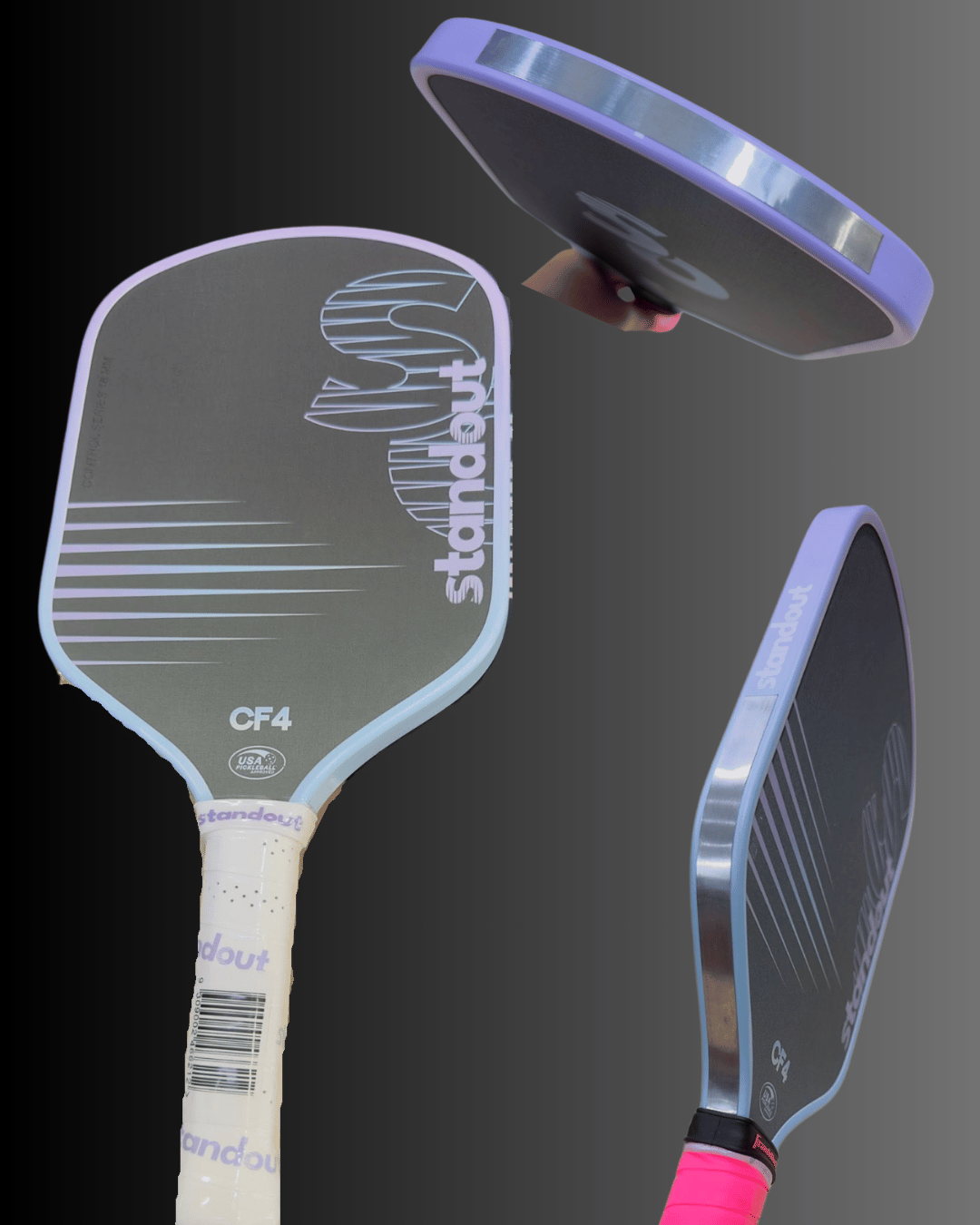
| Standout CF Absolute Black | 16 mm | High (controlled) | Medium | High | High | ₹20,500 |
Quick takeaway:
The Engage Duo is the pop-and-spin value pick rather than the raw power leader.
Who Should Buy the Engage Duo All Foam
This paddle makes the most sense for players who want entry into the Gen 4 category without paying premium flagship prices. It suits beginners through advanced club players who value spin, pop, and versatility over maximum dwell time.
Players who demand elite-level hand control or have existing arm sensitivity may want to look elsewhere.
Final Verdict: A Value Sleeper With a Learning Curve
The Engage Duo All Foam paddle doesn’t follow the typical Gen 4 script, and that’s both its strength and its weakness.
It offers:
- Excellent spin potential
- Noticeable pop
- Strong durability
- Solid singles and doubles versatility
- Very competitive pricing in India
But it also brings:
- Underwhelming dwell time for a foam paddle
- Less raw power than category leaders
- Noticeable vibration
- A short adjustment period
For beginner to advanced club players, the Duo is genuinely an absolute steal at ₹16,100. For high-level tournament players who rely heavily on extended dwell in hands battles, the limitations may be more apparent.
Either way, once properly weighted with tungsten and given time to understand its personality, the Engage Duo reveals a surprisingly capable and durable all-foam option.
FAQs
Is the Engage Duo a true Gen 4 paddle?
Yes, it features full foam thermoformed construction, though its on-court feel is closer to a refined Gen 3 paddle.
How is the dwell time compared to other foam paddles?
Below average for the category. The ball releases quicker than most Gen 4 competitors.
Is the spin really good?
Yes. Topspin drives and especially slice serves and returns are standout strengths.
Does it have strong power?
It has less raw power than many all-foam paddles but delivers noticeable pop.
Should I add tungsten tape?
Highly recommended. Proper weighting significantly improves overall performance.
Is it arm-friendly?
Not the most. Vibration is noticeable, so players with tennis elbow should be cautious.