Author: homeforpickleball

  • Complete list of faults in Pickleball

    A fault in pickleball is any rule violation that stops play and it is important to learn about them in order to reduce avoidable errors, know if your opponent is manipulating a point especially during close games. This guide breaks down every type of pickleball fault in a clear, practical way, focused on non-officiated recreational play.

    Pickleball being the most rapidly growing sport still falls victim to lack of techlonogy for their scoring system, there have been some horrendous calls which completely chance the momentum of the game, so learning about pickleball faults is absolutely necessary before heading into a tournament and ofcourse it does help during your recreational sessions as well.

    Also Read: List of all official Pickleball rules as per USA Pickleball which is the most followed worldwide

    Why Pickleball Faults Matter

    Faults don’t just end a rally—they can change momentum and swing points dramatically. So learning about them will help you keep your cool on court, knowing when you have lost a point is as important as practicing drills in pickleball.

    • If the receiving team commits a fault, the serving team earns a point.
    • If the serving team commits a fault, they lose the serve (or the second server gets the ball, or it becomes a side-out).
    • In rally point games if a fault is commited by either team a point is rewarded to the other regardless of which team served in that point

    Understanding faults is one of the fastest ways to clean up your game especially if you’re new or leveling up from beginner to intermediate.

    Types of Pickleball Faults

    Below is a comprehensive, easy-to-understand list of every fault you should be aware of before stepping on a pickleball court.

    Serving Faults

    These faults happen before or during the serve:

    • Serve doesn’t land in the correct crosscourt service box

    A serve must clear the net and land diagonally across, inside the boundaries.

    • Serve contacts the Non-Volley Zone (Kitchen) line

    It may hit the baseline or sidelines—but never the kitchen line.

    • Either team violates the double-bounce rule

    The receiving team must let the serve bounce once, and the serving team must let the return bounce once.

    • Server foot faults

    A serving fault occurs if:

    • The server doesn’t have at least one foot on the ground behind the baseline
    • A foot touches the baseline
    • A foot touches inside the court or beyond the imaginary sideline/centerline extensions

    • Incorrect server or wrong position

    If players are not standing in the correct right/left position based on score, it is a fault.

    Also Read: Types of serves in Pickeball

    In-Play Faults

    These faults happen during rallies:

    • Ball hits the net and doesn’t cross

    Serve or return any stroke that fails to clear the net.

    • Ball lands out of bounds

    A clear line fault.

    • Ball bounces twice before being hit

    If you don’t reach it in time, rally over.

    • Player catches, carries, or throws the ball

    Any unintentional carry or scoop is a fault.

    • Double-hits not in a single continuous motion

    A clean “one motion” double contact is legal, but two distinct hits are not.

    • Player creates a distraction

    Yelling, sudden movement, paddle waving, if meant to distract, it’s a fault. Again this type of fault is quite subjective but the next time you feel an opponent is doing this intentionally you can always ask them to refrain from doing so

    • Player intentionally aims for an opponents face

    Yes all those BenJohns highlights having a full send on the ball did look cool, but you can no longer do it as it will result in a fault.

    Net Faults

    Net violations are straightforward:

    • Player or clothing/paddle touches the net

    If the ball is still in play, this is a fault every time.

    • Hitting the ball before it crosses the plane of the net

    You may follow through across the plane, however the ball must cross first.

    • Hitting the ball around the post improperly

    Going around the post is legal only if you hit the ball after it crosses the plane.

    Kitchen (Non-Volley Zone) Faults

    These are the most misunderstood in pickleball:

    • Volleys while standing in the kitchen

    Anything touching the NVZ zone be it your foot, paddle, or clothing counts.

    • Momentum into the kitchen after a volley

    You may hit a volley outside the kitchen, but if your momentum carries you in, it’s still a fault.

    • Touching anything in the kitchen after a volley

    Clothing, paddle, even touching your partner counts as entering the NVZ.

    • Volleys after stepping out of the kitchen without both feet re-establishing

    You must reset both feet behind the line before volleying again.
    Also Read: How stacking works in Pickleball

    Gear & Contact Faults

    • Ball hits the player or their clothes

    If the ball touches anything except your paddle or the hand holding the paddle (below the wrist), you lose the rally.

    • Paddle touches the net

    Same as above, its a fault.

    • Extra balls fall out of your pocket

    If additional balls drop during play, it’s a fault.

    • Not holding the paddle when it strikes the ball

    Losing grip mid-swing? Fault.

    • Using earbuds or headphones

    Only hearing aids are allowed.

    Player Position Faults

    • Serving from the wrong side

    Based on score:

    • Even score: serve from right
    • Odd score: serve from left

    • Incorrect receiver position

    Receiver must be in the correct diagonal position.

    • Switching sides incorrectly in doubles

    Switch only when your team wins a point.

    Faults for Stopping a Rally

    Stopping a rally early is a fault unless 100% valid.

    Faults include:

    • Stopping play to claim a broken ball (before the rally ends)
    • Stopping for an equipment issue (paddle drops, hat falls, etc.)
    • Incorrectly identifying a supposed position error
    • Stopping because of an item on the court unless it directly interferes

    Once the rally ends, players can inspect the ball and decide if a replay is fair.

    Learning Pickleball Faults Faster

    There’s no need to memorize the entire rulebook as most faults boil down to:

    • Footwork
    • Positioning
    • Basic kitchen awareness
    • Clean strokes

    Once those become second nature, you’ll focus less on rules and more on strategy.

    Final Thoughts

    Pickleball faults may look overwhelming on paper, but once you’re on the court, the majority become instinctive. The key is understanding the big one which are kitchen violations, foot faults, and positioning issues as they decide most rallies. As you play more, you’ll start recognizing patterns, avoiding unnecessary errors, and sharpening the parts of your game that matter most.

    FAQs

    What exactly is a fault in pickleball?

    A fault in pickleball is any rule violation that stops play. When a fault occurs, the rally ends immediately. If the serving team commits the fault, they lose the serve; if the receiving team commits it, the serving team earns a point.

    What are the most common serving faults?

    Common serving faults include stepping on or over the baseline during the serve, serving from the wrong position, hitting the serve into the net, sending the ball out of bounds, or failing to contact the ball below waist level. A serve must also clear the non-volley zone (kitchen) and land in the correct diagonal service box.

    Is it a fault if the ball hits the net and lands in the right service box?

    Yes. Unlike tennis, there are no “lets” in pickleball serving. If the serve clips the net even slightly and still lands in the correct service box, it is still a fault, and the server loses that rally.

    Is stepping into the kitchen after a volley always a fault?

    Yes. Any part of your body, paddle, clothing, or accessory touching the non-volley zone (or its line) after hitting a volley is a fault. This includes momentum carrying you forward into the kitchen even if the volley happened perfectly clean.

    What happens if the ball hits a player?

    If you get hit by the ball on your side of the net before it bounces, it is a fault against you even if the ball was going out. If it hits you after it bounces, the rally continues as normal.

    Can a player call a fault on their opponent?

    Yes. In recreational play, players call faults on themselves and on their opponents based on what they see. In tournament play, referees typically make the final call, though players are still expected to play honorably.

    Is hitting the ball out of bounds always a fault?

    Yes. If your shot lands clearly outside the court lines, it is a fault, and the opponent wins the rally. However, if a shot touches the line even slightly it is considered an in ball.

    Is double-hitting the ball a fault?

    It depends. If the ball unintentionally hits your paddle twice during one continuous motion, it is legal. But if it is a controlled double-hit or a stop-and-rehit, that is a fault.

    Is it a fault if the ball hits the net post?

    If the ball hits the net post before crossing over into the opponent’s court, it is a fault. If it passes cleanly over the net and then hits the post (on the outside), the ball is out.

    What happens if players are in the wrong positions during the serve?

    If the wrong player serves or receives the ball, it is considered a positional fault. Once the rally ends, the incorrect positioning is corrected and the score is adjusted according to the rules. In sanctioned tournaments, this often results in the rally being replayed unless a point was incorrectly awarded.

    If you are new to pickleball and have learned about all the faults but not yet confident to step on the court then do read our guide on how to play pickleball, this will definitely give you the push you need to enjoy the sport we all love.
  • Detailed guide on Pickleball scoring rules

    Pickleball is one of the fastest-growing sports in the world, yet the scoring system is what often confuses new players the most. The good news? Pickleball scoring especially traditional side-out scoring is far simpler than it seems. Once you walk through a game or two, you’ll be calling out scores confidently and probably even helping someone else understand the ropes.

    Whether you’re stepping onto the court for the first time or trying to clean up the gaps in your understanding, this guide breaks down exactly how pickleball scoring works for doubles and singles, why it’s different from tennis and badminton, and what you need to know about the rising popularity of rally scoring.

    Why Pickleball Scoring Confuses Beginners

    Pickleball borrows pieces of scoring logic from sports like volleyball, tennis, and table tennis but ultimately, it has its own set of rules. The mix of switching sides, calling a third number in doubles, and only scoring on the serve can feel unusual at first. But once you know the pattern, it becomes second nature.

    Traditional Side-Out Scoring

    Traditional scoring also known as side-out scoring is the standard format you’ll encounter in recreational games and most amateur tournaments. It works for both singles and doubles. The idea behind it is quite simple:

    Only the serving team can score a point.

    If the serving team wins the rally → they score.
    If the serving team loses the rally → the serve switches (a “side-out”).

    Think of it like baseball: only the team “at bat” can score. In pickleball, the serving team is “at bat.”

    Also Read: Types of serves in Pickleball, which are legal and which are not

    Starting the Game

    Traditionally, the team standing on the court’s northwest side serves first, but many players determine this with a coin toss, paddle spin, or a quick agreement.

    • Games are typically played to 11 points, win by 2.
    • The first serve of the entire game starts on server #2—so the score begins at 0-0-2.
    • The first serve is always hit diagonally from the right (even) side.

    How Scoring Works During Play

    1. The serving team wins the rally → they earn a point.

    Players on the serving team switch sides after earning each point.
    The same player continues serving until the team commits a fault.

    2. The serving team loses the rally → fault → next server gets the ball.

    Once both players on the serving team have served and lost their rally, it becomes a side-out, and the opposing team gets to serve.

    3. The receiving team NEVER switches sides.

    Only the serving team rotates. The players returning the serve stay put the entire time.

    Understanding the Three-Number Score in Doubles

    In doubles pickleball, the score is called:

    Serving team’s score – Receiving team’s score – Server number

    Example:
    6-3-2 means…

    • Serving team has 6
    • Receiving team has 3
    • The second server is serving

    If you hear “side-out,” it means both servers on the previous team have used their turn, and the serve now goes to the other pair.

    Player Positioning in Doubles

    Proper positioning is essential—and it’s also where many new players make mistakes.

    Rule 1:

    If your team’s score is even, the player who started on the right side must be serving from the right.

    Rule 2:

    If your team’s score is odd, that same starting server will now be on the left side.

    Everyone else may stand anywhere on the court or even outside the court as long as the correct server and correct receiver are in the correct boxes.

    If you are new to pickleball and have to passion to be a better player then do check our detailed guide on how to play pickleball for tips that will help you in your conquest.

    Singles Pickleball Scoring

    Singles scoring follows the same side-out rules, but without the third number.

    In singles:

    • You only call: server’s score – receiver’s score
    • You switch sides every time you score a point
    • Only one serve per side (no partner = no second server)

    Like doubles, games are typically played to 11, win by 2.

    What Is Rally Scoring in Pickleball?

    Rally scoring is a newer scoring format gaining popularity in leagues, rec play, and Major League Pickleball.

    In rally scoring:

    A point is awarded on every rally, no matter who served.

    This is the biggest difference from traditional pickleball scoring.

    Rally scoring basics:

    • Games often go to 15 points
    • Both teams score, regardless of who served
    • Players switch sides based on the score (odd/even) similar to volleyball
    • It keeps games shorter and more predictable in length
    • Built for fast-paced, spectator-friendly formats
    • Ideal for tournaments that aim to complete multiple categories in the same day

    Tips for Learning Pickleball Scoring Faster

    • Play games instead of studying diagrams
    • Say the score out loud before every serve
    • Focus on where you started the game i.e. your “even” side
    • Remember: only the serving team rotates
    • Treat the third number in doubles like a “turn indicator”

    Within one or two games, you will already begin to get a feel for the pattern.

    When Does a Team Win?

    If the match is a service point match then a team wins when:

    • They reach 11 points
    • AND they lead by at least 2 points

    If the score reaches 10-10, you must win 12-10 or higher.

    That’s why pickleball is often dramatic—momentum can swing fast.

    If a match is a rally point match then the first team to reach 15 points wins, also unless clarified most rally point games end with a golden point incase of a 14-14 score.

    Final Thoughts

    Pickleball scoring might feel intimidating the first time you hear “0-0-2,” but once you experience a few rotations on the court, it becomes one of the simplest scoring systems in racket sports. Traditional side-out scoring rewards consistency and strategy, while rally scoring is gaining traction as a faster, more dynamic format.

    Whether you’re playing casual doubles with friends or preparing for your first tournament, understanding the flow of scoring will instantly make the game feel more natural and more fun.

  • What is Stacking?

    If you’ve played doubles pickleball, you may have heard players talk about “stacking.” And if you’ve never tried it yourself, it might sound confusing at first. But once you understand how it works, stacking can completely change the way your team controls rallies, positions itself, and builds smarter strategies.

    This guide breaks down everything you need to know about stacking in doubles pickleball, how it works on both serve and return, and when it helps (or hurts!) your team, yes there are times when not stacking can also win you points.

    What Is Stacking in Pickleball?

    Stacking is an advanced doubles strategy where teammates start points on the same side of the court instead of splitting left and right like in traditional positioning. By doing this, players can stay on their preferred side for the entire match usually to protect a weakness or maximize a strength. If you’ve watched pro pickleball matches then you will see that all teams consist of a right side player and a left side player this is because stacking is the most effective tactic in Pickleball.

    You still have to follow the basic serving and receiving rules, meaning the correct player must serve or receive from the correct box. But outside of those two requirements, players can stand almost anywhere on (or even slightly off) the court.

    This makes stacking a powerful tool when you want:

    • Both forehands in the middle
    • A specific player covering a specific side
    • To attack your opponents’ weaker player or weaker wing
    • To create unpredictable movement and disrupt patterns

    Understanding Even and Odd Sides

    Each player has an “even” (right) and “odd” (left) side. Your even side is determined by where you start the match and not necessarily the standard right-hand position.

    • When your team’s score is even, the original first server stands on the even/right side.
    • When your team’s score is odd, that player stands on the odd/left side.

    Stacking simply rearranges where the non-server or non-receiver stands before the point starts.

    How Stacking Works

    The mechanics of stacking depend on whether you’re serving or receiving. Here’s how both look in practice:

    Stacking on the Serve

    When stacking during service:

    1. The correct server stands in the proper service court (even or odd).
    2. Their partner stands next to them on the same side usually just outside the sideline so the server has enough space to serve and move.
    3. Once the serve is hit, both players slide into their preferred positions.

    Example:
    If your team wants both forehands in the middle, you may start on the right side every time and slide into position once the ball is served.

    This setup keeps everything legal while allowing you to quickly “switch” into your chosen formation without confusion.

    Stacking When Returning a Serve

    This is where stacking becomes trickier.

    Instead of standing in front of the non-volley zone, the non-receiving partner waits just outside the sideline on the same side as the receiver.

    Here’s the flow:

    1. The receiving player stands in the correct service return box.
    2. The partner stands beyond the sideline near the kitchen line.
    3. As soon as the receiver hits the return, both players slide into their desired positions.

    Because the returner starts deeper and farther from their final spot, stacking on the return requires:

    • A deep return
    • Time to move
    • Good communication

    It’s doable and once you start practicing it, it will become second nature.

    Stacking vs Switching

    These two terms often get blended together, but they’re not the same.

    Switching

    Switching happens after the serve or return, usually during the first or second shot when teammates trade sides mid-rally.

    Stacking

    Stacking happens before the point begins, positioning players so they can seamlessly switch immediately after contact.

    Most advanced teams use both: stack → serve/return → switch.

    Hand Signals for Stacking

    To avoid shouting instructions (which your opponents will hear!), many teams use quick hand signals behind the back of the player at the kitchen:

    • 🖐️ Open hand – Switch
    • Closed fist – Stay
    • ✌️ Two fingers – Fake switch (used to confuse opponents)

    Hand signals become crucial once rallies get fast and court movement increases.

    Is Stacking Legal in Pickleball?

    Yes, stacking is 100% legal.

    According to USA Pickleball Rule 4.B.7:

    “In doubles… there is no restriction on player positioning as long as all players are on their side of the net.”

    Only two things must remain correct:

    • The proper player must serve.
    • The proper player must return the serve.

    Everything else is fair game.

    Does Handedness Matter?

    Absolutely.

    A lefty–righty pair is one of the most common reasons teams adopt stacking. By stacking correctly, you can keep both forehands pointed toward the middle this will let you and your partner get maximum reach, power, and control.

    Half Stacking vs Full Stacking

    Full stacking

    Stacking on both serve and return.

    Half stacking

    Stacking only when serving, and playing traditional positions when receiving.

    Many newer players prefer half stacking because stacking on the return requires more coordination and footwork.

    When Should You Stack?

    Stacking helps most when:

    • You want both forehands in the middle
    • A player has a strong forehand or weak backhand
    • You want to maximize a dominant right-side or left-side player
    • You want to break opponents’ rhythm
    • You want to take advantage of a slow or predictable opponent

    If a certain formation helps you win more points then stack into it.

    When NOT to Stack

    Stacking isn’t always the best choice.

    Avoid stacking when:

    • It puts a teammate’s weaker shot in the middle
    • Both players end up covering mostly backhands
    • It causes confusion or miscommunication
    • Your returns aren’t giving you enough time to switch
    • You’re making positioning errors because you’re overthinking

    Stacking should help simplify your strategy and not complicate it.

    Pro Tips to Stack Successfully

    Return deep with height
    Avoid rushing while hitting
    Communicate with signals
    Practice drills that include switching footwork
    Start with half stacking before moving to full stacking

    Bottom Line

    Stacking is an advanced but incredibly useful strategy in doubles pickleball. Once you understand how to position yourself and when to shift, it becomes a powerful weapon to highlight your strengths, hide weaknesses, and create constant pressure on your opponents.

    Try it in your next match you’ll be surprised how much more control you gain over the court.

    FAQs

    Is stacking allowed in every level of pickleball?

    Yes. Stacking is completely legal and used at all levels, from recreational play to pro tournaments.

    Do both players have to stack, or can one stay in their usual spot?

    Teams can stack fully, half stack, or not stack at all. It’s entirely based on strategy and comfort.

    Is stacking difficult for beginners to learn?

    It can feel confusing at first, but once you understand even/odd positions and practice moving together, it becomes second nature.

    Do teams need hand signals to stack properly?

    Hand signals aren’t mandatory but are highly recommended to avoid miscommunication especially during fast games.

    Should I stack if my partner is left-handed?

    Yes! Lefty–righty teams benefit the most from stacking because both forehands can stay in the middle.

    Is stacking only useful for advanced players?

    Not at all. Even casual players can benefit, especially when trying to protect a weakness or simplify positioning.

    Is stacking risky?

    Only if communication is poor. With good signals and practice, stacking becomes one of the safest and smartest strategies in doubles.

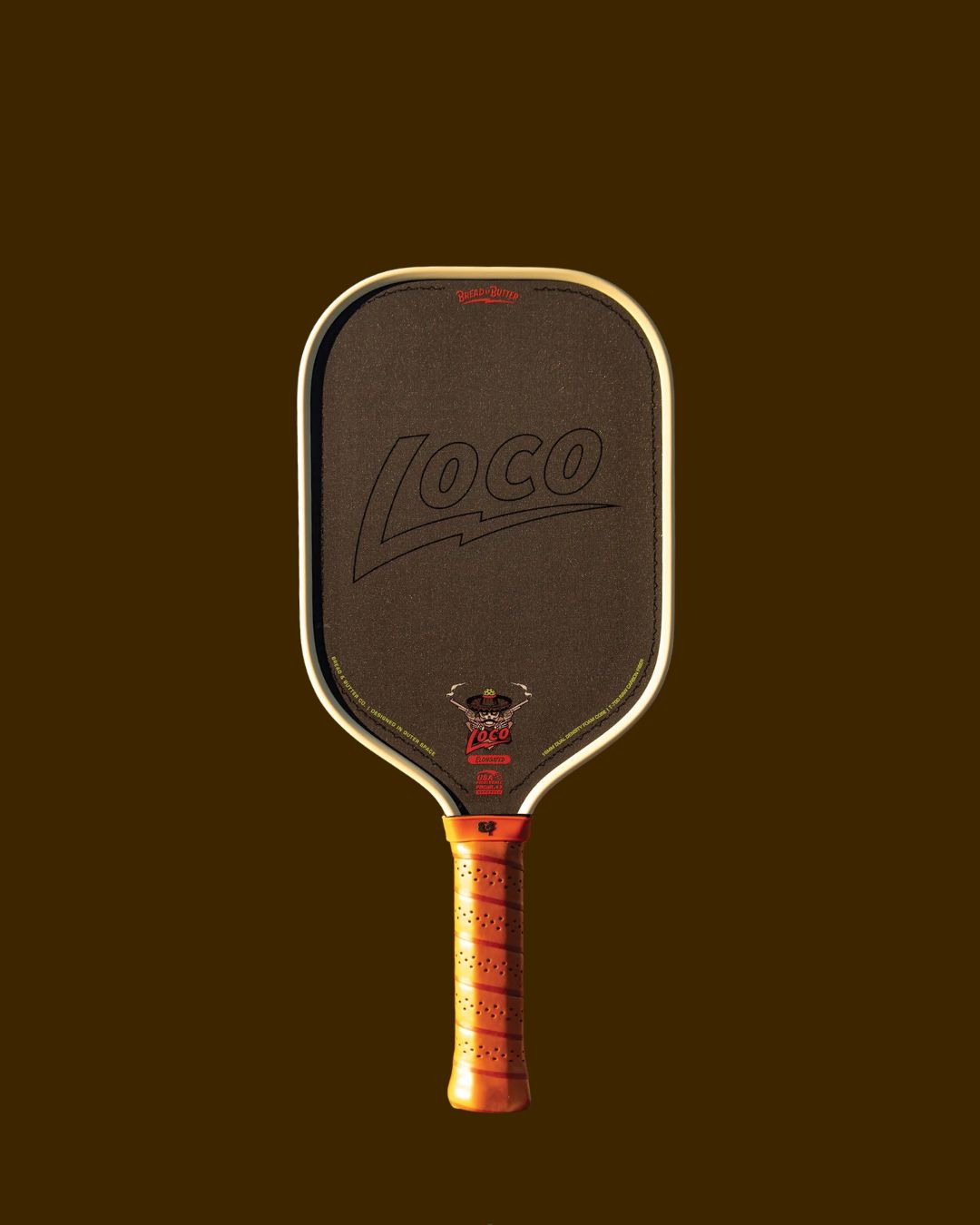
  • Detailed review of the Bread & Butter Loco Paddle

    Detailed review of the Bread & Butter Loco Paddle

    Every now and then, a paddle enters the pickleball world that forces players to pause, rethink, and recalibrate what they thought they knew about power paddles. The Bread & Butter LOCO has quickly become one of those paddles. On paper, it already stands out—full EPP foam core, EVA foam perimeter, and three distinct shapes (Elongated, Hybrid, and Widebody), giving players options depending on how they construct their game. But after spending hours drilling, testing, and matching up against players using their preferred weapons, I realized this paddle has much more depth than the marketing claims.

    As a coach, I always tell players that a paddle should fit you, not the other way around. The LOCO is interesting because at first, it feels unapologetically powerful and similar to the Boomstick, but with a more nuanced touch once it breaks in. During my first 2-hour drill session, the paddle felt noticeably stiff and very lively off the face. However, by session number three, the feel mellowed out and the foam core opened up beautifully. That’s when the controlled drives, buttery drops, and consistent resets started coming alive. I felt like the paddle went from “well this is a bit rigid” to “okay, now we’re cooking” over the course of about 6 total hours of hitting.

    One thing that instantly caught my attention was how maneuverable the LOCO feels. Despite being a full-foam build, something that usually increases swing weight, the twist weight is quite easy on the wrist. Even during fast hands exchanges, I was matching blow-for-blow against players using their regular paddles. This surprised me because generally full-foam paddles tend to feel bulkier in hand but this one somehow don’t.

    However, the one drawback I personally noticed was dwell time. The LOCO has more dwell time than I typically prefer in a hand battle. While this helps with control and shapes your soft game beautifully, in rapid exchanges it sometimes made me feel a half-step behind. Due to this I had to recalibrate my swing path and timing which caused some unforced errors at first (Yes, im blaming the paddle.) But when I asked power players those who hit big drives to try this paddle, they did not find any lack of pop due to dwell time. In fact, they mentioned that unlike other foam paddles, the LOCO doesn’t need tungsten tape at the head or near the sweet spot to unleash its full potential.

    But me being a control-oriented player, I always add tungsten tape at the throat of any power paddle so I did the same with the Loco as well. Through this customization I noticed improved stability, and I was also able to generate the right amount of counter-punching ability without sacrificing maneuverability. So my conclusion is that power players may love the stock setup, control-first players might prefer a bit of customization.

    Overall, the Bread & Butter LOCO is an exciting addition in the ‘Power Paddles,’ segment and at $200 it is in my opinion quite reasonably priced . It’s explosive, highly customizable, and available in shapes that allow players to tailor the paddle to their game. If you are looking for a paddle similar to the as the Boomstick or the Gearbox GX2 then the LOCO deserves a test hit at the very least.

    Bread & Butter LOCO Paddle Specs Comparison

    FeatureElongated LOCOHybrid LOCOWidebody LOCO
    ShapeLongest reach, best for drivesBalanced length + widthLargest sweet spot
    Core ConstructionFull EPP foam + EVA perimeterFull EPP foam + EVA perimeterFull EPP foam + EVA perimeter
    Power★★★★★ (Maximum)★★★★☆★★★★☆
    Control★★★☆☆★★★★☆★★★★★
    Spin PotentialHighHighModerate–High
    ManeuverabilityVery goodExcellentGood
    Sweet Spot SizeMediumMedium–LargeLargest
    Best ForAggressive countering, singles, hard drivesAll-court players, doublesControl players, blockers, defenders

    Please Note: I personally only tested the elongated version of the BnB Loco, for the hybrid and widebody versions I asked around in my network for the data, the data displayed on this table is consistent with 7 opinions which is why I can publish it. If any one of you would like for a detailed paddle review do reach out at homeforpickleball@gmail.com

    Bread & Butter LOCO Paddle Specs (Elongated)

    Power

    If you want power, this paddle delivers it without hesitation. The combination of EPP core and EVA foam perimeter creates a trampoline-like rebound that feels very similar to the Boomstick but with a slightly more predictable response once broken in. The Elongated version, in particular, hits like a hammer.

    Control

    Control comes alive after the break-in period. Once the stiffness settles, the foam engages more consistently and the paddle becomes surprisingly touch-friendly. By session number three, my drops, resets, and dinks were landing exactly where I wanted. I was able to alter between dead dinks and topspin dinks at will.

    Spin

    The raw surface combined with longer dwell time makes the LOCO a top-tier spinner. Rolls, topspin drives, and dipping counters are easy to generate.

    Maneuverability

    A big highlight. The paddle swings lighter than most full-foam builds. Even in the Elongated shape, the twist weight is tuned tightly enough to allow fast exchanges and reactive blocks.

    Durability

    Bread & Butter paddles have generally held up well long-term, and the LOCO feels no different. Foam paddles can be prone to early breakdown, but this one shows no signs of softening too quickly.

    Selkirk BoomStick vs Gearbox GX2 vs Bread & Butter LOCO – Spec Comparison Chart

    SpecSelkirk BoomStickGearbox GX2Bread & Butter LOCO
    Weight Range227–235 g224–230 g224–230 g
    Core TypePolypropylene Honeycomb3K Carbon w/ Patented SST Core (Solid Span Technology)EPP Foam Core + EVA Foam Perimeter (Full Foam)
    Face MaterialRaw QuadCarbon FaceToray T-700 Carbon FiberRaw Carbon Fiber
    Paddle ShapeElongatedTraditional / Control ShapeElongated, Hybrid, or Widebody
    Length17 in16.5 inVaries by shape (typically 16.3–17 in)
    Width~7.4 in~7.375 inWidebody ~8 in, Hybrid ~7.6 in, Elongated ~7.4 in
    Grip Length5.75 in~5.5 in~5.3–5.5 in depending on shape
    Grip Circumference4.25 in4 in (smaller profile)4.25 in
    Swingweight~125–128~113–116~118–121 (varies by shape)
    Twistweight~6.5–7.5~5.8–6.2~6.0–7.0
    Power Rating⭐⭐⭐⭐⭐ (Very High)⭐⭐⭐⭐☆ (High)⭐⭐⭐⭐⭐ (Very High)
    Control Rating⭐⭐⭐⭐☆⭐⭐⭐⭐⭐⭐⭐⭐⭐☆
    Spin Potential~1,900–2,000 RPM~1,900–2,100 RPM~1,800–2,000 RPM
    Notable FeatureMassive power + longest reachOne-piece molded core + consistent feelFull-foam core for max pop + adjustable feel after break-in
    Break-In TimeMinimalNone needed (solid core)4–6 hours of drilling
    Ideal ForPower players, Bangers, SinglesControl players, Precision hittersPower players, foam-core lovers, hybrids who want power + forgiveness

    FAQs About the Bread & Butter LOCO Paddle

    Is the LOCO good for beginners?

    It can be, but it’s designed primarily for intermediate to advanced players who want power and shaping ability.

    Which LOCO shape should I choose?

    • Elongated → Maximum reach & power
    • Hybrid → Balanced power and control
    • Widebody → Largest sweet spot & best soft game

    Does the LOCO need lead or tungsten tape?

    Power players generally say no, but control players may benefit from adding tungsten at the throat, not the head.

    How long does the LOCO take to break in?

    Around 5–6 hours of drilling. It starts stiff but becomes more consistent and soft-feeling with time.

    Is this similar to the Boomstick?

    Yes, in terms of raw power and foam construction. But the LOCO feels slightly more maneuverable.

    Is the LOCO good for hand battles?

    It’s solid, but the dwell time may feel long for some players. If you rely heavily on fast counters, you may prefer adding weight.

    Does the LOCO come in 14 mm thickness?

    No, the BnB Loco only comes in a “16mm” model for all its shapes the elongated, widebody and hybrid.

    Does the Bread & Butter LOCO paddle come with a warranty?

    Yes, the Bread & Butter generally offers a limited manufacturer warranty on their paddles (including the LOCO), covering defects in materials and workmanship. However, coverage terms (such as duration and what counts as a defect) may vary depending on where you purchase it, so it’s best to check with the retailer or the official Bread & Butter website for the exact warranty details before buying.

  • Advanced Pickleball doubles strategies used by Pro players

    Pickleball is arguably the one racket sports that gets more views and attention for its doubles format rather than singles, and yes we said’ ‘racket sports.’ Doubles pickleball opens the door to strategy, teamwork, communication, and that special kind of chaos that makes you laugh even while you’re scrambling for the next shot. It’s social, fast-paced, and incredibly rewarding once you begin understanding how two players can move and think as one unit. As a coach, I’ve seen so many players instantly fall in love with doubles simply because it adds layers to the sport that singles just can’t replicate.

    So let’s break it all down. How do you actually play doubles? What strategies matter most? And how do you become the kind of partner that people want to play with every time? Below, I’ll walk you through everything starting from rules, fundamentals, advanced tactics, all the way to mindset training, so you are always confident stepping onto the court with any partner you play with.

    Understanding the Rules of Doubles Pickleball

    The rules for doubles pickleball are very similar to singles, but there are a few extra details you need to know—especially when it comes to calling the score. In singles, it’s simple: your score first, your opponent’s score second. In doubles, we add a third number: the server position. Before every serve, the server calls out their team’s score, the opponents’ score, and whether they are server 1 or 2 for that rally.

    Throughout the game, both players on a team will get a chance to serve before a side-out occurs. That’s why identifying server 1 and 2 matters. The only exception is the very first service of the match where only one player serves at the start, and a fault immediately results in a side-out. After that, normal rotation takes place.

    It sounds confusing at first, but trust me, it becomes second nature. If you want to fast-track your comfort with doubles, a couple of private lessons or drilling sessions with a local coach can speed up the learning process, only for rules though. To get better and be more consistent you will still have to do drills regularly.

    Basic vs. Advanced Pickleball Doubles Strategies

    When you’re just starting out, your job is simple: get the fundamentals down. You don’t need stacking, crash & drive, or precision poaching right away. Start with consistent serves, cleaner footwork, and reliable shot placement. Get a feel for how the game flows with a partner precisely the timing, the rhythm, and the communication.

    But once those basics feel comfortable, that’s when the fun begins. Advanced doubles strategies like stacking, poaching, and patterned movement add a new dimension to your game. And when you and your partner finally sync up on these concepts? That’s when you start playing real doubles pickleball.

    Now without further adieu, let’s break down the core strategies you should focus on at each stage.

    Getting to the Kitchen Line Immediately After the Return

    The single most important strategy in doubles: advance to the non-volley zone (NVZ) as soon as you return the serve. Almost every high-percentage play happens from the kitchen line. If you stay stuck at the baseline, you’re playing defense the entire point and your chances of winning drop dramatically.

    Good teams sprint to the line together. Great teams know exactly why they’re doing it and even when to stay back, yes you read that right!

    Develop a Reliable Drop Shot

    The drop shot is the bridge between the baseline and the kitchen. When your opponents beat you to the NVZ line, a soft, controlled drop shot forces them to hit up on the ball and gives you time to move forward. A well-executed third-shot drop is often the difference between winning and losing against strong teams.

    Keep Your Opponents Pinned to the Baseline

    Just like you don’t want to stay back, your opponents don’t either. If you can keep them deep while you and your partner control the kitchen line, the point is already tilting heavily in your favor. Use deep drives, heavy topspin, and firm volleys to keep pressure on them and prevent them from advancing. Check out our article on the types of shot to learn how to execute these shots better.

    Aim for the Feet

    Simple but deadly. Shots at the feet force awkward upward contact, which usually leads to a pop-up—your opportunity to finish the point. Whether you’re driving, dinking, or countering, the feet are always a high-percentage target.

    Serve Deep & Consistently

    A deep serve buys you time. It pushes the returner back and prevents them from charging the kitchen too quickly. Instead of overhitting focus on depth, direction, and reliability.

    Stand Behind the Baseline on the Return

    Many new players stand right on the line and end up jammed or forced to backpedal. Standing a couple of feet behind gives you time to react, step into your return, and maintain balance. And remember you must let the serve bounce, so you don’t want to be standing too close to the baseline while receiving a serve.

    Hit Deep Returns

    A deep return of serve keeps your opponent back long enough for you to get to the kitchen line. It also makes their third shot tougher, forcing them into lower-percentage drops or rushed drives.

    Be Intentional With Your Positioning

    Great doubles teams don’t just stand in “their side.” They adjust based on opponent tendencies, partner strengths, and shot patterns. Sometimes that means shifting closer to the middle, shading toward a dangerous shot, or spreading wide to protect angles.

    Win the Race to the NVZ

    Back when I was new at Pickleball, a senior player would always tell me, “take control of the net, take control of the net,” at first I did not realise how important that it but later when I got to higher levels, I realized that almost all points are decided by which team gets to the kitchen first and holds it. So remember, tour mission: get to the kitchen early, make sure you’re partner gets there too, and stay disciplined once you’re in the NVZ.

    Third Shot Options: Drop or Drive

    Your third shot is your first tactical decision as the serving team.

    • Drop when the return is low, short, or when you want to advance safely.
    • Drive when the returner is out of position, when you see a backhand target, or when you want to set up a fifth-shot drop.

    Attack on the Fourth if You Can

    If your opponent fails to get to the kitchen line, the fourth shot can be a fantastic time to go on offense. Keep the ball low, find their weak side which is mostly a player’s backhand, and force them to hit up.

    Use Spin When Appropriate

    Adding topspin, backspin, or sidespin creates unpredictable bounce and trajectory. It doesn’t need to be excessive, controlled, consistent spin is more dangerous than flashy inconsistency.

    Attack the Middle

    Hitting down the middle creates hesitation, confusion, and miscommunication. It also provides plenty of margin for error. If you hear your opponents arguing about whose ball it was, you’re doing something right. Besides aiming for the middle is always a high percentage shot in comparison to aiming for the corners.

    Poaching With Purpose

    A poach is an aggressive move where you take a ball intended for your partner. It’s not about stealing, it’s about capitalizing on patterns. Great poachers communicate clearly, move decisively, and finish points efficiently. Poor poachers… well, they frustrate teammates.

    Stacking

    Stacking allows each player to stay on their preferred side of the court. Lefty/righty combos benefit most, but even same-handed teams use stacking to maximize forehands, protect weaknesses, and control the middle.

    Dinking with Patience

    Dinking is a chess match. You’re not just hitting soft shots you’re building patterns, targeting weaknesses, and waiting for the ball that sits even half an inch too high. Patience wins more dink rallies than power or skill ever will. As a pro tip I would suggest that not every high dink needs to be put away, bide your time and make the put away count the most.

    Keep Every Ball Low

    If you consistently send high, attackable balls, you’ll constantly be defending. A soft grip and clean technique help you keep the ball skimming just above the net.

    Pro/Advanced Tips for Playing Doubles Pickleball

    Improve Your Decision-Making

    Skill matters, but smart decisions win matches. Know when to attack, when to reset, and when to simply keep the ball in play.

    Accuracy Over Power

    You can’t overpower strong players, but you can outplace them. Hit smarter, make your opponents move around, once you tire them out you improve your chances to not only win the rally but even the entire match.

    Communicate Constantly

    Call “yours,” “mine,” “switch,” “no,” and “bounce.” The quieter the team, the more points they give away.

    Trust Your Partner

    Good teams back each other up. Great teams anticipate each other’s moves. You should be well aware of your partner’s skillset, for eg even if you are on the left side and your partner has a strong backhand let them pick the center balls, that way the opponent will always have to second guess their strategies.

    Read Out Balls

    Learning to let balls go long is one of the fastest ways to jump levels. Shoulder-high drives with pace almost always sail long so let them, by chance if it lands it, your opponent will still stop driving hard knowing you are up for letting high balls sail away.

    Move Together

    If your partner moves left, you shift left. If they move back, you do the same. Think of yourselves as connected by an invisible rope.

    Stay Patient

    The best players don’t rush. They wait for the right ball, the right moment, the right angle. Patience is a weapon.

    Should You Drive or Drop the Third Shot?

    It depends on the return. If it’s low and short, a drop is your best option. If it’s deep and gives you space to generate pace, a drive might create a pop-up or force an error. Your goal isn’t to hit a perfect shot—it’s to put your team in a better position for the fifth.

    How to Become an Ideal Doubles Partner

    Practice with your regular partner often, do match pattern drills, as that is where the real magic happens. Play with your partner often. Learn their habits. Celebrate their good shots, support them after bad ones, and stay calm no matter what. Body language matters do not slump, groan, or show frustration. Be the partner who lifts the team, not the one who sinks it.

    Remember Doubles isn’t just about great shots it’s about great energy.

    Final Thoughts

    Doubles pickleball adds strategy, teamwork, and fun to every match. Whether you’re learning the basics or stepping into advanced tactics like stacking and poaching, every layer you add makes the game richer. So grab a partner, hit the courts, and start building the kind of chemistry that turns rallies into highlights.

    .

  • What is a bert?

    If you’ve ever watched a pickleball match and seen a player explode into action by darting around the kitchen to put away a shot, you’ve probably witnessed a Bert. This crowd-pleasing move is one of the most exciting and arguably one of the most strategic techniques in modern pickleball.

    The Bert is all about surprise, court awareness, and precision. When performed correctly, it can flip a rally in your favor and instantly apply pressure on your opponents.

    At HomeForPickleball, our mission is to help players at every level grow their game with clear, practical guides. Remember, though no strategy improves your game without consistent drilling. Even if you don’t have a partner, solo drills and basic training equipment can help you sharpen the skills needed to pull off advanced moves like the Bert.

    What Is a Bert in Pickleball?

    A Bert is similar to the popular Erne shot with one key twist. Instead of taking the shot from your own sideline, you move around the kitchen onto your partner’s side of the court to intercept the ball.

    You remain outside the non-volley zone (NVZ) as you attack, often catching opponents off guard. The unexpected angle, combined with the speed of the movement, makes the Bert an incredibly effective weapon at higher levels of play.

    How to Master the Bert Technique

    Perfecting the Bert requires sharp footwork, quick decision-making, and excellent communication with your partner. Here’s how to build the foundation:

    1. Start With Movement Basics

    Practice quick lateral steps along the kitchen line. Train your body to move fast without sacrificing balance or control.

    2. Stay Visually Locked In

    Your eyes should track both your opponents and your partner. Reading the play early is the difference between a winning Bert and being caught out of position.

    3. Integrate It Into Real Gameplay

    Don’t wait for perfect conditions. Look for cross-court dinks that sit up just enough for you to attack. As your confidence grows, the timing will feel more natural.

    4. Relax Your Grip

    A looser grip allows smoother transitions between forehand and backhand shots and is crucial when you’re attacking at full speed.

    5. Train With Purpose

    Set aside dedicated time in each practice session to work solely on Bert footwork and shot execution. Repetition builds instinct.

    Step-by-Step Guide to Executing the Bert

    To execute a successful Bert shot in pickleball here are the key things that you need to keep in mind:

    1. Scout Your Position: Start near the NVZ line on your partner’s side.
    2. Read the Opponent: Look for a high or floaty cross-court dink.
    3. Move Fast: Sprint or shuffle around the kitchen, staying outside the NVZ.
    4. Time the Ball: Meet it immediately after it bounces on your side.
    5. Strike With Intention: Aim for a sharp, aggressive angle to surprise your opponents.
    6. Recover Quickly: Slide back into your defensive position and prepare for the next exchange.

    Pro Tips:

    • Footwork Matters: Light, agile steps make the Bert possible.
    • Timing Is Everything: The moment you identify a Bert opportunity, commit fully.

    Benefits of Adding the Bert to Your Game

    The Bert is a high-value move with real strategic advantages and also one of the most stylish shots in pickleball.

    1. Outsmart Opponents

    The Bert creates angles they don’t expect, often resulting in instant winners.

    2. Expand Your Court Coverage

    By using your partner’s side intelligently, you reach shots that would typically be unreturnable.

    3. Improve Your Agility

    Practicing the Bert strengthens reaction time, footwork, and overall court movement.

    4. Increase Offensive Pressure

    You gain more chances to attack early in the rally, controlling pace and tempo.

    5. Boost Your Game IQ

    Reading the setup for a Bert forces deeper tactical awareness and better partner communication.

    6. Keep Your Opponents Guessing

    When mixed wisely into your strategy, the Bert makes your playstyle unpredictable and dangerous

    Frequently Asked Questions

    Is the Bert legal in pickleball?

    Yes, the Bert is completely legal as long as you stay outside the non-volley zone (kitchen) when making contact with the ball. You are allowed to move around the kitchen onto your partner’s side of the court, but you cannot step into the NVZ or touch the kitchen line during the shot. As long as your feet stay clear, the Bert is a perfectly valid, and highly effective advanced technique.

    What’s the difference between a Bert and an Erne?

    Both shots involve attacking from outside the kitchen, but the Erne is executed from your own sideline, while the Bert requires you to move around the kitchen and attack from your partner’s sideline. The Bert is more advanced because it demands quicker movement, better timing, and strong partner communication.

    When should I attempt a Bert in a match?

    The best time to go for a Bert is when your opponent sends a high or attackable cross-court dink, especially one that floats up or travels close to your partner’s sideline. This gives you time to explode around the kitchen and hit the ball at an unexpected angle. Avoid forcing the move pick moments where the setup naturally presents itself so you stay balanced and avoid leaving your side of the court exposed.

  • What is an Erne?

    The opponent has sent a loopy ball but its bound to fall in the kitchen and with that youre chances of hitting a volley also went away, but what if we told you there is a way to legally hit this ball on the volley in Pickleball? If you’re eyeballs lit up then you need to first thank one certain Mr. Erne Perry and then continue reading this guide in order to learn what is an Erne shot in pickleball.

    What Is an Erne in Pickleball?

    At Home for Pickleball, we love talking about the shots played by the pros and the Erne is hands down one of them.

    An Erne is basically an aggressive volley taken while you position yourself just outside the court, striking the ball in the air as it travels above the kitchen. For it to be legal, you must jump or move into the out-of-bounds area beside the non-volley zone, make contact mid-air, and land completely outside the kitchen. No part of your body, paddle, or momentum can drift into the NVZ.

    You can hit an Erne on either side of the net, but timing and footwork are everything. When you pull it off cleanly, it’s usually the last shot of the rally. But before chasing highlight-worthy shots, we strongly encourage players to build the fundamentals of steady dinks, patient patterns, and reliable volleys first. These are the skills that set you up to recognize and create Erne opportunities instead of forcing them.

    So why do the pros drill this shot so often? Not just because it makes for good highlights on ESPN. The real reason is simple: knowing when to attack with an Erne can be the difference between finishing a game confidently and walking away thinking “if only.” It’s a weapon that can elevate your game from a strong 4.0 play into a 5.0 play where players are always decisive, intentional, and always plan for the next shot simply by predicting patterns.

    Now that you know what makes the Erne so effective, let’s break down how to actually hit one.

    Why Is It Called An Erne?

    Ok we know reading about this can be a bit boring but it is only fair to put the limelight on why the shot is called an Erne.

    The Erne gets its name from Erne Perry, a competitive pickleball player who became widely recognized for hitting this shot time and again and winning points with it as well. His ability to time the move perfectly and use it as a real offensive weapon made the shot stand out and ultimately earned it his name.

    Erne Perry didn’t invent the technique, but he’s the one who put it on the map. His breakout moment came during the 2010 USAPA National Pickleball Tournament in Buckeye, Arizona, where he used the shot so effectively that players and spectators couldn’t stop talking about it. From that point forward, the move became known simply as “the Erne,” a nod to the player who brought it into the spotlight.

    Mastering the Erne

    The Erne is one of those shots that can light up a rally and just as easily leave experienced players shaking their heads. It’s not simply the jump beside the non-volley zone that makes it tricky. What really matters is timing, precision, and a bit of controlled boldness or what we like to call it ‘cockyness’

    But here’s the good news: the Erne doesn’t have to feel overwhelming. Imagine you’re deep into a fast-paced point, you recognize the setup, take a clean split step, and explode toward the sideline. In one smooth motion, your paddle meets the ball mid-air, and you put away the Erne with authority. Your opponents freeze, your partner grins, and for a moment the whole court feels electric, and just like that the momentum of the game turns into your favor

    That’s the magic of the Erne it blends finesse with power and rewards players willing to think ahead and trust their instincts. It’s also a reflection of your growth as a player: your discipline, your willingness to evolve, and your love for the sport.

    With the right coaching, consistent reps, and a paddle that matches your style, mastering the Erne isn’t just possible but it is the next exciting step in elevating your pickleball game.

    What Does An Erne Look Like?

    An Erne is the kind of shot that makes you feel like a certified Avenger on the pickleball court. When your usual toolbox isn’t getting the job done and the point looks out of reach, the Erne steps in as your secret weapon.

    The setup usually starts in a tight dink exchange. If you’ve managed to pin your opponent into a corner and they’re forced to send their dinks closer and closer to your sideline, stay alert. Watch the height and lift on their shot. The moment you see a ball with enough air under it, that’s your cue. Explode past the kitchen, leap into the out-of-bounds lane, and strike the volley cleanly mid-air. Just remember the golden rule: nothing your feet, your paddle, or your momentum can touch the net or the non-volley zone.

    Pulling off an Erne at the right moment doesn’t just win you the point. It sends a message: you’re here to play bold, play smart, and take control of the court.

    The Bert and Erne in Pickleball

    The Bert and Erne shots are like two peas of the same pod in Pickleball given that both are meant to have a surprise element and the one hitting the shot lands outside the court. You wont see these shots being hit successfully quite often as both require an advance level of skill which is only developed after hours and hours of practice. Both shots are equally effective but can also make you look like an absolute beginner if not attempted correctly. So use them wisely and sparingly, but then again we at HomeforPickleball believe in the saying fortune favors the brave, and so we will teach you both the shots without having to spend thousands of dollars on Pickleball coaches.

    What Is A Bert in Pickleball?

    A Bert is another exciting, high-energy shot in pickleball almost like the Erne’s adventurous cousin. It’s a volley you take by coming in front of your partner and finishing the shot outside the court on their half. Think of it as an Erne, but instead of stepping out on your own sideline, you land yourself across your partner’s side. Because you’re essentially “poaching” their space to attack, the Bert is often called a poach. And when you pull it off cleanly, it opens up a much sharper angle, especially if you’re attacking with your dominant forehand side.

    But communication is everything. If you’re planning to go for a Bert, your partner needs to know ahead of time. Without that heads-up, you both risk collapsing into the same half of the court and leaving the opposite side completely exposed.

    Now that we’ve cleared that up, let’s get back to what you are here for, ‘the Erne,’ althought if the bert shot peaked your interest, go read our guide on how to execute the bert shot to get better at it.

    How to setup and execute the Erne

    Before you start chasing Ernes, it’s important to approach the shot with the right mindset. Don’t fall into the trap of trying to set up an Erne on every point. Mixing up your patterns is what keeps your opponents guessing, that unpredictability is exactly what increases your chances of turning an Erne opportunity into a lethal shot to end a rally.

    To create the perfect setup, you will need a blend of sharp decision-making, patience at the kitchen line, and the ability to read your opponent’s dink patterns. When you combine anticipation with smart variation, the openings for an Erne appear naturally instead of being forced.

    The setup

    Your dink placement is the key to creating a clean Erne opportunity. To set one up, you want to guide your opponent into sending their dink closer to your sideline. When the ball drifts wide, you’ll have the space—and the angle—to step outside the court and attack the volley for an Erne winner.

    But remember, variety is everything. If you rely on the same pattern too often, your opponent will spot the setup long before you make your move. And once they start reading it, you might find them turning the tables and Erne-ing you instead.

    If your opponent begins anticipating your wide-dink setups, switch gears. Try mixing in other aggressive patterns, like the popular shake-and-bake strategy, to keep them guessing and maintain control of the rally.

    Awareness and reading patterns

    Being aware when to charge for the Erne is equally as important as anticipating the opponent’s dink heights. Once you have engaged your opponents in a few dink rallies you can then identify if their dinks have spin on then or are they at “Erning height”. Most pro players usually use the first 2-3 points to identify their opponents dinks and movements to identify if Erne’s would be effective finishers.

    Legal Aspects of the Erne Shot

    The Erne shot is legal in pickleball because it has nothing to do with the non-volley zone rules. Let me explain, As per the NVZ rule, all volleys must be initiated from outside the non-volley zone or the NVZ line. So when a player hits an Erne, they step away from the NVZ line hence it is a legal shot. But also remember even after you hit an Erne, you’re follow through or any part of your body cannot touch any part of the net or the net post.

    Defending Against the Erne

    Some may think that it is impossible to defend against an Erne and they could not be more wrong about that. The key to counter an Erne is identifying it early and setting your paddle angle and body position correctly, If these two things are done correctly you can counter an Erne shot by hitting a cross-court dink on the volley, hit a lob shot or simply body bag the one hitting the Erne as they are most likely to be out of position for a return shot.

    The Impact of the Erne on Pickleball

    The Erne shot has undoubtedly opened up a whole new pattern of strategies in Pickleball. Gone are those days where you could easily drop your 5th shot into a diagonal corner, or expect to get away with a loopy cross court dink. The Erne is soon becomming a focal point for the most rapidly growing sport in history. If you want to master the Erne or read about how to counter the Erne shot then check our guide about Various Pickleball strategies.

    Master the Fundamentals First

    The Erne shot is undisputed when it comes to the most stylish pickleball shot with the ATP coming in a close second. With that being said, while the Erne is a lethal weapon to add to your arsenal of advanced shots, if you play it often in a match, you will get predictable and your opponent can leverage that to their advantage. So like we say in almost all our guides and tutorials, first thing to do is, master the basics. Always remember, make an habit of getting more points rather than getting only a few highlight points. So if you’re new to the sport of pickleball or a seasoned pro, it is always good to brush up on the basics. Once you have learned to art of taking early leads, you can then try to hit shots like an Erne consistently

  • How to improve your serve in 5 simple steps

    A pickleball rally starts with a serve, and when it is your chance to serve, you can dictate the flow of the point from your first shot itself. In this article, we will show you 5 tricks that every pro player uses to make their serve into a weapon, so without further adieu, lets get into it!

    5 Pickleball Serve Tips That’ll Instantly Make You Look Like You Know What You’re Doing

    If there’s one thing that sets the tone for every rally, it’s your serve. You could have the best dink game in town, but if your serve is weak, you’re basically starting every point on defense. So let’s fix that.

    I’ve seen it all on the courts the stiff-arm servers, the “I forgot my hips exist” folks, and the dramatic tossers who think they’re auditioning for Wimbledon. Let’s clean up those habits and serve like a pro.

    Tip #1 – Use Your Whole Body, Not Just Your Arm

    If your serve looks like you’re swatting a fly, we need to talk.

    A lot of beginners (and even a few sneaky intermediates) try to serve using just their arm or wrist. Sure, it works, but it’s like trying to hit a home run using only your forearm you’re leaving all that power on the table.

    Think of your body as a chain your legs, hips, core, and shoulders should all work together. Start from the ground up and rotate through the shot. That’s your “kinetic chain.” Use it, and suddenly your serve feels smoother, stronger, and way more consistent.

    Tip #2 – Master a Closed or Semi-Open Stance Before Going Fully Open

    Here’s where I see a lot of players go wrong they face the net square-on, like they’re posing for a passport photo.

    When you’re serving, try a closed stance, where your front shoulder points toward the net. If that feels too tight, a semi-open stance works just fine. This gives you room to rotate your body and really drive through the ball.

    It’s not that an open stance is “wrong,” but it’s like running before you can walk. Master the fundamentals first, your future self (and your shoulder) will thank you for it.

    Pro Tip: If you’ve been hammering in nothing but power serves, your opponent is already coiled and waiting to crush the return. They’ve read your play! To flip the script and win the mental battle, introduce the surprising slow serve. By wrong-footing them with a soft shot they weren’t expecting, you disrupt their momentum and instantly reclaim control of the point. Think of the serve as your opening gambit in a chess match; always mix up pace and placement to keep your opponent guessing and off-balance. Read our guide on the types of pickleball serves to learn what is a power serve, slow serve and other

    Tip #3 – Tension Is the Enemy of Power

    Here’s a coaching truth: if your grip looks like you’re trying to strangle the paddle, your serve is doomed.

    A tight grip and tense arm make your motion jerky and inconsistent. Instead, loosen up. Let the paddle do some of the work.

    Your motion should be smooth a simple low-to-high swing, like you’re brushing up through the ball. Imagine hitting through three balls lined up in a row, not just one. That’s the follow-through we want.

    Pickleball serves are all about rhythm, not muscle. So relax that death grip, take it from us, your shots (and your elbow) will love you for it.

    Tip #4 – Don’t Reach Back, Just Rotate

    Some players think they need a giant backswing to get power. You don’t. This isn’t golf.

    If you’re taking your paddle halfway to your neighbor’s backyard, you’re doing too much. Instead, set up with your paddle near your hip, turn your shoulders, and let your body rotation bring the paddle through naturally.

    Power doesn’t come from reaching, rather, it comes from timing and technique. Plus, you’ll look way smoother doing it.

    Tip #5 – Stop Tossing. Just Drop It.

    Here’s a funny thing that a bunch of players do is that they toss the ball like they’re pitching a softball. Don’t do that.

    In pickleball, the serve drop rule means you’re literally just… dropping it, duh!. Hold the ball around hip height and as you start your swing, simply let it fall. No toss, no flick, no drama.

    Your goal is one clean, fluid motion — drop and hit. It’s simpler, more consistent, and way easier to repeat under pressure.

    https://www.instagram.com/reel/DQ_ksz6jSk6/?igsh=MWNnN2RrZTNyNmJ0dw==

    Final Thoughts

    Serving might look simple, but it’s one of the most technical shots in the game. Each of these small details right from using your legs to relaxing your grip, it all adds up to a serve that’s not just consistent but confident.

    So next time you step onto the court, remember:
    ✅ Engage your whole body.
    ✅ Stay relaxed.
    ✅ Drop, don’t toss.

    And if all else fails just smile, breathe, and remember that even the pros miss their first serve sometimes.


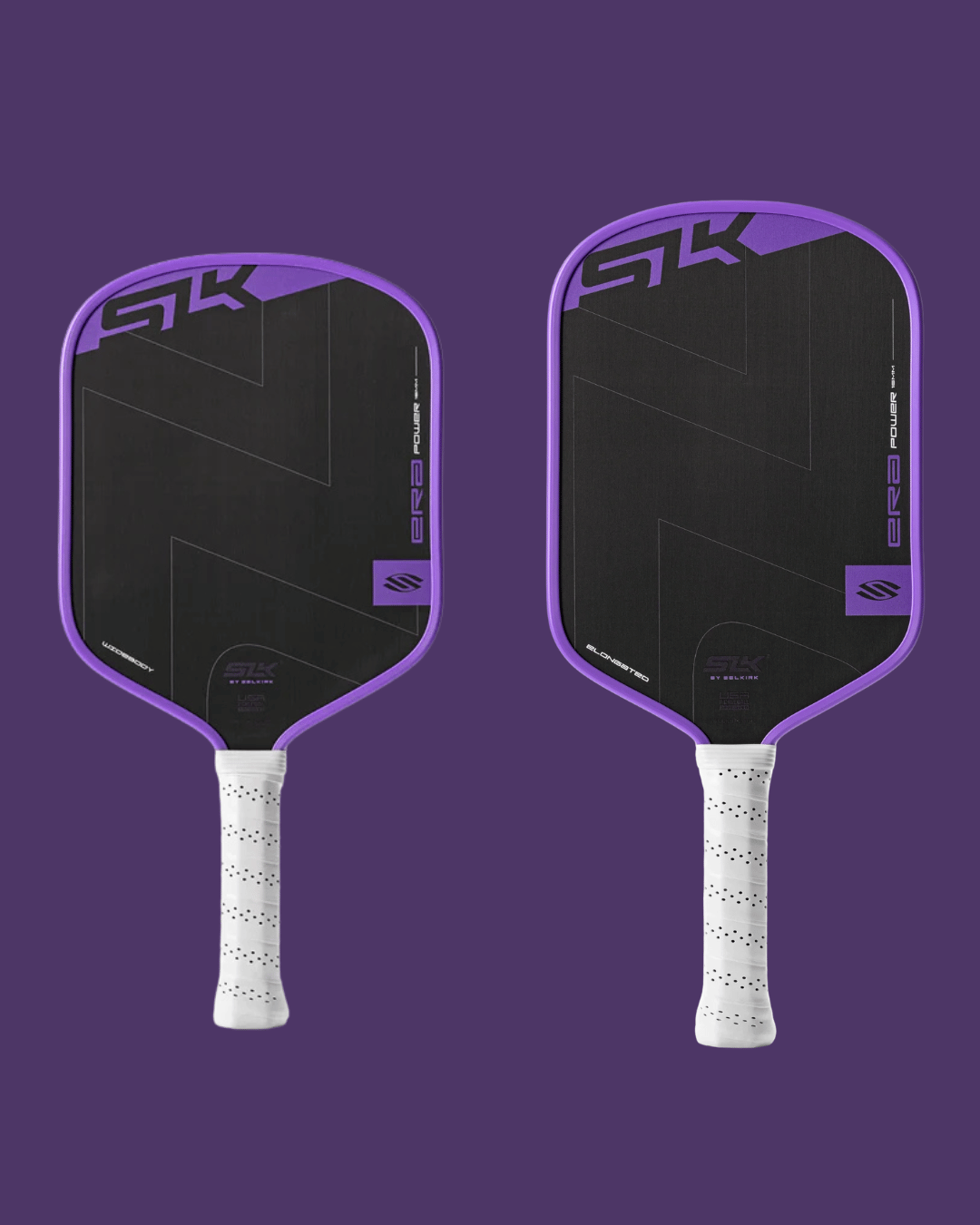
  • Detailer review of the Selkirk SLK Era Power Paddle

    Detailer review of the Selkirk SLK Era Power Paddle

    If you’ve been around my blog for a while, you already know I’ve always leaned toward control paddles. I like feeling the ball linger on my paddle just a little longer, shaping each shot like I’m painting strokes on a canvas. So when I first picked up the SLK Era Power, I was not expecting to fall for it the way I did, however, just a couple of sessions with the paddle had me sold. Personally, I will be using the paddle in a few upcoming tournaments as well.

    First Impressions

    Right out of the box, the Era Power felt solid and not overly head-heavy, but with enough swing weight to give my drives some serious pop. The carbon face gives it that crisp, confident sound when you connect cleanly, and I immediately noticed how easily I could drive through the ball without losing control.

    If you’ve played with softer paddles before, you’ll likely appreciate how SLK has found a middle ground here. You’ll find there’s power when you want it, but enough feedback to keep your touch shots in check.

    Power With Purpose

    The drives are where the SLK Era Power truly shines. The paddle gives you that little extra “pop” without requiring you to swing harder it feels like the paddle itself wants to help you finish the point. My overheads, in particular, started landing with more speed and bite. It’s one of those paddles that makes you feel rewarded for stepping in aggressively.

    On the backhand punches, I noticed a distinct jump in pace. The ball just springs off the face faster, and those quick exchanges at the kitchen become easier to win.

    That said, the extra power means you’ll need to recalibrate your soft game. My first few dink battles were honestly a mess since I was overshooting a bit and struggling to control the touch. But after a few sessions, once I found my rhythm, I could add extra spin and revs to my dinks. Once those aggressive roll dinks started dipping right at my opponents’ feet I really began to appreciate what this paddle could do.

    Customization Tip: Add Lead Tape Near the Handle

    As a player I have always preferred a more controlled feel, hence I applied a bit of lead tape near the handle, and it completely changed the balance. The paddle felt more stable on blocks and softer on resets. For anyone transitioning from a control paddle, I strongly recommend this tweak as it keeps the power while giving you the familiar balance that you are used to.

    Who This Paddle Is For

    The SLK Era Power is ideal for players who are ready to step up from a control-oriented setup but aren’t ready to go full throttle into a raw power paddle. It rewards clean technique, quick reflexes, and confidence in your offensive shots, but it still gives you the finesse you need in longer rallies.

    If you love playing aggressive doubles and enjoy finishing points with authority, this paddle will feel like a natural extension of your hand.

    Final Thoughts

    The SLK Era Power isn’t just about hitting harder, it’s about hitting smarter. Once you dial in the touch, this paddle becomes an all-court weapon. From explosive drives to rolling dinks, it’s arguably one of the most versatile options for intermediate to advanced players looking to find that sweet balance between control and power.

    Would I recommend it? Absolutely. Especially if you’re coming from a control paddle background like me, just add a little lead or tungsten tape near the handle and let this beauty do its work.

    Comparison Chart: Black Opal vs ERA Power vs Perseus Pro IV

    PaddleCore / ConstructionTypical SpecsBest ForConsiderations
    Six Zero Black OpalFull-foam or advanced foam core, textured face for spin/control(14 mm version) premium build, balanced weightPlayers wanting a mix of control + pop, upgrading from beginner gearPremium price, may require clean technique to fully benefit
    SLK ERA PowerDynamic Fusion Core (polypropylene + EVA foam) + 3-layer face of T700 raw carbon/fiberglassWeight ~7.9–8.4 oz, core thickness ~16 mm in many versions, two shapes (Elongated & Widebody) (Pickleball Warehouse)Intermediate to advanced players who hit drives, want pop + versatilitySlight learning curve in soft game; aggressive style benefits more
    JOOLA Perseus Pro IVAdvanced carbon friction surface + hybrid core constructionTop tier specs, higher price pointAttack-oriented players, spin/drive-specialistsLess forgiving if your technique is inconsistent; cost is high

    Key takeaway:

    • If you’re shifting from basic gear and want a all-round upgrade, Six Zero Black Opal is strong.
    • If you’ve moved toward driving, finishing points and want a paddle that supports that style, SLK ERA Power fits very well.
    • If you’re already high level and want near-elite performance with spin/power focus, Perseus Pro IV is the match.

    FAQs for the SLK ERA Power Paddle

    What core thickness does the SLK ERA Power use?
    The ERA Power is available in 16 mm core thickness in many of its versions (especially the Widebody) which gives a thicker feel and more “meat” behind the hit.

    What shapes does the ERA Power come in?
    It comes in at least two shapes: Elongated (for extra reach/power) and Widebody (for a larger sweet spot and more forgiveness).

    What is the typical weight range for this paddle?
    Specs list weight ranges around 7.9 oz to 8.4 oz depending on model/shape.

    How did I find the paddle’s performance for drives and overheads?
    In my use, I found the ERA Power gave noticeably more “pop” on drives and faster overhead finishes, the paddle communicated that extra speed and bite.

    How did it feel in dink exchanges / soft game?
    Initially it took me some time to adapt in dink battles because the paddle is more power-oriented. Once I settled in, I could use it to roll aggressive dinks and add more revs, making my opponents hesitate.

    Does it work for a player coming from a control paddle background?
    Yes, if you are coming from a control paddle, you’ll benefit from the power the ERA Power offers, but you may want to adjust your soft-game and strikes. Also adding lead tape near the handle (as you did) can help fine-tune the feel.

    Can I customize the weight/balance of the paddle?
    Yes, the manufacturer and user community suggest you can apply lead or tungsten tape (especially near the handle/perimeter) to alter swing weight and balance.

    How forgiving is the paddle on off-center hits?
    The Widebody shape version in particular is noted for having a larger sweet spot and better forgiveness on off-center hits thanks to its Dynamic Fusion Core design.

    What level of player is this paddle best for?
    It’s best suited for intermediate to advanced players who are comfortable with clean strikes, drives, and want a paddle that delivers power + spin. If you’re still heavily relying on arm/wrist-only shots, you might not yet unlock full benefit.

    Is the paddle approved for tournament play?
    Yes the SLK Era is USAPA/APP approved for tournament use. Both, the widebody and elongated shape are approved.


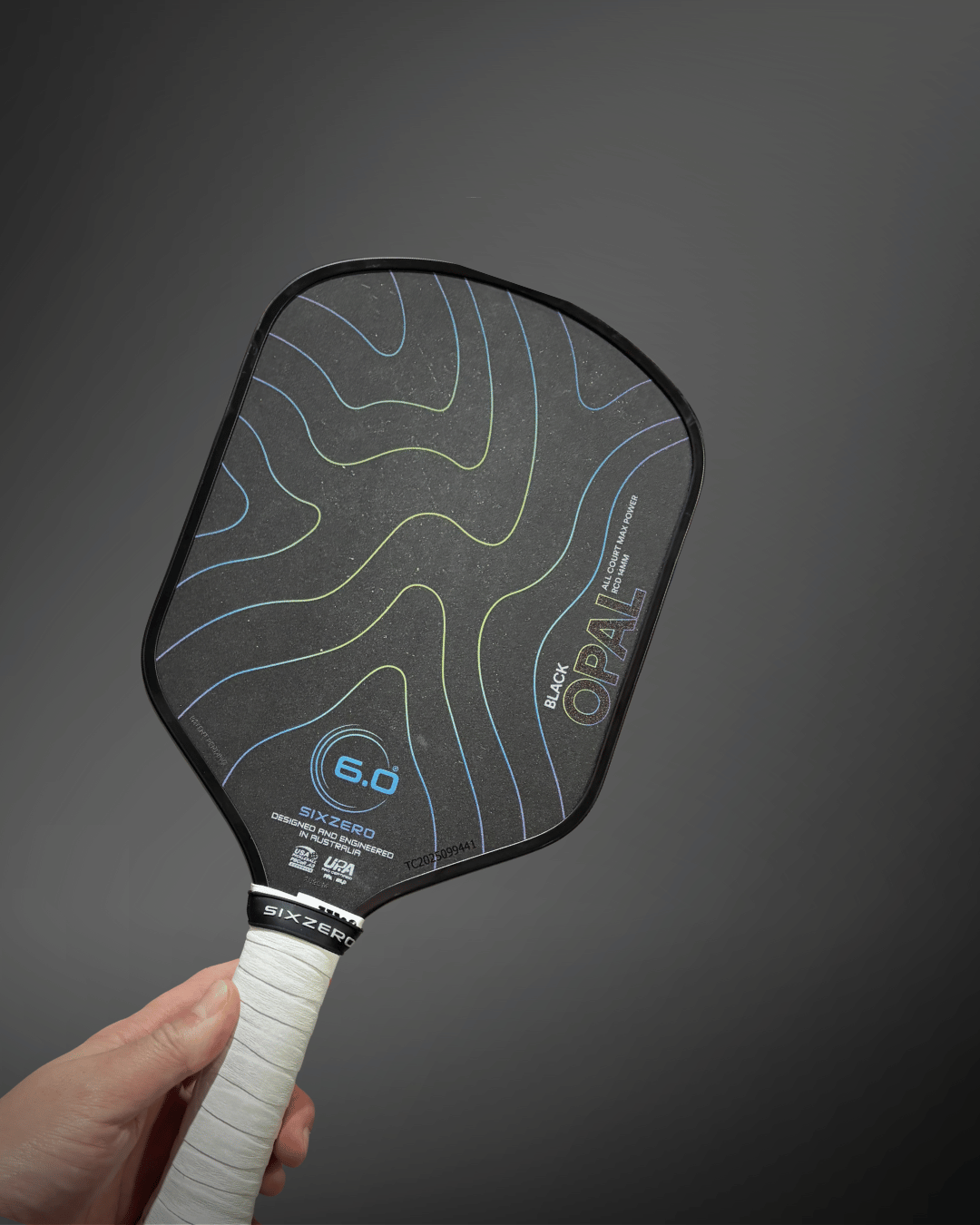
  • Detailed review of the Six Zero Black Opal

    Detailed review of the Six Zero Black Opal

    As someone who came to pickleball without a racket-sport background (yes, that’s me!), I’m always on the lookout for gear that helps me “feel” the game better. After spending several sessions with the Six Zero Black Opal paddle in my hands, here’s what I found and how it stacks up to my expectations.

    First Impressions: Looks & Feel

    Straight out of the gate, the Black Opal stood out. The matte black finish with subtle iridescent accents gave it a premium look no flashy graphics screaming “look at me,” just clean and sleek. The weight felt nicely balanced in my hand, and the grip size suited my palm well without feeling bulky.

    Because I’m still refining my strokes, grip comfort matters a lot. The grip on the Black Opal felt slightly more cushioned than some entry-level paddles I’ve tried, and that extra comfort translated into less wrist tension during longer rallies.

    On-Court Performance

    Control & Touch

    One of my biggest takeaways: the paddle gave me excellent control. During soft exchanges near the NVZ line, I noticed I could place the ball where I wanted rather than just lumping it deep. For players like me who are still mastering placement over sheer power, that is a big win.

    Power & Pop

    Now, I didn’t become a monster server overnight, but I did feel more pop than I expected for a paddle in this category. When I rotated my body and used my legs (yes, I remembered Tip #1), I could feel the paddle respond with a crisp hit. The Black Opal rewarded good motion it wasn’t “forgiving to sloppy swings,” but that’s not necessarily bad if you’re on the learning curve and want to improve your mechanics.

    Spin & Versatility

    The slightly textured face of the paddle gave me the ability to add a bit more spin than my previous gear. On drives and returns I could feel the difference. While I wouldn’t call it a dedicated “spin machine,” it’s definitely better than many basic paddles. If you’re working toward more advanced shots, this is a nice bonus.

    What I Liked Most

    • Balanced performance: Great mix of control + pop.
    • Comfortable grip: Less fatigue during longer sessions.
    • Premium build aesthetic: Looks as good as it feels.
    • Progress-friendly: I felt like my weaknesses were highlighted—meaning I learned more, not just got an “easy” paddle.
    • Final Verdict

    Comparion with arguably the most common competitors

    While I do not own all three paddles (as of yet!), I borrowed the paddles on seperate occasions, from my friends/slash players who have been using the paddles for a good 3-4 months. I played with each paddle for a week and came up with this comparison. I should also mention that each paddle was modified by my friends, for eg: overgrips of different companies and lead tape.

    PaddleSpecs / MaterialsBest ForTrade-Offs
    Six Zero Black OpalReported weight: ~8.0-8.3 oz
    Core: Full-foam floating core, “G4” / advanced foam layer Surface: Diamond Tough™ texture designed for spin/precision
    Players ready to upgrade beyond basic gear, seeking a paddle that offers both spin and pop with premium feel.Premium price. Because the build rewards good mechanics, if your technique is still very basic you might not unlock its full advantages yet.
    SLK ERA PowerWeight: ~8.0-8.4 oz depending on shape
    Core: 16 mm polypropylene + EVA foam (in many versions) Face: High-end carbon fiber (T700 in widebody version)
    Intermediate to advanced players who want strong power-oriented performance with good tech and two shape options (Widebody vs. Elongated) to match playing style.Because it’s designed for power, control at the kitchen line or in tight soft-game situations may require more finesse. Also slightly heavier feel for players accustomed to ultra-light paddles.
    JOOLA Perseus Pro IVWeight: ~7.9–8.1 oz depending on thickness (14 mm or 16 mm) Core: Polypropylene with dual-layer foam (varies by version)
    Surface: Textured carbon fiber friction surface built for pop/spin
    Players who love aggressive attacking, drives and spin and are comfortable with a paddle that can deliver serious pop.Less forgiving if your timing or technique is inconsistent; may be more paddle than needed for someone focused mainly on control or that soft game.

    How to Use This Comparison

    If you’re an attack-focused player, want max pop and spin, and are comfortable with less forgiveness: the JOOLA Perseus Pro IV may be your match.

    If you’re still mastering your fundamentals and want a great “next-level” paddle that offers both spin control and power: consider the Black Opal.

    If your game is moving into power territory, you play aggressive, hit drives often, and want shape choices: the SLK ERA Power is a strong pick.

    Frequently Asked Questions

    Is the Black Opal available in both 14 mm and 16 mm core thicknesses?
    No, based on the current listings, the Black Opal is listed as the 14 mm version (for example, the product page shows “Black Opal 14mm”). I could not reliably find a 16 mm offering of this specific model during my review period. If you’re seeing “16 mm” listed somewhere, check carefully (model variant, stock, region). For now, I’d treat the 14 mm as the standard for this paddle unless clarified by the brand.

    What happens if I switch to a thicker 16 mm core version would that give more power or different feel?
    Since I reviewed only the 14 mm version of the Black Opal, I can’t speak from direct experience to a 16 mm variant of this model. However, in general with paddle design, a thicker core (16 mm vs 14 mm) usually means more “meat” behind the hit typically more pop/power but slightly less finesse and touch. If Six Zero did release a 16 mm version later, it might shift the feel in that direction. So if you prioritise control, placement and finesse, the 14 mm works very well. If you want maximum pop and you’re comfortable with faster swings, a hypothetical thicker version would lean that way.

    How durable is the surface and material on the Black Opal will it hold up over time?
    From my play sessions, I’ve been genuinely impressed with the build quality. The paddle advertises a “Diamond Tough” surface texture and high-density foam core, which gave the Black Opal a premium feel. After multiple hours of rallying and aggressive drives, I didn’t notice any major marring or dead-spots yet. Of course, long-term durability depends on how you store it, how often you use it, and whether you hit hard or soft. But if you maintain it, I’d expect it to hold up well.

    For someone coming from no racket background (like me), will the Black Opal be too “advanced”?
    That’s a great question. As someone who also started without a racket-sport background, I found the Black Opal to be very usable especially because it rewards good technique rather than penalising beginners severely. If your basics (stance, swing path, using body) are in place, this paddle will work nicely. That said, it does reward you for using your kinetic chain (legs, core, rotation) and good contact point. If you were relying purely on your wrist or arm, you might not feel the full benefit immediately. So yes it may be a bit “advanced” in that sense, but not off-limits. It’s arguably an ideal paddle for someone ready to take that next step.

    What grip size fits this paddle best?

    For my hand size (medium to average), I found the standard grip on the Black Opal comfortable right out of the box no over-grip necessary. If your hands are larger, adding an over-grip is an easy fix, and it didn’t impact the feel for me. The paddle’s balance remains solid, so changing grip size didn’t throw off my play.

    Is this paddle approved for tournament play (USAPA/APP)?
    Yes according to the manufacturer’s spec listing, Six Zero paddles (including the Black Opal) are labelled as “USAPA-approved.” From my own experience in local tournaments, I’ve used this paddle without any compatibility issues. If you play in competitive events, always check the specific tournament rule sheet though.

    How does the Black Opal compare to my old beginner paddle in terms of feel and forgiveness?
    Compared to my previous budget paddle (which had a “dead spot” feel), the Black Opal felt significantly more responsive. When I hit clean strokes, it rewarded me with a crisp pop and strong sound. But and this is worth knowing when I mis-timed or swung only with my arm, it was less forgiving than the old paddle. So if you’re still relying heavily on arm-only swings, you might want to refine your form before expecting full benefit from this paddle.

    How is the warranty and support?
    Six Zero advertises a 12-month structural warranty on their paddles. In my purchase process, the NFC chip registration (embedded in the paddle) made registering the warranty quick and straightforward. It gives me confidence in the build quality especially if you’re investing in a premium paddle.

    How much vibration or arm-fatigue did I feel using it?
    The Black Opal uses technology like “Shock Shield™” aimed at damping vibration. In my sessions I noticed less forearm fatigue than some other paddles I’ve used especially during aggressive drives. That said, because I started pushing myself (using my legs, core, and rotation more), I still felt normal fatigue after long play but no unusual arm or wrist soreness, which is a good sign.