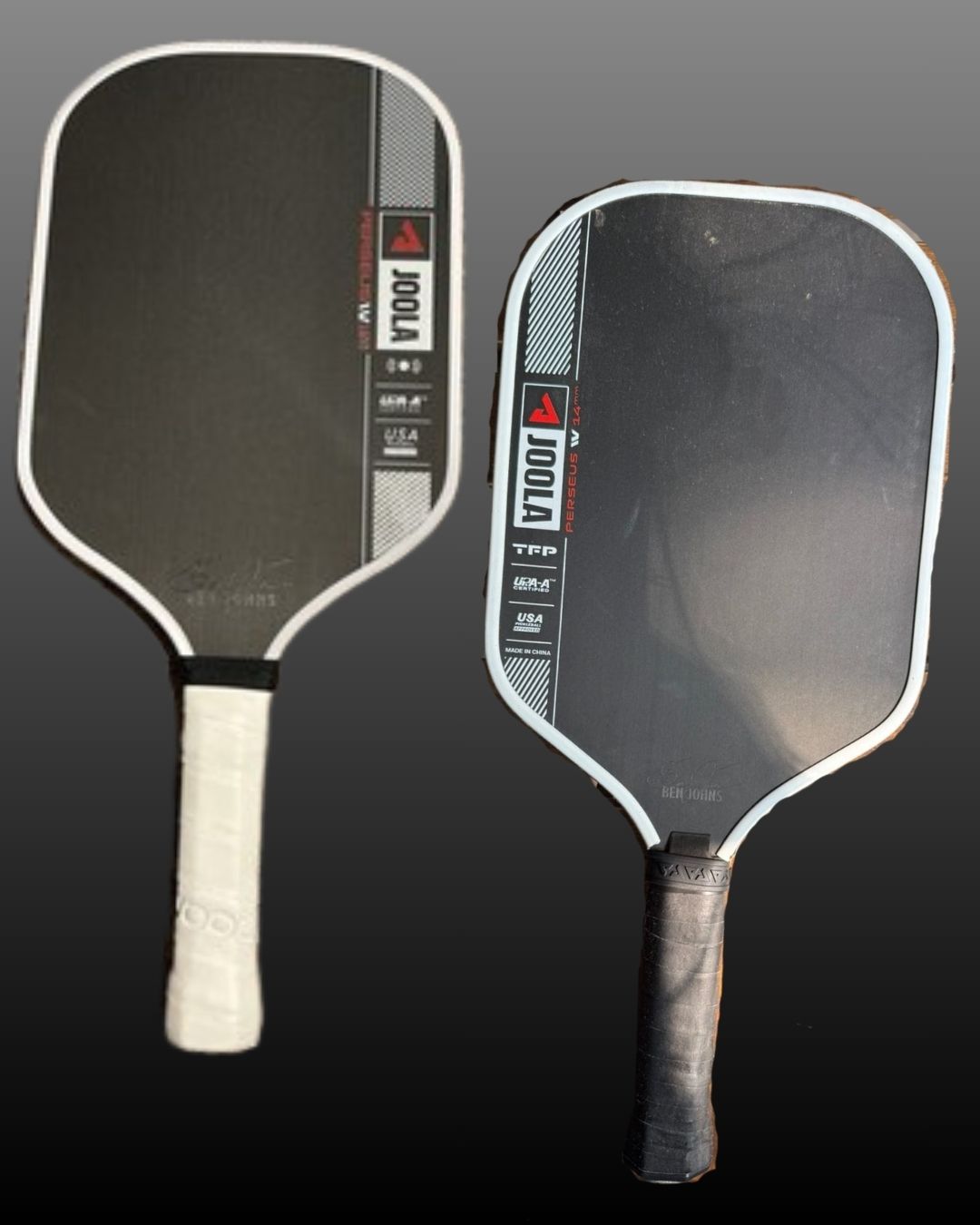
After putting both the 14mm and 16mm Joola Perseus Pro IV paddles through six months of hard, competitive use, combined with regular drilling sessions, rec play, and even a few tournaments I feel confident saying this: these paddles are not everyone’s cup of tea, and yes even a pro player will need time to adapt to this paddle. However, once you find your rhythm with this paddle, you will begin to love the game even more.
Both versions require a genuine break-in period, which honestly caught me off guard at first. The first few sessions felt stiff, almost like the paddles were holding back their real personality. But once you push through that 5–6-session drilling phase (yes drills, not just casual games), the Perseus Pro IV becomes a completely different beast.
And the sound I have to give it to Joola, no other paddle comes close to that crisp silenced gunshot like sound when a pickleball meets the sweet shop of the Perseus pro IV. There is no better feeling than when your paddle makes good connection with a pickleball.
On-Court Performance After Break-In
Once fully broken in and dialed, both the 14mm and 16mm models of the Joola Perseur Pro IV really start to shine. Drives effortlesly sail off the paddle with serious pace and low trajectory. Baseline serves flatten out naturally which gives you more confidence to control the rally right from your serve. Dinks pick up a little extra spin without much extra hand action which makes it easier for you to disguise your speedups, And putaways? Let’s just say you do feel like Ben Johns while hitting them.
A lot of reviewers claim there’s a big difference between the 14mm and the 16mm versions. In my experience, they actually play more alike than most people think. The core feel is similar, the performance ceiling is similar, and the forgiveness is pretty close too.
If I had to pinpoint differences this is what I would have to say:
- 14mm Perseus Pro IV:
Slightly lighter, easier to whip, ideal for players whose natural hip rotation or kinetic chain isn’t super strong. I did add tungsten tape from the throat to the sweet spot on both sides which gave it better stability without making it too heavy. This model is definitely a bit lighter on the wrist as well. - 16mm Perseus Pro IV:
Surprisingly complete right out of the box, even before adding any weight. This is actually one of the rare paddles where I didn’t feel the need to reach for tungsten tape which says a lot for me who is a control oriented player who needs more stability on the throat area of all my paddles. The Perseus Pro IV 16mm however has that ready-to-go stability that’s perfect for doubles.
Both versions have one design note which i would like to see be made better is that the handle could use a few more millimeters. If you rely on two-handed backhands, you’ll understand what I am referring to.
Which is the best fit for you?
- Pick the 16mm if:
You’re a doubles-first player who values stability and clean resets. It has that “plug and play” steadiness that makes it feel more tournament-ready. - Pick the 14mm if:
Singles is your main game, or you prefer something a bit faster through the air. It still performs well in doubles once weighted properly.
Pricing
At $280, the Joola Perseus Pro IV definitely sits on the premium end of the pickleball paddle market. And here’s the honest truth durability can vary based on how often and how hard you play. If you like switching paddles every 4–6 months, or if money isn’t a concern, the price might not bother you. But if long-term value is a priority, there are more durable options out there with the same paddle features.
For players entering higher-level tournaments or aspiring to play pro-level events, though, this paddle has the firepower and touch to justify the price tag.
Customer Service
Joola is known to be actively responsive to customer greivances which is evident in the manner of how they responded to the infamous Joola Mod15 Paddle incident, in general among my local pickleball community too there have not been any complains by any player who has used Joola Paddles, so overall I can say that Joola does care about its customers and once they do find a way to make their paddles more durable they would definitely dominate the paddle market globally.
Dwell Time
One thing that genuinely surprised me about the Joola Perseus Pro IV both the 14mm and 16mm models is the dwell time which is why I had to dedicate a seperate paragraph for it.
At first, especially during the break-in period, the paddle can feel a bit stiff and almost too responsive, like it wants to fire the ball off quicker than you’re ready for (trampoline effect). But once you put in those 5–6 drilling sessions, the face starts to settle in beautifully. The ball stays on the paddle just long enough to give you that extra sense of control on dinks and counters, without ever feeling lul or dead. In fast-hands exchanges, the dwell time gives you confidence to redirect pace, and on topspin drives it allows you to really feel the ball sink into the surface before ripping through it. The 16mm version naturally offers a touch more grab and stability, but the 14mm equally matches up with a few customizations. Overall, the dwell time feels intentional, refined, and one of the reasons this paddle becomes so dangerous once you truly dial it in.
| Feature | Perseus Pro IV 14mm | Perseus Pro IV 16mm |
|---|---|---|
| Thickness | 14mm | 16mm |
| Feel | Fast, crisp | Plush, controlled |
| Stability | Moderate (with tungsten becomes excellent) | High |
| Best For | Singles & fast hand battles | Doubles & stability seekers |
| Break-In Time | 5–6 drilling sessions | 5–6 drilling sessions |
| Power | High | High |
| Control | Very good | Excellent |
| Adds Swing Weight Easily? | Yes | No need |
| Handle Length | Same (slightly short) | Same (slightly short) |
Final Thoughts
If you’re willing to put in the drilling time, the Perseus Pro IV rewards you with explosive power, excellent spin, and a crisp feedback that just feels addicting. It’s not the easiest paddle to pick up and instantly master—but once you get over that learning curve, both the 14mm and 16mm versions deliver top-tier performance that absolutely holds up in competitive play.
Joola Perseus Pro IV vs Selkirk Boomstick vs Six Zero Opal vs Gearbox GX2
| Feature / Paddle | Joola Perseus Pro IV (14mm) | Joola Perseus Pro IV (16mm) | Selkirk Boomstick | Six Zero Opal | GearBox GX2 |
|---|---|---|---|---|---|
| Typical feel | Slightly quicker, lighter to rotate; more forgiving for singles footwork. | Plum-ier feel, more stable at the kitchen; slightly more dwell. | Solid, crisp, designed for power with a firm face. | Balanced control-focused feel; great for dinks and resets. | Modern hybrid feel: good control with a pop when wanted. |
| Break-in | Needs break-in (a few drilling sessions) to open up. | Same warms up in 4–6 sessions but feels great afterwards. | Break-in tends to be shorter; responsive early. | Moderate break-in; predictable quickly. | Moderate; performs well after a week of regular use. |
| Sweet spot | Good; benefits noticeably from light tungsten on throat→sweet spot. | Wide and forgiving; performed well without extra tape for the user. | Generous sweet spot but can feel head-heavy on mishits. | Focused sweet spot excellent control in center. | Large sweet spot engineered for consistency. |
| Power vs Control | More control; less raw pop unless taped/weighted. | Adds a touch more stability and power great for doubles. | Leans power-forward superb drives and flat serves. | Control-first dinks and resets shine. | Versatile: strong drives and solid control for net play. |
| Handle / Grip | Handle felt short for two-handers (user note). | Same shorter handle; stable grip. | Typically comfortable length; user preference varies. | Usually good grip/length for two-handers. | Ergonomic design; comfortable for long sessions. |
| Tungsten tape needed? | User added tungsten (throat→sweet spot) to improve stability. | User didn’t feel it was necessary on 16mm. | Often not needed; some players add small amounts to tune. | Rarely needed; already control-oriented. | Optional for fine tuning. |
| Best for | Singles players who want lighter rotation + doubles players who like a nimble blade (if taped). | Doubles specialists and players who want added stability & dwell. | Power players, baseline hitters, big drives. | Players who prioritise control, dinks and resets. | All-rounders who want a modern hybrid feel. |
| Durability | 4-6 months | 4-6 months | 12 months or more | 10-12 months | 6-8months |
| Price (approx) | $280 | $280 | $333 | $250 | $279 |
| User takeaway (from your notes) | Great for players wanting a lighter option but who don’t mind adding tape to stabilize. | User favorite for doubles; felt complete without major mods. | Powerful weapon with strong drives; needs adaptation. | Superb for dinking and resets; less pop than power paddles. | Balanced performerversatile for both singles/doubles. |
Please note: Durability is subject to how you use the paddle, I based my analysis considering 2 drill sessions and 3 rec plays in a week
FAQs
Does the Perseus Pro IV actually need a break-in period?
Yes. Both the 14mm and 16mm versions improve dramatically after several drilling sessions.
Is the Joola Perseus Pro IV14mm or 16mm better for beginners?
The 16mm is more forgiving. However, neither version is “beginner-friendly” in the traditional sense.
Is tungsten/Lead tape necessary?
For the 16mm, not really. For the 14mm, tungsten tape on the throat and sides improves stability and enlarges the sweet spot.
How is the durability compared to other premium paddles?
Durability is decent but not exceptional. Players who hit hard daily may need to replace it within 6–9 months.
Can I use this paddle for both singles and doubles?
Yes, but singles players may prefer the quicker 14mm version.
Leave a Reply